
Vandaag of morgen in huis

Kwaliteit gegarandeerd

Welkomstaanbiedingen ontgrendelen: GRATIS bezorging | Tot 80% korting | Gratis 30 dagen JoyPlus-proefperiode
Download de app
A night light may seem like a simple purchase, but small differences can make a big difference to how well it works day to day. Parents often use one during night-time care, while reading a story or when a child has trouble settling to sleep. A model that’s too bright, runs out of charge quickly or is awkward to use can soon prove disappointing.
Look out for these three common pitfalls:
A cheerful design without practical controls
An animal shape or colourful casing may look appealing, but it tells you little about how the light works. For night-time use, touch controls and different brightness settings are often more convenient than a small switch on the back.
“Dimmable” without clear specifications
Some product descriptions mention dimming without saying how many settings are available or what colour the light is. Check whether it offers three fixed settings, stepless dimming or simply different colours.
Rechargeable, but without useful battery information
A USB connection doesn’t automatically make a light suitable for everyday use. Check the battery capacity, charging voltage and whether you can use the light wirelessly while moving it around.
For a baby’s or toddler’s room, a soft light setting is usually more practical than a powerful desk lamp. A dimmable night light with several settings can be adjusted to suit the situation: use a low setting as a bedside light in your child’s room, and a brighter one when you need to find something.
Check the light colour too. According to the product specifications, warm white light, for example around 2600 to 3000 kelvin, gives a softer look than bright, cool white. An LED night light usually uses little power. However, check the stated light output in lumens. A 40-lumen light is intended for mood lighting and orientation, not for lighting an entire room.
A USB rechargeable night light is handy beside the bed, as you don’t need a socket while using it. Check:
Actual battery life depends on the brightness setting and the programme you choose. Manufacturers don’t always state a fixed run time. So compare battery capacity and controls, rather than relying on the phrase “long battery life”.
A children’s light should stand securely on a flat surface. A soft silicone exterior may feel pleasant to the touch, but always check the warnings in the product information. For a light intended for a baby’s or toddler’s room, the following points are relevant:
Touch controls are convenient, but can sometimes be activated with the slightest touch. A model with a memory function or fixed light settings may be more predictable.
The following selection is based on the product specifications provided, such as battery type, light settings, controls and materials. Always check the current product page for price, availability and included accessories before buying.
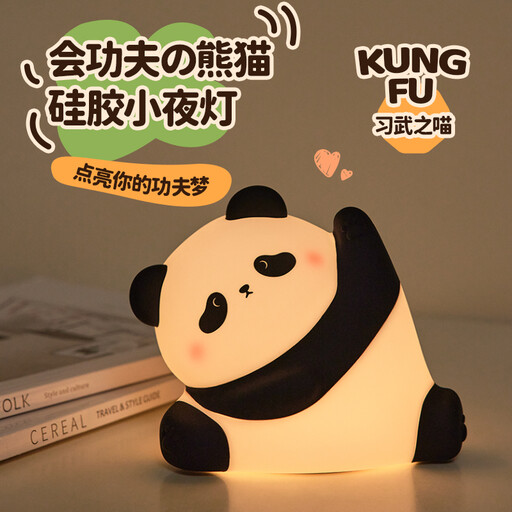
Why it suits this profile: This compact panda night light combines a soft silicone exterior with three light settings and simple touch controls. That makes it a good first night light for a baby, toddler or child.
The product specifications list three dimming settings, touch controls and a 1200 mAh rechargeable battery. That means you don’t have to judge it on looks alone.
Food-grade silicone according to the product specifications, three light settings, touch controls and USB charging.
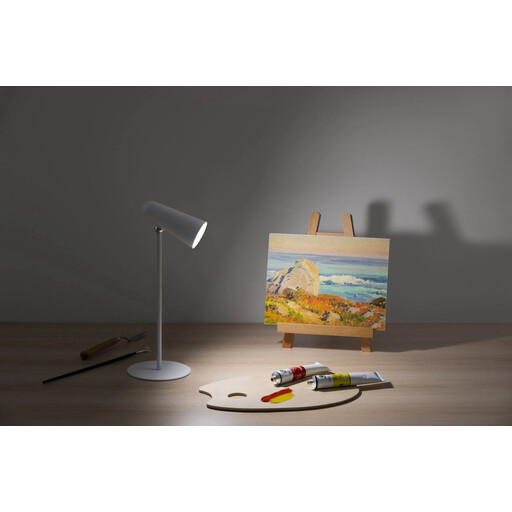
Why it suits this profile: This flexible lamp is a good choice if you value a neutral design and versatility more than a playful animal shape.
The listed specifications include a power rating of 3.5 W, a 2000 mAh lithium-ion polymer battery and a maximum charging voltage of 5 V.
2000mAh battery, flexible use and a Dutch responsible party listed in the product information.
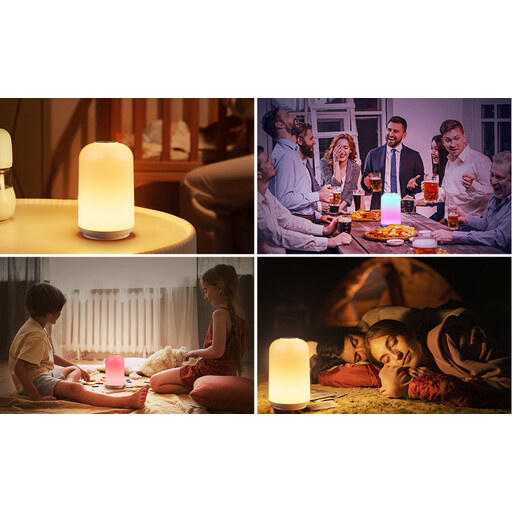
Why it suits this profile: This model is a good fit if you want to switch between warm white and RGB lighting, for example in a child’s bedroom, bedroom or as a mood light.
The specifications list stepless dimming for warm white, seven RGB colours, a sensor that works at up to 40 lux and USB charging at 5 V - 1 A.
40 lumens, CRI above 85, warm white at 2600-2800 K and a compact size of 13 × 8 × 8 cm.
We’ve put together a complete, up-to-date list of products that meet these strict selection criteria and the applicable European safety regulations.
It can be, provided the product information says the model is intended for indoor use and you place it somewhere stable. Follow the manufacturer’s safety warnings. Don’t leave a baby unsupervised with the light, and don’t put the device in the cot or under bedding.
Run time varies depending on battery capacity, brightness and the function you choose. A low light setting usually uses less energy than bright light or constantly changing RGB lighting. As brands don’t all use the same testing methods, stated run times aren’t always directly comparable.
According to the stated product specifications, an LED light usually uses little power. Total energy use depends on how often you charge it and how many hours it’s on. A 1 W model, such as some compact RGB lights, uses less power during operation than a 3.5 W light. Charging via a suitable USB adapter, laptop or power bank is convenient, but always check the recommended charging voltage.
