
Vandaag of morgen in huis

Kwaliteit gegarandeerd

Welkomstaanbiedingen ontgrendelen: GRATIS bezorging | Tot 80% korting | Gratis 30 dagen JoyPlus-proefperiode
Download de app
A rechargeable outdoor lamp is useful on a balcony, patio, in the garden or when camping. You do not need a fixed power connection, and you can move the lamp whenever it suits you. However, not all wireless lamps are suitable for every use. A model that works perfectly as mood lighting on a table may not provide enough light for a path or workspace, for example.
So do not just focus on colour and shape. Above all, check the charging options, light output, protection against moisture and how you intend to use the lamp.
A solar outdoor table lamp sounds appealing, but the solar panel needs sufficient daylight. On a covered balcony, under a parasol or during dark winter days, charging may be less practical. A lamp powered solely by solar energy may then unexpectedly provide very little light.
A USB outdoor LED lamp or a model with both solar and USB charging offers greater flexibility. You can place the lamp outdoors when there is enough light and top it up via USB when needed.
The IP code indicates how well a product is protected against dust and moisture. IP44 includes protection against splashing water from different directions. This is suitable for a patio or bathroom, but it does not mean the lamp can be submerged or withstand direct jets of water.
Therefore, do not place an IP44 lamp in a pond, beneath an open gutter or anywhere that rainwater can collect for long periods. The same applies to a rechargeable floor lamp with IP54: you should also avoid heavy rain and submersion, even though this rating provides a different level of protection against dust and splashing water.
Lumens indicate how much light a lamp produces. A lamp providing 170 lumens is generally suitable for a table, balcony or cosy seating area. A larger patio or an area requiring orientation lighting may need more light. A 340-lumen floor lamp provides broader, clearer illumination, but it also takes up more space.
Also consider the colour temperature. 3000 Kelvin represents warm white light, which is often ideal for a cosy indoor or outdoor setting. If you want to illuminate a cupboard, worktop or dark passageway, brighter light may be more suitable, or you could consider an LED cabinet light with a motion sensor.
Check whether the lamp has an integrated battery and how it is charged. An outdoor lamp with a battery can be useful if you do not want to leave a cable trailing. Solar charging is practical in a sunny location, while USB charging is more predictable when the weather is changeable.
Also check the type of connection. The Viani models use a 100 cm USB-A cable. The Xiaomi Flexible Rechargeable Lamp has a 2000 mAh lithium-polymer battery and a maximum charging voltage of 5 V. Always use a suitable USB charger and follow the manufacturer’s safety information.
A dimmable outdoor lamp is more versatile than one with just a single light level. Three brightness settings, for example, can be useful for a dinner, chatting on the patio or reading at the table. Do check whether the lamp dims continuously or in fixed steps.
An integrated LED light source does not need replacing, but if it develops a fault, it usually cannot be replaced by the user. This is a practical difference compared with fittings that use a replaceable light source.
Check the dimensions before ordering. A compact LED outdoor table lamp will fit on a narrow balcony edge, whereas a 125 cm lamp needs more space and must stand securely. A lightweight 0.35 kg model is easy to move, but it should be placed on a level surface to reduce the risk of it toppling over.
Metal combined with plastic is used in various outdoor lamps. Clean these lamps according to the product information, for example with a soft, dry cloth. Do not use liquid cleaner unless this is permitted.
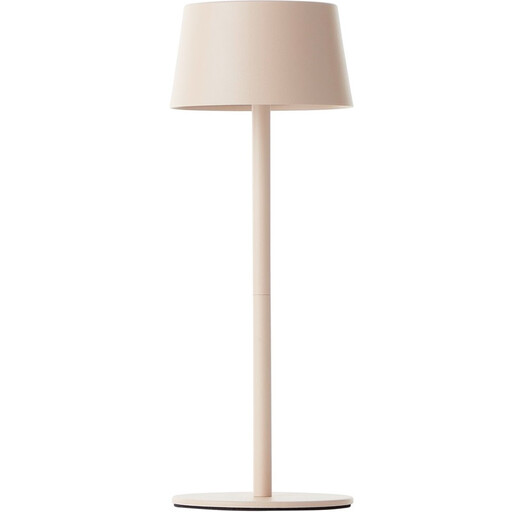
Why it suits this profile: A compact solar table lamp with USB as an additional charging option, suitable for a balcony, table or bathroom.
As well as solar charging, USB charging is available. The IP44 specification makes it clear that the lamp is splash-resistant, but not waterproof.
170 lumens, warm white light at 3000 K, three dimming settings and two mounting heights.
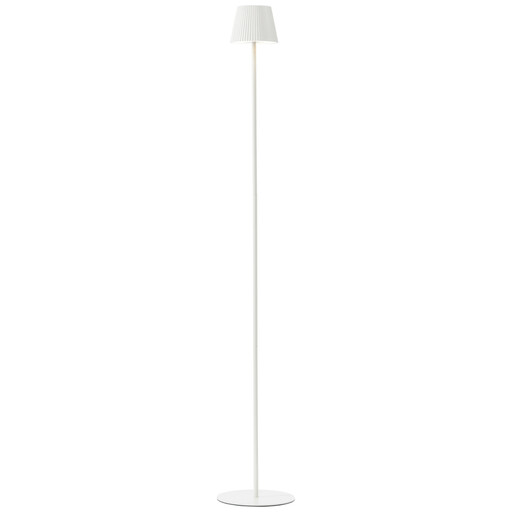
Why it suits this profile: A taller wireless outdoor lamp for patios, verandas and gardens where broader light coverage is preferred.
The specifications state 340 lumens and IP54. Nevertheless, place the lamp securely and protect it from heavy rain and submersion.
125 cm high, 340 lumens, warm white light, USB-A charging and an integrated touch dimmer with three settings.
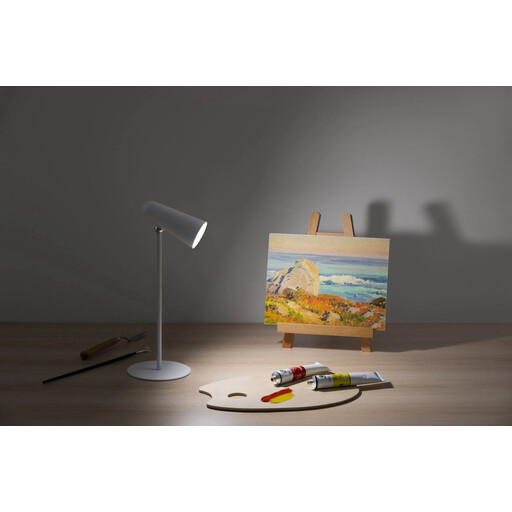
Why it suits this profile: Thanks to its battery and flexible design, this lamp is easy to take with you for temporary use indoors or while travelling.
The battery and charging details are clearly stated: 2000 mAh and a maximum of 5 V. For outdoor use, however, check the moisture protection in the current product information.
3,5 W power, a lithium-polymer battery and a design made for portable use without a fixed connection.

Why it suits this profile: For kitchen cupboards, wardrobes, shelves and dark passageways where automatic lighting is more useful than mood lighting.
The PIR sensor activates within a specified range of 3 to 5 metres. The lamps are USB rechargeable, but are not intended for damp outdoor locations.
Two 40 cm lamps, three colour temperatures, 61 LEDs per lamp and an integrated 1100 mAh battery.
We have put together a complete, up-to-date list of products that fully meet these strict selection criteria and the applicable European safety regulations.
This depends on the battery capacity, brightness setting, temperature and charging method. The available product specifications do not provide a single fixed operating time for every model. A lower dimming setting generally uses less power than the highest setting, but check the current product information for an accurate usage duration.
Only if its IP rating is suitable, and within the stated limits. IP44 and IP54 do not guarantee that a lamp is waterproof. Do not place the lamp in standing water and avoid direct jets of water. If in doubt, place the lamp under a sheltered canopy and charge it via USB.
An LED lamp generally uses little power while switched on. The models in this selection range from 3,5 W to 3,4 W, among other specifications, but actual consumption depends on the operating time and brightness setting. With solar charging, you do not use a fixed mains connection to recharge the lamp; with USB charging, consumption depends on the charger used and how often you recharge the battery.
