
Vandaag of morgen in huis

Kwaliteit gegarandeerd

Welkomstaanbiedingen ontgrendelen: GRATIS bezorging | Tot 80% korting | Gratis 30 dagen JoyPlus-proefperiode
Download de app
A rechargeable night light is handy when you don’t want to switch on a bright ceiling light during the night. However, many buyers are drawn to features that matter less in practice than they might seem. A light may offer lots of colours, for example, but have very limited dimming options. Or the battery may run out quickly with daily use.
Parents also have extra things to consider. A light in the nursery should be stable, shouldn’t get unnecessarily warm and should be easy to clean. For a hallway or bathroom, a motion sensor, brightness and water resistance are more important. This guide will help you assess the differences using verifiable product specifications.
An RGB night light with seven colours may seem versatile, but the choice of colours says nothing about how useful it is as a bedside light. For a night-time feed or changing a baby, warm white light is often more practical than bright blue or red light. So check whether the light has a fixed warm white setting as well as RGB, and whether you can dim it.
“Rechargeable” doesn’t automatically mean you can go for weeks without charging. Check the battery capacity in mAh, the stated operating time and the charging method. A USB-rechargeable light can be handy with a laptop, adapter or power bank, but check whether the right cable and charging voltage are specified.
A night light with a motion sensor usually only works when it’s dark enough. The range, detection angle and light threshold determine whether it responds well in your hallway or nursery. A sensor with a range of 3 to 5 metres is practical for a corridor, but may be too sensitive beside a bed or cot.
For bedrooms, a colour temperature of around 2600 to 3200 K is a useful guide to warm light. A dimmable night light gives you more control than one that only switches on and off. Also consider the type of control:
A higher battery capacity may mean longer use, but actual battery life also depends on brightness and sensor mode. A 500 mAh model is compact, while a light with 1200 or 2000 mAh will generally have more capacity. Always consider the product specifications alongside the power rating.
Check the stated charging voltage, for example 5 V - 1 A. Use a suitable USB power source and don’t charge the light somewhere cables could come loose or where there’s moisture.
For a nursery night light or children’s bedroom lighting, rounded shapes and a stable base are practical. Silicone can feel soft, but check whether the product description says the material is suitable for your intended use. A product listing is no substitute for supervision: keep the light out of reach of young children and don’t let them play with the charging cable.
For outdoor use, check the IP rating. IP44 means protection against splashes, not immersion or prolonged exposure to rain. A light with this rating should therefore be placed in a sheltered spot on a balcony or patio.
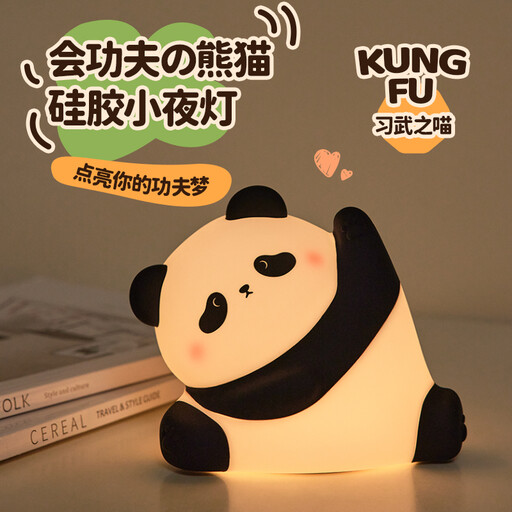
Why it suits this profile: The panda design is intended for use beside a bed or in a child's bedroom. It’s operated by touch and has three light levels for different occasions.
The product description specifies both the battery and three dimming levels. So you don’t have to judge it by its appearance or animal design alone. Babies still need to be supervised by an adult.
1200mAh rechargeable battery, three light levels, touch control and a casing made from ABS, PP and silicone, according to the product listing.
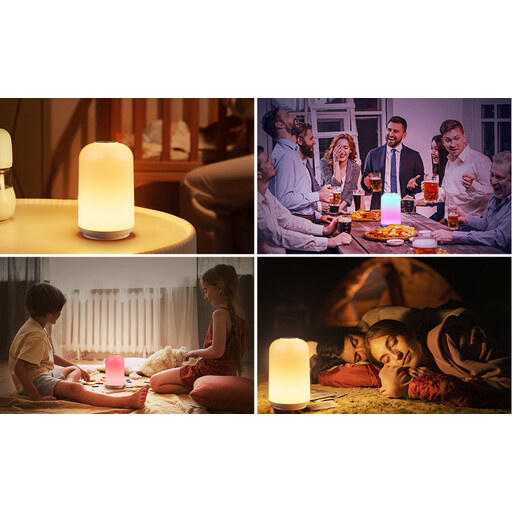
Why it suits this profile: This model combines a fixed warm white setting with seven RGB colours. It’s a good fit for adults and families who want one compact light for a bedroom, children’s bedroom or living room.
The specifications list not only RGB, but also warm white light at 2600-2800K and stepless dimming in that setting. This makes the features clearer than a general mention of colour options alone.
12 SMD LEDs, 40 lm, stepless dimming for warm white, USB charging and a compact size of 13 x 8 x 8 cm.

Why it suits this profile: Two wireless lights are practical for a hallway, stairs, toilet and nursery. According to the listed specifications, the sensor activates the light when it detects movement in the dark.
The product information specifies a sensor range of 3-5 metres, a light threshold of up to 20 lux and a sensor mode with up to 10 hours of use. Check the placement before attaching or setting down the light.
Two lights, 500mAh battery per light, five brightness levels, three colour temperatures and USB charging at 5 V - 1 A.
We’ve put together a complete, up-to-date list of products that meet these strict selection criteria and current European safety requirements.
Warm white light at around 2600 to 3200 K is often chosen for calm, gentle lighting. Choose a low dimming level too, and position the light so it doesn’t shine directly into anyone’s eyes. A night light is no substitute for supervision or other safety measures in the nursery.
It varies by model, brightness level and mode of use. For example, the 2-pack light with a motion sensor specifies up to 10 hours in sensor mode. A light that stays on continuously at high brightness may need recharging sooner. So compare both the battery capacity and the stated operating time.
An LED night light generally uses very little power. The total cost depends on the wattage, how often you charge it and your electricity tariff. A 1 W model uses around 1 Wh for an hour of use. There are also small additional losses from the USB adapter when charging. In sensor mode, where the light isn’t on continuously, consumption depends on how often movement is detected.
