
Vandaag of morgen in huis

Kwaliteit gegarandeerd

Welkomstaanbiedingen ontgrendelen: GRATIS bezorging | Tot 80% korting | Gratis 30 dagen JoyPlus-proefperiode
Download de app
A rechargeable night light may seem like a simple purchase, but the differences between models can be significant. During a night feed or nappy change, parents need enough light to see without brightly lighting the entire room. In a hallway, cupboard or bedroom, a lamp with a motion sensor can be particularly useful. Meanwhile, product pages sometimes promise long battery life, numerous colours and smart features without clearly explaining the conditions under which those specifications apply.
Before buying an LED night light, pay particular attention to the following potential pitfalls.
A stated operating time of several dozen hours, for example, usually depends on the brightness, colour mode and functions being used. A lamp that stays on continuously at its highest setting will run for considerably less time than one used with dimmed light. Check whether the battery life is specified for the lowest setting, sensor mode or maximum brightness.
A night light with RGB colours can create a soothing atmosphere at bedtime or in a child’s room, but warm white is often calmer and more functional for night feeds and nappy changes. Check whether you can set the colour and whether the white setting can be dimmed separately. Having numerous colour settings is of limited value if the controls are awkward to use.
A night light with a motion sensor will usually only respond when it is dark enough. The stated detection distance may also depend on the positioning, direction of view and any obstacles. A sensor lamp on a bedside table therefore works differently from one in a hallway or wardrobe. Also check whether the lamp can stay on continuously when required.
For a nursery or bedroom, a warm white night light of around 2600 to 3200 kelvin is a practical choice. It creates a softer effect than cool white light. For a hallway, bathroom or cupboard, a neutral or cooler colour may be more suitable.
A dimmable night light gives you greater control. Stepless dimming allows gradual adjustment, while models with three or five settings may be easier to use. Also pay attention to the light output in lumens. A lamp producing 30 to 40 lumens is designed to provide soft, localised light; a 400-lumen model can illuminate a much larger area and is therefore less suitable as a subtle bedside light.
A night light with touch controls is useful when you do not want to search for a small button during a night feed. However, check whether touching, double-tapping and pressing and holding activate different functions. A night light with a timer prevents the lamp from staying on unnecessarily. Many models have a fixed timer duration, so check that it suits your routine.
A motion sensor can save energy in a hallway or wardrobe. Check the stated detection distance and light threshold, such as ≤20 or ≤40 lux. These values indicate the level of darkness at which the sensor can activate; they do not guarantee that the lamp will respond in exactly the same way in every situation.
A USB-rechargeable night light is practical if there is no socket next to the bed. Look at the battery capacity in mAh, the type of connector and the recommended charging source. A 1200mAh or 2000mAh battery does not, on its own, indicate exactly how long the lamp will stay on, as brightness and functions affect power consumption.
For children, rounded shapes and a casing without small parts that can come loose easily are preferable. Product information may list materials such as food-grade silicone, ABS and PP. This does not mean that a lamp should be used as a toy without supervision. Always follow the safety warnings: keep the product away from water and heat, keep loose charging cables out of reach, and do not allow young children to operate it without supervision.
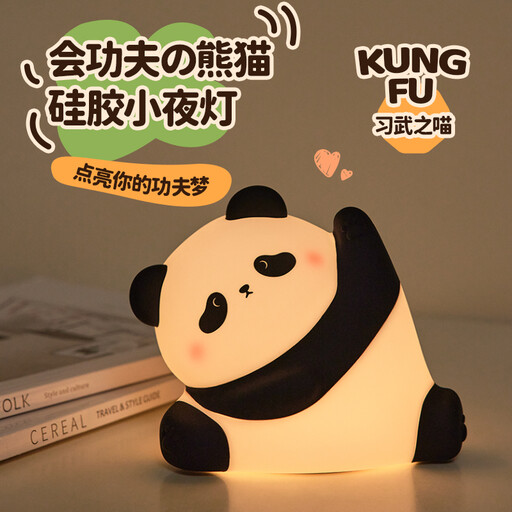
Why it suits this profile: This compact cuddly night light is designed for nurseries and children’s rooms, with a soft silicone panda shape and simple touch controls.
The three light settings keep operation straightforward. According to the product description, it has a rechargeable 1200mAh battery, so you do not need disposable batteries.
Food-grade silicone according to the product information, touch controls, three brightness settings and USB charging.
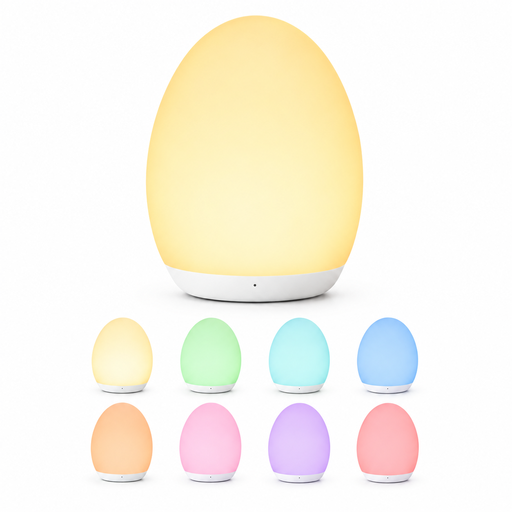
Why it suits this profile: For parents who want to combine warm light, colour choice and automatic switch-off in one portable model.
The product description distinguishes between use at maximum and minimum brightness. According to the description, the stated battery life of up to 100 hours applies at the lowest brightness setting.
2000mAh battery, dimmable warm white light, eight colours, touch controls, memory function and a one-hour timer.
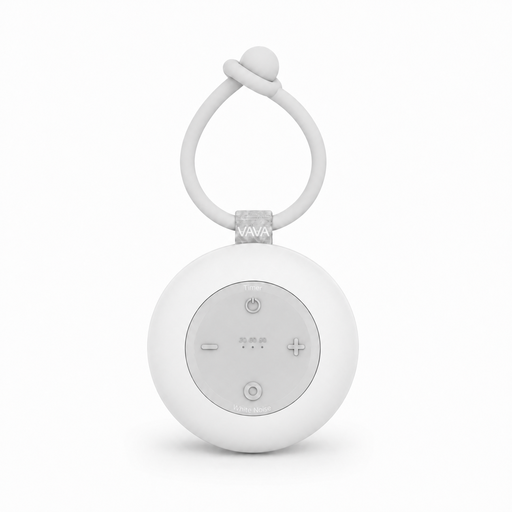
Why it suits this profile: This portable night light is designed for families who want to use light and sound functions at home, on the go or during a nap.
The lamp and sound functions work independently. The timer can be set to 30, 60 or 90 minutes, so the lamp does not have to remain on all night.
18 sound options, five light settings, USB-C charging, a stated battery life of up to 40 hours under a specific test setting and a child lock.
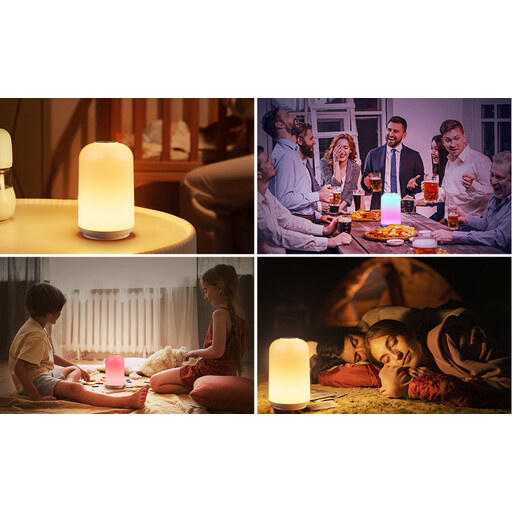
Why it suits this profile: A suitable option for anyone who wants to use one compact lamp on a bedside table, shelf or piece of furniture in a child’s room.
The product information lists a separate warm white mode with stepless dimming. This means you do not have to use RGB when you need functional night lighting.
12 SMD LEDs, 40 lumens, stepless warm white dimming, seven RGB colours, a built-in battery and charging via 5V-1A USB.
We have put together a complete, up-to-date list of products that fully meet these strict selection criteria and the applicable European safety regulations.
This depends on the battery capacity, light intensity, colour mode and any sensor or sound functions. A stated maximum operating time often applies to the lowest brightness setting. For everyday use, it is best to check the runtime for the setting you actually intend to use.
Warm white is often practical for night feeds, nappy changes and brief tasks beside the bed. Ideally, choose a lamp with adjustable brightness. This allows you to adapt the light to the room without switching on the main lighting. Place the lamp securely and out of a baby’s reach.
A sensor lamp only comes on when movement and a low light level are detected. As a result, it may use less power than continuous lighting, but the actual operating time depends on how often the sensor is activated. Also check whether the sensor mode has a separate battery-life specification in the product information.
