
Vandaag of morgen in huis

Kwaliteit gegarandeerd

Welkomstaanbiedingen ontgrendelen: GRATIS bezorging | Tot 80% korting | Gratis 30 dagen JoyPlus-proefperiode
Download de app
A rechargeable LED night light with motion sensor can be useful in a dark hallway, nursery, wardrobe or beside your bed. Many models look similar, but there can be big differences in sensor range, battery life, light settings and installation. If you only look at the price or the number of LEDs, you could end up with a light that runs out too quickly, switches on unexpectedly or doesn’t provide enough light.
Use these practical selection tips to compare wireless night lights based on verifiable product specifications.
A PIR sensor responds to movement within a set range. A light with a range of 3 to 5 metres may suit a hallway or bedroom, but in a small wardrobe it could switch on whenever someone walks past. Check the light conditions too: some models only switch on automatically when it’s dark enough.
So, check:
A larger battery doesn’t automatically mean you’ll need to recharge less often. Actual battery life depends on brightness, sensor mode and how often the light is activated. For example, a model with a 500mAh battery may have a different battery life from one with 1100mAh, but a stated usage time is the only practical way to compare them.
Check whether the product information includes:
Lighting that doesn’t require drilling is handy, but adhesive strips only work well on a clean, dry and suitable surface. A light could come loose from a dusty wardrobe, textured wall or damp surface. Check the size too: a 40 cm light won’t fit every shelf or wardrobe.
For installation without drilling, you’ll need a flat surface, enough room for the light and a secure fixing. Don’t use an indoor light where it could be exposed to rain or splashing water.
A sensor light for a bedroom or hallway doesn’t need to be as bright as LED cabinet lighting for worktops. A slim model with a motion sensor is practical for a wardrobe. For a nursery night light, a softer, warm setting may be more comfortable than cool white light.
Check the stated colour temperature:
An LED light with a dimmer gives you more control. Some models have fixed brightness levels, while others offer stepless dimming. This matters if you want to use the light both for practical illumination and to create a relaxing atmosphere.
A USB-rechargeable light is easy to charge using a suitable USB charger, power bank or laptop. Always check the stated charging values. A light that requires 5V and 0.5A has different specifications from a model that requires 5V and 1A.
A larger battery can be useful for a wardrobe light that’s activated frequently. Also check how many lights are included in the pack. A 2-pack may be better value if you want to light two wardrobes, a hallway and a bedroom.
Not every wireless night light is suitable for a balcony or patio. An IP44 rating means protection against splashing water, but not immersion or powerful water jets. A solar table lamp with USB charging is often a more sensible choice for outdoor use than an indoor model with an adhesive strip.
Always check:
Claims about light quality or suitability come from the relevant product description. Where a brand refers to its own research, treat this as a claim by the brand, not as an independently verified result.
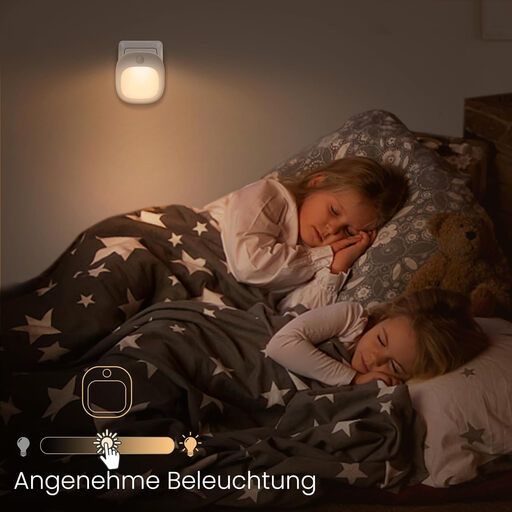
Why it suits this type of user: A compact set for anyone who wants to light two areas, such as a bedroom and landing, without wiring or drilling.
The product description states a sensor range of 3-5 metres, a sensor mode and a standard light mode. It also gives a usage time of up to 10 hours in sensor mode.
500mAh USB-rechargeable battery, three colour temperatures, five brightness levels and two lights in the set.
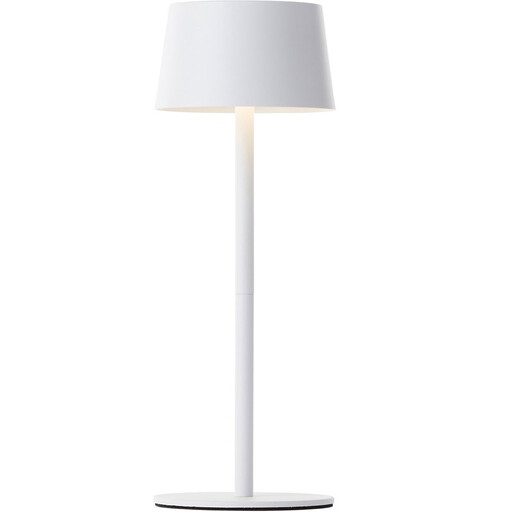
Why it suits this type of user: For anyone looking for a freestanding light for a balcony, patio or living room, and who values having several charging options.
The IP44 rating makes it clear that the lamp is splashproof, not waterproof. It isn’t designed to be submerged.
170 lumens, 3000K warm white light, three dimming settings and charging via both the solar panel and USB.

Why it suits this type of user: Its long, flat design is made for kitchen cupboards, wardrobes and shelves where you want even lighting.
The dimensions are clearly stated: 400 x 38 x 10 mm. This means you can check in advance whether the light will fit in the space available.
61 LEDs, PIR detection at 3-5 metres, three colour temperatures and a built-in 1100mAh battery. The set contains two lights.
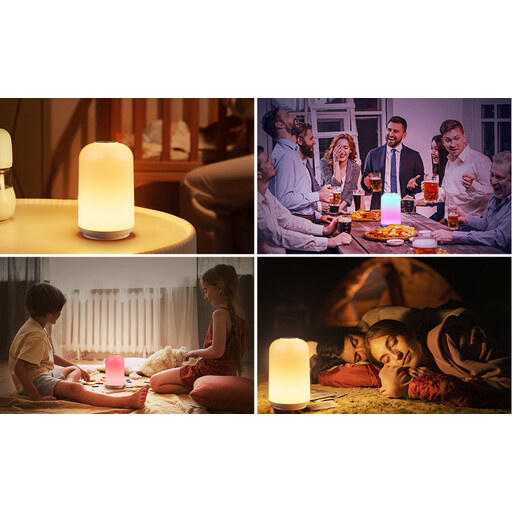
Why it suits this type of user: This compact light is for anyone who wants to use colour as well as white light to create an ambient feel in a bedroom or nursery.
The product details list separate warm white, RGB and off settings, as well as stepless dimming for warm white. This makes the light functions clearer than simply describing it as an RGB night light.
12 SMD LEDs, 40 lumens, warm white at 2600-2800K, seven RGB colours and a built-in USB-rechargeable battery.
We’ve put together a complete, up-to-date list of products that meet these strict selection criteria and the applicable European safety regulations.
Clean and dry the surface, check that it’s flat, then apply the adhesive strip according to the product instructions. Check the position and sensor range before removing the protective film for good. For a heavy light or a damp room, a different fixing method may be more suitable.
It varies depending on battery capacity, brightness and how often the light is activated. The product description for the 2-pack with a 500mAh battery states up to 10 hours in sensor mode. Treat this as a guide; actual daily use may vary. A light with 1100mAh has a higher battery capacity, but the manufacturer doesn’t state a set usage time for this model.
An LED light generally uses little power, but overall energy use depends on how often it’s charged and how long it’s used. According to the product details, the light with RGB function has a power rating of 1W. Charging via a laptop, USB charger or power bank is convenient, but always use a suitable USB power source and charge the light according to the safety instructions.
