
Vandaag of morgen in huis

Kwaliteit gegarandeerd

Welkomstaanbiedingen ontgrendelen: GRATIS bezorging | Tot 80% korting | Gratis 30 dagen JoyPlus-proefperiode
Download de app
A rechargeable LED night light sounds simple: pick a model, charge it and place it by the bed. In practice, lights vary widely in brightness, controls, battery and mounting. For a nursery, children’s room, hallway or cupboard, looks aren’t the only thing that matters. The wrong choice can mean light that’s too bright, frequent recharging, or a light that doesn’t respond properly in the spot you need it.
An RGB night light with multiple colours can be appealing, but colour variety isn’t always helpful during a night feed or when a child needs to drift back to sleep. Check whether the product also offers warm white light and whether the brightness is adjustable. Warm white light of around 2600 to 3200 kelvin is generally perceived as softer than cool white light.
An LED night light with a motion sensor is practical in a hallway, cupboard or bedroom. Even so, pay attention to the detection range and the light conditions. Some models only switch on when it’s dark enough. A sensor with a range of 3 to 5 metres can be fine in a small cupboard, but needs careful placement in a longer corridor.
Also note the difference between PIR motion detection and an ambient light sensor. PIR detects movement, and a light sensor determines whether the environment is dark. A model with both functions prevents the light from switching on unnecessarily during the day, but the exact behaviour depends on the settings and the space.
A stated runtime isn’t a fixed result for every situation. Actual duration depends on your chosen brightness, colour, sensor mode and the number of activations. A 1200mAh battery has more capacity on paper than a 500mAh one, but also look at charging and controls. A USB‑rechargeable light is handy if you already use a USB charger, laptop or power bank.
For a nursery night light, three things matter:
A dimmable night light with touch controls can be handy during a night feed. Do check that the controls aren’t too sensitive and that the light isn’t triggered accidentally.
Pay attention to battery capacity, USB voltage and the supplied accessories. Product information might, for example, state charging via 5 V and 1 A. Use a suitable USB power supply and follow the manufacturer’s warnings. Don’t leave a light on charge for long periods in a place where heat can build up.
An integrated battery makes placement flexible, but every rechargeable battery has a limited lifespan. If you don’t fancy charging often, pick a sensor model that only lights up when movement is detected.
For a slim cabinet light, dimensions are decisive. A light 300 or 400 millimetres long and 10 millimetres thick fits under many kitchen cabinets without taking up much space. Check in advance whether the adhesive strip suits the surface and whether the light sticks firmly.
Silicone models feel soft, but that doesn’t mean they can be submerged in water. According to the product information for the VIVREAL model, the light is intended for indoor use and should be kept away from high temperatures, flames and water. So don’t use a non‑waterproof light as bathroom lighting.
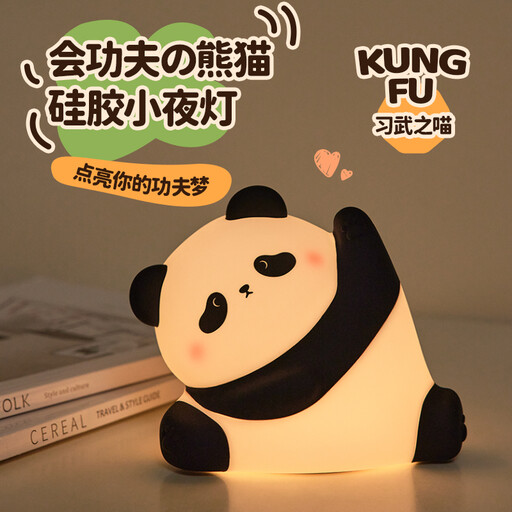
Why this fits the profile: This compact panda night light has a soft silicone housing, touch controls and three dim levels. It’s intended for the nursery, children’s bedroom or as a bedside light.
The three light levels mean you don’t end up with an on‑off lamp only. The 1200mAh battery and USB charging reduce the need for disposable batteries.
1200mAh rechargeable battery; touch controls; silicone housing per the product description. For indoor use and keep away from water.
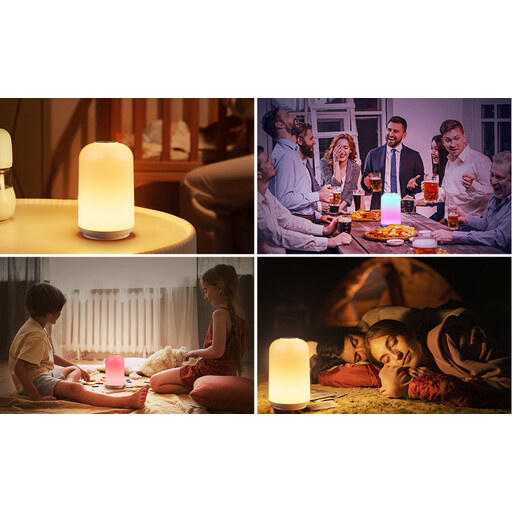
Why this fits the profile: Ideal if you want one light to use as mood lighting in the bedroom or as children’s room lighting. The model combines warm white light with seven RGB colours.
The stated 40 lumens, stepless dimming for warm white and separate RGB modes make the light choice clearer than a simple colour button without adjustable brightness.
2600–2800K warm white; seven RGB colours; 13 × 8 × 8 cm; built‑in battery and charging via 5V‑1A USB.

Why this fits the profile: This set is designed for kitchen cabinets, wardrobes, shelves and dark passageways. The slim form and two lights offer more placement options.
According to the product information, the PIR sensor has a range of 3–5 metres. You won’t have to hunt for a button, while three colour temperatures suit both task and mood lighting.
Set of two; 400 × 38 × 10 mm per light; 61 LEDs; 1100mAh battery; drill‑free installation with adhesive strip.
We’ve compiled a complete, up-to-date list of products that fully meet these strict selection criteria and current European safety requirements.
Place a rechargeable LED night light on a stable, dry surface and keep charging cables out of reach of young children. For a sensor light, a spot near the floor, a cupboard door or the bed is often more logical than behind an object. Test detection before fixing the adhesive strip permanently.
A decorative choice, such as the Paladone Darth Vader Lightsaber Wall Lamp, is better suited to a playroom or the bedroom of a Star Wars fan than a baby’s cot. This battery‑powered model is intended for wall mounting; check the included fixings in advance and allow for the required batteries.
Don’t use lights without a specified moisture rating in a damp bathroom. For the kitchen, a slim cabinet light is suitable provided it doesn’t come into direct contact with water or steam. Clean the housing according to the product instructions, usually with a soft, dry or slightly damp cloth and without abrasive agents.
That depends on power consumption, usage time and the lifespan of the built‑in battery. A USB‑rechargeable light does mean you won’t have to replace disposable batteries regularly. Models with a motion sensor also only light up when movement is detected.
There’s no fixed runtime for every household. Brightness, colour mode, number of activations and sensor mode affect the result. The product information for some models, for example, mentions up to 10 hours in sensor mode. Treat this as a product specification under certain conditions, not a guarantee for every usage situation.
Put it in a stable spot where the sensor isn’t covered. For a cupboard, the inside or underside of a shelf works well; for a hallway, mounting at eye or hip height is often practical. Keep the detection range in mind and avoid direct contact with water, heat sources and loose cables.
