
Vandaag of morgen in huis

Kwaliteit gegarandeerd

Welkomstaanbiedingen ontgrendelen: GRATIS bezorging | Tot 80% korting | Gratis 30 dagen JoyPlus-proefperiode
Download de app
A rechargeable LED night light may seem like a simple product, but small differences determine whether you enjoy using it every day. Parents may want a soft light for night-time feeds, while adults are often looking for a cordless lamp for the bedroom, hallway or cupboard.
The biggest buying mistakes usually come down to three pitfalls:
For a bedroom or baby’s room, a dimmable night light is often more practical than a lamp with just one light setting. This allows you to choose a soft setting while sleeping and a brighter one when you need to find something.
Also pay attention to the colour temperature:
A lumen rating helps you compare models. A 30-lumen lamp creates a different effect from a 400-lumen model. More light is particularly useful for a cupboard, staircase or workspace; for a bedroom night light, a low setting is often sufficient.
Check whether the lamp has a built-in rechargeable battery and how it is charged. A USB-rechargeable lamp will often work with a USB cable connected to an adaptor, laptop or power bank. Always check the stated charging voltage, such as 5V, and use a compatible charger.
Battery capacity is usually stated in mAh. A higher capacity may provide longer run time, but actual usage time also depends on the brightness and selected function. With a model featuring a motion sensor, it is also important to check whether the sensor only responds in the dark.
In terms of energy consumption, a 1-watt lamp theoretically uses 1 kWh after 1,000 hours of operation. With a rechargeable lamp, electricity consumption also depends on charging losses. The cost per charge is generally modest, but the exact price depends on your energy tariff.
A night light for a baby’s room must stand securely and should not be placed within a baby’s reach in the cot. For some models, the product information recommends adult supervision. A soft silicone casing can feel pleasant to hold, but keep the lamp away from heat, flames and water.
Also consider:
An IP44 rating means protection against splashing water, not immersion or direct jets of water. Do not automatically use an ordinary bedroom lamp in the bathroom.
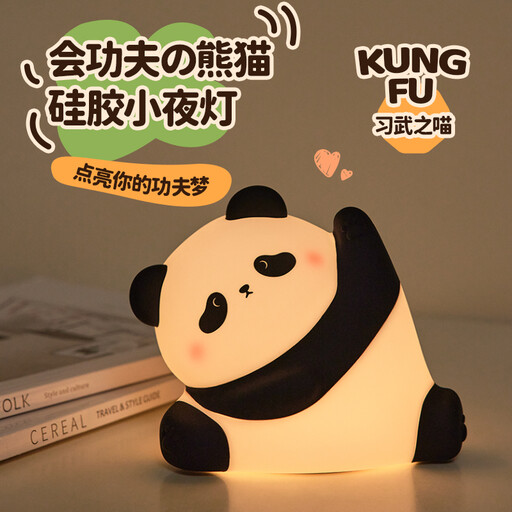
Why it suits this profile: The compact panda shape and simple touch controls are ideal for parents looking for an easy-to-use children’s night light for a baby’s room or toddler’s room.
According to the product description, the lamp has three dimming levels and a 1200mAh rechargeable battery. This means you are not limited to a model with just one brightness setting or disposable batteries.
According to the product specifications: food-grade silicone casing, three dimming levels, touch controls and USB charging.
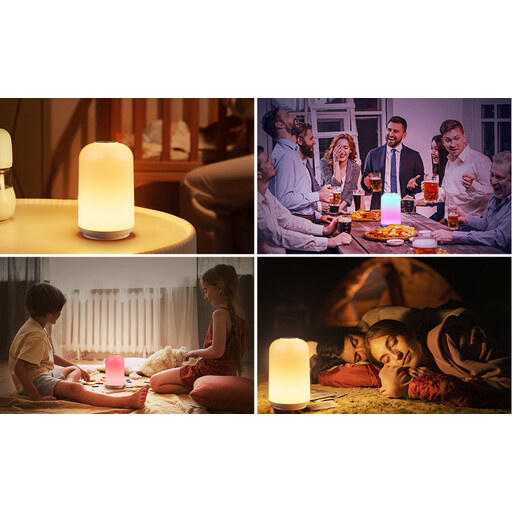
Why it suits this profile: Ideal for anyone wanting one cordless lamp to use as a night light, ambient light or colour accent in a child’s room.
The product information states that it offers stepless dimming in warm white as well as seven RGB colours. You are therefore not restricted to one fixed atmosphere or brightness level.
According to the product specifications: warm white at 2600–2800K, seven RGB colours, 40 lumens, USB charging and a built-in rechargeable battery.

Why it suits this profile: A practical choice for a hallway, staircase, cupboard or baby’s room where the light needs to switch on automatically when movement is detected.
According to the product description, the PIR sensor works in low light and detects movement at a distance of 3–5 metres. This prevents the lamp from activating unnecessarily during the day.
According to the product specifications: two lamps, five brightness levels, three colour temperatures, USB charging and up to 10 hours of use in sensor mode.
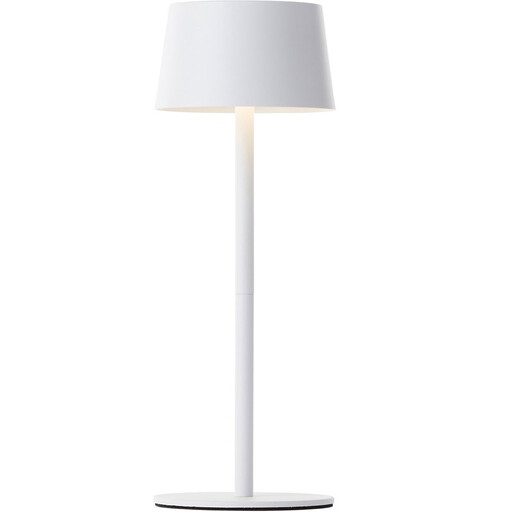
Why it suits this profile: This cordless table lamp is suitable for adults looking for a light for the balcony, patio, living room or bathroom.
According to the product information, the lamp has three dimming levels and can be charged via USB or solar power. The IP44 rating is intended for splashing water, not immersion.
According to the product specifications: 170 lumens, warm white light at 3000K, three dimming levels, USB and solar charging, and IP44.
We have put together a complete, up-to-date list of products that fully meet these strict selection criteria and the applicable European safety regulations.
This depends on the battery capacity, brightness and operating mode. Check the stated capacity in mAh and look for a specific run time. A sensor mode usually only uses energy when the lamp is activated, but the manufacturer’s information remains the most reliable guide.
It can be, provided the lamp stands securely, is not placed in the cot and remains out of the baby’s reach. Ideally, choose a low light setting and check the safety warnings for the specific model. A soft casing does not mean that the lamp is intended to be used as a toy.
A 1-watt lamp theoretically uses 1 kWh per 1,000 hours of operation. The final cost depends on charging losses and your electricity tariff. With a rechargeable LED lamp, charging correctly is particularly important: use the recommended USB voltage and disconnect the cable when required by the product instructions.
