
Vandaag of morgen in huis

Kwaliteit gegarandeerd

Welkomstaanbiedingen ontgrendelen: GRATIS bezorging | Tot 80% korting | Gratis 30 dagen JoyPlus-proefperiode
Download de app
A rechargeable LED night light is handy beside your bed, in a nursery, in the hallway or inside a kitchen cupboard. You don’t need a socket right next to the light, and you can move it whenever you need to. However, many models look similar, even though they can differ considerably in how they work, their battery, brightness and installation.
If you only look at the appearance or a low price, you could run into a few practical problems. So, before you buy, pay particular attention to the following points.
A motion sensor night light can switch on automatically, but the detection range and light conditions vary from model to model. Some sensors only respond when it’s dark enough. Others switch on during the day too, which can drain the battery more quickly.
So, check:
A dimmable night light may have two or three fixed brightness settings. That’s different from continuous dimming. For a nursery or bedroom, a low warm-white setting may be more comfortable than a bright white light. For a cupboard, hallway or kitchen, more light is often more useful.
So, don’t just look for the word dimmable. Check the number of settings, the colour temperature and the light output in lumens.
A USB-rechargeable light works without a fixed power connection, but its run time depends on the battery capacity, brightness and sensor settings. A compact light with a 500 mAh battery will generally have a different run time from a model with 1,200 or 2,000 mAh.
Also check whether a USB cable is included, what charging power is required and whether the LED light source can be replaced. With integrated LED lighting, the light source usually can’t be replaced separately.
For everyday use, battery capacity and charging method matter more than simply seeing the word ‘rechargeable’. A USB-rechargeable light can usually be charged using a laptop, power bank or USB adapter. However, check the stated voltage and current, such as 5 V and 1 A.
A battery of:
The stated run time still depends on the brightness setting you choose. Treat the manufacturer’s figure as a guide, not a guarantee for every situation.
Colour temperature is measured in kelvins:
A light with 30 lumens is suitable for orientation or ambient lighting, but not as a replacement for a full-size ceiling light. For a desk or table, 160 to 210 lumens may be more practical. Also consider where you’ll place it: a light with a narrow beam works differently from a model that spreads light in all directions.
Measure the space where you plan to put the light. For example, a slim light measuring 300 × 38 × 10 mm may fit inside a narrow cupboard, while a compact LED table lamp will need space on a bedside table.
There are three common installation options:
For use in a child’s room, consider stability, small parts and cables. The product information for the panda model states that it’s for indoor use, should be protected from high temperatures, and that young children should be supervised by an adult. A light with an IP20 rating is only intended for dry indoor spaces.
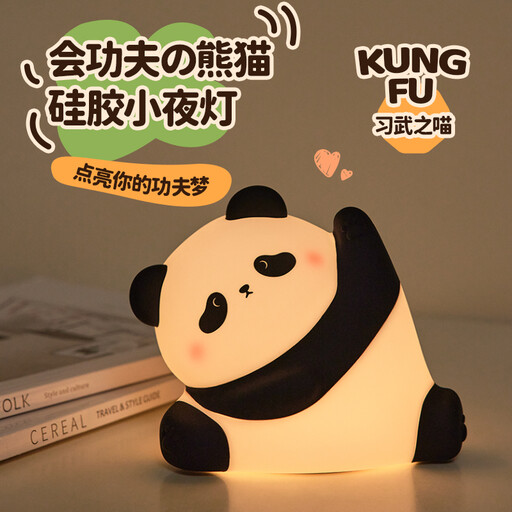
Why it suits this profile: This soft panda design combines simple touch controls with three light settings. It’s an easy-to-use choice for a bedside table, nursery or child’s bedroom.
The specifications list a rechargeable 1,200 mAh battery and three dimming settings. That means you won’t need disposable batteries or have to rely on unspecified controls.
USB rechargeable, touch controls, three light settings and a silicone casing, according to the product description.
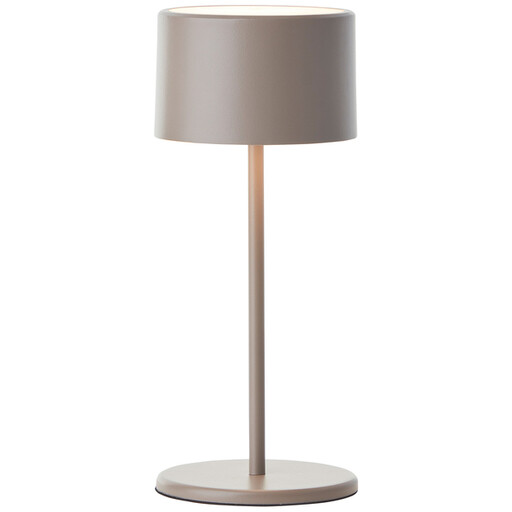
Why it suits this profile: Its metal and plastic construction, compact size and warm light make it a good fit for a permanent spot on a sideboard, desk or bedside table.
The product details specify 210 lumens, 3,000 K, 2 W and three touch settings. This makes it easy to compare the light using verifiable specifications.
210 lumens, warm white light, three dimming settings and an integrated rechargeable battery.

Why it suits this profile: This model is designed for kitchen cupboards, wardrobes, shelves and dark passageways where automatic lighting is useful.
The specifications list PIR detection from 3 to 5 metres, three colour temperatures and a USB-rechargeable battery. The product description also says that no drilling is required.
41 LEDs, three colour temperatures, two lights in the set and a slim 300 × 38 × 10 mm design.
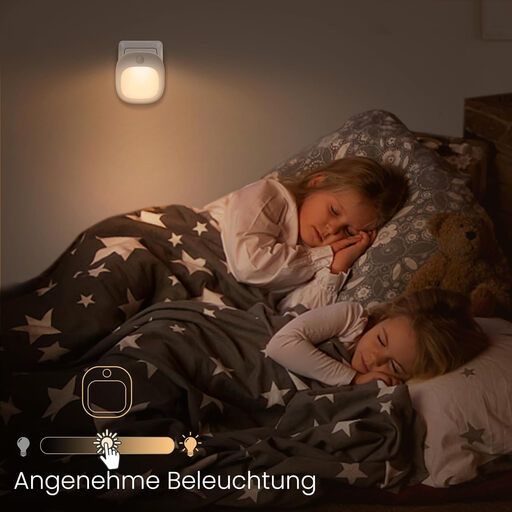
Why it suits this profile: With a sensor mode, a standard mode, five brightness levels and three colour temperatures, this set can be used in places such as a hallway, bedroom or nursery.
The listing gives a battery capacity of 500 mAh, a sensor range of 3 to 5 metres and up to 10 hours of use in sensor mode. This gives you a clearer idea of what to expect than a vague claim about long battery life.
Five dimming levels, three colour temperatures, motion detection and USB charging.
We’ve put together a complete, up-to-date list of products that meet these strict selection criteria and the applicable European safety requirements.
It depends on the battery capacity, brightness and mode of use. Sensor mode often uses less power than continuous lighting. Check the stated run time and charge the light according to the manufacturer’s instructions.
It can be, as long as the model is intended for indoor use and is placed safely out of a child’s reach. Keep loose cables away, and avoid water and high temperatures. Young children need to be supervised by an adult. Ideally, choose a low, warm light setting and always check the safety information on the product page.
LED lights generally use little power. The exact cost depends on the wattage, how often you charge it and your local electricity tariff. For example, a 2 W light uses less energy per hour than a higher-wattage model. For a more precise comparison, check the stated wattage and energy consumption per 1,000 hours.
