
Vandaag of morgen in huis

Kwaliteit gegarandeerd

Welkomstaanbiedingen ontgrendelen: GRATIS bezorging | Tot 80% korting | Gratis 30 dagen JoyPlus-proefperiode
Download de app
A rechargeable LED motion sensor light is handy for kitchen cupboards, wardrobes, hallways and bedrooms. It switches on automatically when you come close and doesn’t need to be connected to a mains power supply. However, not every model is suitable for every space.
Marketing often focuses on the number of LEDs, a large battery or “long battery life”. In practice, the mounting method, sensor settings and light output are what determine how well a light works. Keep these points in mind to avoid choosing the wrong one.
A light might look slim in a product photo but still be too long or too wide for a kitchen cupboard. Measure the available space first. Check not only the length but also the height of the light and where the motion sensor needs to point.
A 40 cm model can provide enough light beneath a wide shelf, while a 30 cm light may be more practical for a narrow cupboard or bedside table.
A battery capacity given in mAh indicates how much electrical charge the battery can store. It doesn’t tell you exactly how long the light will last. Battery life also depends on the brightness, the selected light colour, how often the sensor is triggered and whether the light stays on continuously.
Check whether the product information gives a specific battery life. Some models only list the battery capacity. In that case, it’s best not to expect a set amount of time before recharging.
A PIR sensor responds to changes in infrared radiation, usually from a moving person. The stated detection range, for example 3 to 5 metres, doesn’t guarantee that the light will respond just as quickly from every angle. A cupboard door, shelf or other obstacle can limit the range.
Also check the operating mode. Some lights switch on automatically only in the dark, while others also have a continuous-light setting.
For kitchen lighting without drilling, a self-adhesive fitting is practical. Check first that the surface is clean, dry and flat. Tape may not stick as well to a dusty, porous or damp surface. Also avoid placing a light above a hob or somewhere regularly exposed to steam and splashes, unless the manufacturer specifies suitable protection.
A slim LED cupboard light measuring around 10 mm thick will usually fit beneath a shelf or inside a wardrobe. Check whether the supplied mounting materials are suitable for your surface.
Colour temperature is measured in kelvin:
A light with 3 colour temperatures gives you more choice than a model with one fixed colour. With a dimmable LED light, you can also adjust the brightness. This is useful in a bedroom or nursery, where bright light isn’t always welcome.
A USB-rechargeable light can be charged using a laptop, power bank or suitable USB adapter. Check the charging voltage and current in the product information. Use only a compatible charger and don’t charge the light in a damp environment.
A 2-pack of LED lights can be handy if you want to light two cupboard shelves, a cupboard and hallway, or several bedrooms. Check whether the lights need to be operated and charged separately.

Why it suits this buyer: At 30 cm long, it’s suitable for smaller cupboards, shelves and bedside tables. The set includes two lights for use in different areas of your home.
Its compact size makes it easier to check the measurements beforehand. The battery is USB-rechargeable, so there’s no need for a fixed mains connection.
41 LEDs, PIR detection with a stated range of 3–5 metres, a 1,100 mAh battery and three colour temperatures.
Why it suits this buyer: This model is a good fit for wide kitchen cupboards or wardrobes where you want to illuminate a larger area.
The dimensions are clearly specified: 400 × 38 × 10 mm. This lets you check whether the light will fit beneath a shelf before ordering.
61 LEDs, a built-in 1,100 mAh battery, USB charging, and white, daylight or warm light.
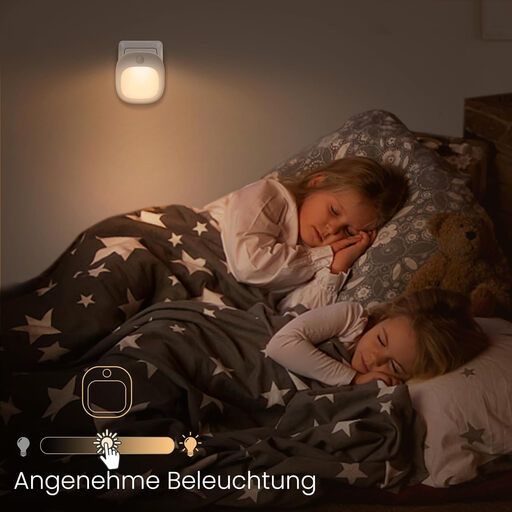
Why it suits this buyer: The combination of sensor mode, continuous-light mode and five brightness levels makes it practical for hallways, bedrooms and nurseries.
The product information states a battery life of up to 10 hours in sensor mode. That gives you a clearer idea of what to expect than the battery capacity alone.
500 mAh USB-rechargeable battery, three colour temperatures, five dimming levels and a stated sensor range of 3–5 metres.

Why it suits this buyer: This light is designed for a table, sideboard or desk and doesn’t need to be wall-mounted. That makes it a good choice for wireless ambient lighting.
There’s no need to attach the light with tape or screws. Place it on a stable, flat surface and bear in mind that its IP20 rating is for dry indoor use.
210 lumens, warm 3,000 K light, an integrated battery and a three-level dimmer.
We’ve put together a complete, up-to-date list of products that meet these strict selection criteria and the applicable European safety regulations.
Position the light so that the sensor isn’t directly blocked by a cupboard door or decorations. Once it’s fitted, check that it switches on from the spot where you need it. Clean the casing with a soft, dry cloth and avoid abrasive cleaning products and excessive moisture.
An LED sensor night light works best when its automatic mode activates only in low light. For a work surface or pantry, a continuous-light setting may be more useful. Always follow the safety instructions for a lithium battery, and don’t open the light.
Clean and dry the surface, attach the light using the supplied adhesive and check that it’s firmly in place. Keep the sensor unobstructed and test its range before settling on a final position.
It varies by model and how you use it. Brightness, the number of movements detected and the selected operating mode all affect battery life. Check both the battery capacity and any stated runtime, such as “up to 10 hours in sensor mode”.
A motion sensor light generally uses energy only while it’s on and switches off automatically in sensor mode. Actual power consumption depends on the brightness, the number of activations and how often the battery needs recharging.
