
Vandaag of morgen in huis

Kwaliteit gegarandeerd

Welkomstaanbiedingen ontgrendelen: GRATIS bezorging | Tot 80% korting | Gratis 30 dagen JoyPlus-proefperiode
Download de app
A rechargeable LED light with a motion sensor is handy in a kitchen cupboard, wardrobe, hallway, toilet or bedroom. You won’t need to run a cable to a socket, and the light can switch on automatically when you come nearby. However, wireless lights vary considerably in sensor range, installation, brightness and battery life.
If you focus only on a low price or a high number of LEDs, you may run into practical problems. For example, the light may not stay on long enough, the adhesive strip may come loose or the light may be too bright for a bedroom. Use the following checks to make a more informed choice.
A PIR sensor typically responds to movement and temperature differences within its detection area. According to the product information for the 30 cm cabinet light, its detection range is approximately 3 to 5 metres. That’s useful for a cupboard or hallway, but it won’t necessarily suit every room.
So check:
A shorter on-time is often enough for a wardrobe. In a dark hallway, a light that switches off quickly may be less practical.
A wireless cabinet light may run on disposable batteries, a built-in lithium battery or a USB connection. So always check which power source it uses. A USB-rechargeable light is handy if you already use a USB charger, laptop or power bank. With a model that takes replaceable batteries, you’ll need to factor in the ongoing cost and the need to change them.
Also check whether the battery capacity is stated. According to the product specifications, the 30 cm light has a built-in 1100 mAh battery and charges via DC 5V at 0.5 A. Its exact run time depends on the brightness, how often it switches on and the battery’s charge level.
A light with three colour temperatures gives you more choice, but colour temperature and brightness are two different things. 6500K–7000K looks cool and bright, while 2800K–3200K feels warmer and more relaxing. Neutral or cool light can be pleasant over a worktop, while warm light is often a better fit for a bedroom.
Also check whether the light is dimmable. A dimmable LED light with several settings gives you more control than a product that only lets you switch between colour temperatures.
Measure the space where you plan to fit the light before ordering. A slim light measuring 300 × 38 × 10 mm, for example, will fit inside a narrow cupboard or underneath a shelf. Also check the surface: an adhesive strip won’t stick to every dusty, damp or very rough wall.
Kitchen lighting without drilling is particularly useful in rented homes. Make sure the surface is free of grease and dust, and don’t install the light above a hob or somewhere that gets a lot of steam unless the manufacturer explicitly says it’s suitable.
The number of LEDs doesn’t tell you everything about how much usable light a product gives off. If the information is available, check the lumens, wattage and light distribution. For example, the Aigostar clip-on lamp is listed as having 160 lumens, 2.5 W and a 120° beam angle. This makes it easier to judge whether it’s intended for reading, task lighting or as an additional ambient light.
One compact light may not be enough for a large kitchen or a deep cupboard. A set of two may be more practical, especially if you want to light several shelves or spaces.
Check the material, charging voltage and protection rating. A light rated IP20 is intended for dry indoor spaces and must not come into direct contact with water. Keep USB ports and batteries away from moisture. Only use a compatible USB power supply, and don’t try to open a built-in battery yourself.
The fixing method is also important for wall-mounted lights. A light supplied with an adhesive strip is quick to install, but check that the casing stays firmly in place after fitting. Screw mounting may be more suitable for a heavier model.

Why it suits this type of user: This is a practical starting point if you want to light a kitchen, wardrobe or hallway without drilling. The set includes two lights and offers three colour temperatures.
The specifications state a PIR range of 3–5 metres, a USB-rechargeable 1100 mAh battery and a slim 10 mm casing. This lets you compare the sensor, power source and space required before buying.
41 LEDs, three colour temperatures, USB charging and two lights per set. According to the product information, it can be installed using an adhesive strip.
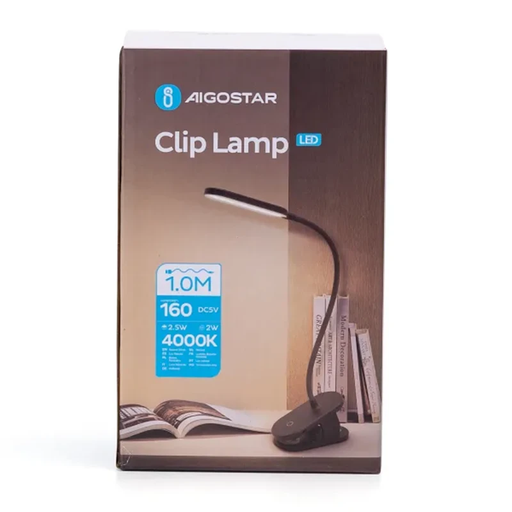
Why it suits this type of user: The adjustable clip works well on a desk, shelf or bed frame. This model is a good choice when focused lighting matters more than automatic motion detection.
The product specifications list 160 lumens, three light settings, a 1200 mAh battery and an adjustable base. So you can choose based on practical details rather than appearance alone.
Clip-on fitting, 4000K natural white light, 2.5 W power and a stated beam angle of 120°.
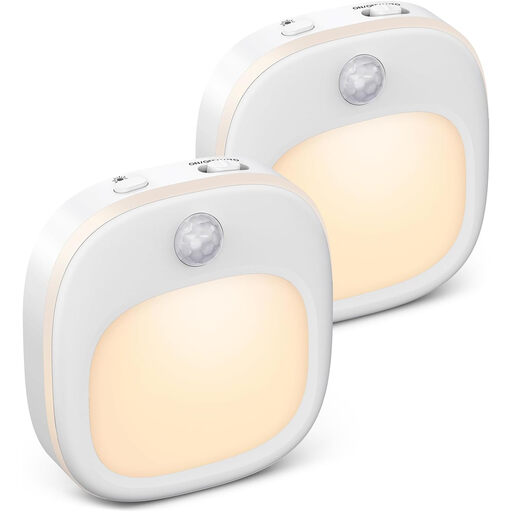
Why it suits this type of user: A set of two is a good fit for a hallway, toilet or bedroom where you want automatic lighting in several places without a fixed connection.
The product title lists motion detection, five dimming settings and three colour temperatures. Before buying, check which batteries it needs and where you plan to install it.
Two lights, five dimming levels, three light colours and a power rating of 1 W according to the stated product specifications.
A battery-powered LED wall light is suited to a fixed spot on the wall, while a clip-on or table lamp is easier to move around. For ambient lighting, the Paladone Darth Vader Lightsaber Wall Lamp could be an interesting choice for a child’s bedroom, playroom or Star Wars collection. This model runs on batteries and is designed as a decorative wall light; no motion sensor is listed.
A table lamp with touch controls, such as the Brilliant Helio, makes more sense for a desk or bedside table. According to the product specifications, this lamp has a warm colour temperature of 3000K, 210 lumens and a three-setting dimmer. It’s designed for a different purpose from automatic cupboard lighting.
We’ve put together a complete, up-to-date list of products that meet these strict selection criteria and the applicable European safety requirements.
Clean and dry the surface, fully charge the light first and check the sensor’s position. Place the light so that you enter the cupboard or passageway within the stated detection range. Don’t use adhesive mounting on damp or loose surfaces.
It depends on the battery capacity, brightness, sensor settings and how often the light switches on. A higher mAh rating gives you an indication of capacity, but not a fixed run time. So also compare the charging method and check whether the light can be used while it’s charging.
A light that only comes on when it detects movement may use power for less time than one that stays on continuously. Actual consumption depends on the wattage, brightness and how often the sensor is triggered. If in doubt, check the stated power rating and battery capacity rather than relying on the term “energy-efficient”.
