
Vandaag of morgen in huis

Kwaliteit gegarandeerd

Welkomstaanbiedingen ontgrendelen: GRATIS bezorging | Tot 80% korting | Gratis 30 dagen JoyPlus-proefperiode
Download de app
A rechargeable LED light is handy in a kitchen cupboard, bedroom, nursery, caravan or on a film set. You don’t need a fixed power socket, and you can move the light whenever it suits you. However, these lights vary considerably in sensor range, colour temperature, battery capacity and charging options.
Marketing copy often highlights “long battery life” or “bright light”, but without specific details, that doesn’t tell you much. Before you buy, pay particular attention to the following pitfalls.
A battery rated at 1100 mAh, for example, sounds generous, but battery life also depends on brightness, sensor mode and how often the light is activated. A light running continuously at maximum brightness uses more power than the same model in a short sensor mode.
Check whether the product description provides information about:
A wireless light still needs regular charging. Not every light is suitable for damp rooms or outdoor use, either. Many models have an ABS and metal casing, but that doesn’t mean they’re waterproof.
For a bathroom, shed or covered outdoor area, check explicitly whether an IP rating is listed. If no such information is provided, it’s best to use the light indoors and keep it away from water.
An LED light with a motion sensor typically responds to movement within a certain range. For the models in this selection, that range is around 3 to 5 metres. Positioning, the direction the sensor faces and the amount of ambient light all affect how it works.
A sensor light is especially practical for short periods, such as when opening a kitchen cupboard or walking along a hallway at night. For reading or working, a light with a fixed setting and dimming function is often more suitable.
Colour temperature is measured in Kelvin:
A light with several settings is more versatile than a model with just one colour temperature. For a nursery night light, a warm, low setting is usually more practical than a bright, cool white light. Position the light so it doesn’t shine directly into anyone’s eyes.
Don’t just look at the number of LEDs. The number of diodes doesn’t directly tell you how much light the lamp produces. Where available, check the luminous flux in lumens. A cupboard or bedside table needs only a little light; for photography or video, adjustable brightness and colour rendering are more important.
A dimmable LED light can suit a range of situations. For photography, also check the CRI value, as this indicates how naturally colours are rendered. A camera LED light or RGB video light is a different type of product from cupboard lighting: these lights are designed for image production, not general home lighting.
Measure the space where you want to put the light before ordering. A slim 10 mm model, for example, will fit under a shelf or in a narrow cupboard, while a larger video light needs more room.
Also consider how it’s installed:

Why it suits this buyer: The set contains two compact lights for kitchen cupboards, shelves or a wardrobe. With three colour temperatures to choose from, you can opt for cool, neutral or warm light.
The product information gives specific dimensions of 300 × 38 × 10 mm, a 1100mAh battery and a PIR range of 3–5 metres. This makes it easier to assess the fit and charging requirements in advance.
Two lights per set, USB charging, three colour temperatures and adhesive-strip mounting with no drilling required.
Why it suits this buyer: At 40 cm long, it’s suitable for wider kitchen cupboards, wardrobes and shelves where a shorter light would illuminate less surface area.
The specifications list the 61 LEDs, a sensor range of 3–5 metres and three colour temperatures. The light is also just 10 mm thick, so you can check in advance whether it will fit.
61 LEDs, a 1100mAh USB-rechargeable battery, automatic switching on and off, and two lights in one set.
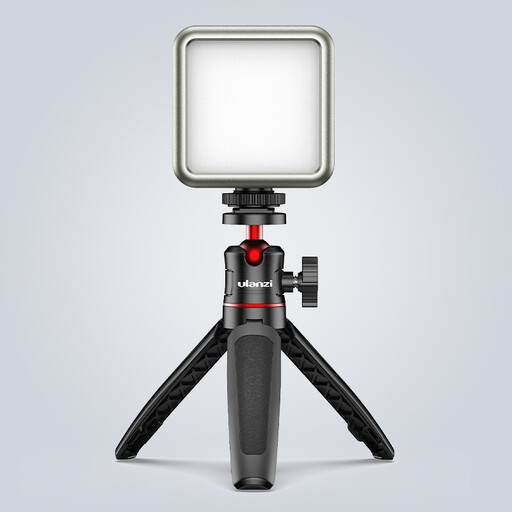
Why it suits this buyer: For video creators, vloggers and product photographers, a portable camera LED light with adjustable colour is more practical than an ordinary cupboard light.
The product information lists a range of 2500K–9500K, dimmable operation and a built-in 2000mAh battery. Be sure to check the charging and safety instructions before use.
RGB video light, colour temperature of 2500K–9500K, dimming function, magnetic back and USB-rechargeable battery.
We’ve put together a complete, up-to-date list of products that meet these strict selection criteria and the applicable European safety regulations.
The operating time per charge depends on battery capacity, brightness and operating mode. A sensor light that switches on only briefly may last longer than one that stays on continuously. Always check the conditions under which the stated operating time was measured.
A USB-rechargeable light can be used in a nursery when positioned according to the product instructions. Keep it away from water and heat, and out of a child’s reach. Choose a warm, low setting and don’t point the light directly at the face. The light is not a substitute for adult supervision.
LEDs are generally known for their efficient light output, but actual power consumption varies by model and brightness setting. With a rechargeable light, you’re also mainly paying to charge the battery. So compare the wattage, operating time and brightness you need rather than just the number of LEDs.
