
Vandaag of morgen in huis

Kwaliteit gegarandeerd

Welkomstaanbiedingen ontgrendelen: GRATIS bezorging | Tot 80% korting | Gratis 30 dagen JoyPlus-proefperiode
Download de app
A rechargeable LED lamp can be handy in places without a plug socket: beside the bed, in a wardrobe, on a balcony or as mood lighting in the living room. Yet not every cordless lamp proves equally suitable in practice. A short product title, for example, doesn't always tell you how long the lamp will work, how to charge it or what the casing is designed for.
So before you buy, watch out for three common pitfalls:
A USB rechargeable lamp is practical if you don't want to keep buying loose batteries. Check the battery capacity in mAh, the charging voltage and the charging method. A model with 500 mAh is compact, while a 1100 mAh battery offers more capacity. The actual runtime also depends on the brightness and the sensor mode selected.
A battery-powered lamp can be handy when you want to use it straight away or don't have a charging point nearby. In that case, pay attention to the type of battery required and the expected replacement costs. For decorative lighting, such as a string of lights, batteries are often a simple solution for temporary use.
The number of lumens, shown as lm, gives an indication of the amount of light. An LED night light usually needs less light than cupboard lighting or a lamp to illuminate a worktop. Also look at the colour temperature:
A dimmable LED lamp offers more flexibility. Check whether the dimming function is stepless or has only a few settings. With RGB mood lighting, it's often more about colour choice and atmosphere than functional illumination.
Measure the available space before you order. For a narrow kitchen cupboard, an ultra-thin lamp of 30 or 40 cm may fit better than a table lamp. When mounting with adhesive tape, make sure the surface is clean and dry, and check that the lamp stays firmly in place.
For outdoor use, the IP rating is important. IP44 means protection against solid objects larger than 1 mm and against splashing water. So use such a lamp on a sheltered balcony, patio or in the garden, but not in a pond, under a sprinkler or in a place where water can pool. A lamp with IP20, like some indoor models, belongs only in dry rooms.
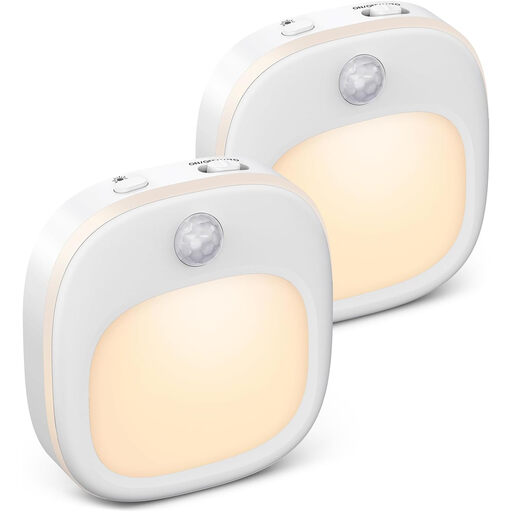
Why this fits the profile: A set of two lamps is practical for, say, a hallway and toilet. The motion sensor ensures automatic activation without you having to fumble for a switch.
The product title states battery power and motion detection. So you won't confuse this model with a USB rechargeable lamp; just bear in mind that batteries will need replacing.
2-pack; motion detection; five dimming levels and three colour temperatures according to the product information.
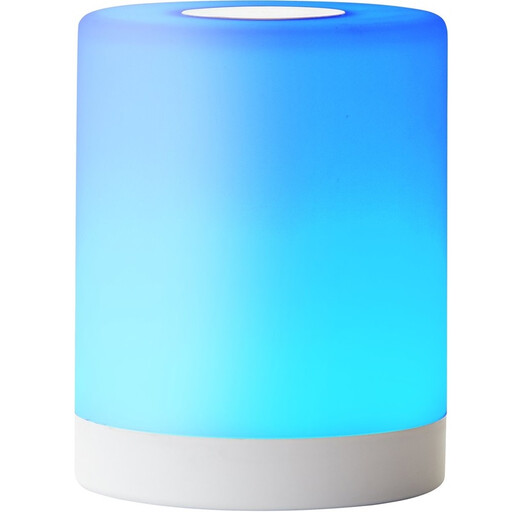
Why this fits the profile: This freestanding lamp is ideal if you're looking for a cordless table lamp for indoors and a sheltered spot outdoors, such as a balcony or patio.
The specifications mention a built-in rechargeable battery, USB-A connection, touch dimmer and IP44. So the power supply, controls and splash-water limitation are clearly described.
140 lumens; 3000 K; RGB function; integrated dimmer; IP44 splash-water protection.

Why this fits the profile: This model is designed for kitchen cupboards, wardrobes and other long, narrow surfaces where manual switching is inconvenient.
The length of 40 cm, the PIR range of 3–5 metres and the included adhesive mounting are all stated in the specifications. Measure your cupboard first to ensure a good fit.
2-pack; 61 LED lamps per light; 1100 mAh battery; three colour temperatures; USB charging.
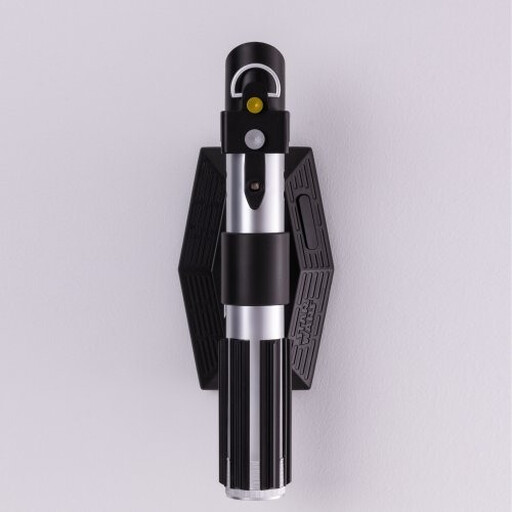
Why this fits the profile: A Star Wars lamp is a decorative choice for a child's bedroom, gaming room or entertainment space where appearance matters more than general task lighting.
The product information clearly states wall mounting, battery power and dimensions of 28 × 9.1 cm. So there's no need to plan for a plug socket next to the wall.
Wall lamp in lightsaber shape; LED light source; fixing materials included according to the product description; runs on batteries.
We've put together a full, up-to-date list of products that fully meet these strict selection criteria and comply with current European safety regulations.
That depends on the battery capacity, brightness setting and sensor function. A lamp with a larger battery can run for longer, but the product information doesn't always state a fixed runtime. So look at the mAh, charging voltage and any specified runtime.
Yes, that's what compact cupboard lamps with a PIR sensor are designed for. Check the detection range, light threshold and mounting method. A lamp with an adhesive strip is handy in a rented property, but the surface must be clean and sturdy enough.
LED lamps generally have a low stated wattage. A lamp of 1 or 2 W uses less electricity when left on for long periods than many traditional light sources. With battery-powered models, you also need to factor in the cost and lifespan of the batteries. So the most cost-effective choice depends on how often and for how long you use the lamp.
