
Vandaag of morgen in huis

Kwaliteit gegarandeerd

Welkomstaanbiedingen ontgrendelen: GRATIS bezorging | Tot 80% korting | Gratis 30 dagen JoyPlus-proefperiode
Download de app
A rechargeable LED lamp is handy when you don’t want to run a cable or need to move a light around. Think of a dark kitchen cupboard, bedside table, balcony, patio or campsite. However, not every wireless LED lamp is equally practical. A high light output on the packaging, for example, tells you little about battery life, how the lamp charges or where it’s safe to use.
Keep an eye out for these three common pitfalls:
Light output is usually measured in lumens (lm). A compact lamp with 160 to 210 lumens could work well as an LED table lamp, reading light or mood light. For a deep cupboard or worktop, a broader spread of light may be more useful than a high lumen rating alone.
Also check the colour temperature in Kelvin (K):
A model with several settings, such as a dimmable lamp or one with three colour temperatures, offers more flexibility. Check whether you control the settings with a button, touch control or sensor.
A USB-rechargeable lamp usually has a built-in lithium battery. Capacities such as 1,100 mAh, 1,200 mAh or 2,000 mAh give you an indication of how much energy it stores, but don’t compare products on this figure alone. A lamp running continuously at maximum brightness uses more energy than one on a low dimmer setting or with automatic shut-off.
Check:
A built-in battery makes a lamp portable, but it also means you’ll need to recharge it regularly. If you need longer use away from a socket, a solar table lamp could be a good option, provided it gets enough direct daylight.
An LED cupboard light with an adhesive strip is quick to install, but check the surface and fixing method first. Dust, moisture or an uneven surface can weaken the adhesive. For a lamp with a motion sensor, the detection range and mounting height are important. For example, the 40 cm cupboard lights in the selection below specify a PIR range of 3 to 5 metres.
For outdoor use, check the IP rating. IP44 means protection against splashes from different directions. This is suitable for a sheltered balcony or patio, for example, but not for immersion. According to the product specifications, an IP20 lamp is intended for dry indoor spaces.

Why it suits this shopper: This set includes two compact lights for cupboards, shelves or a dark passageway. They attach with adhesive strips, so there’s no need to drill.
The product specifications list 41 LEDs, three colour temperatures and a PIR sensor with a range of 3–5 metres. This means you can check the key features before buying.
Two lights per set, each 30 cm long, with a built-in 1,100 mAh battery and DC 5 V USB charging.
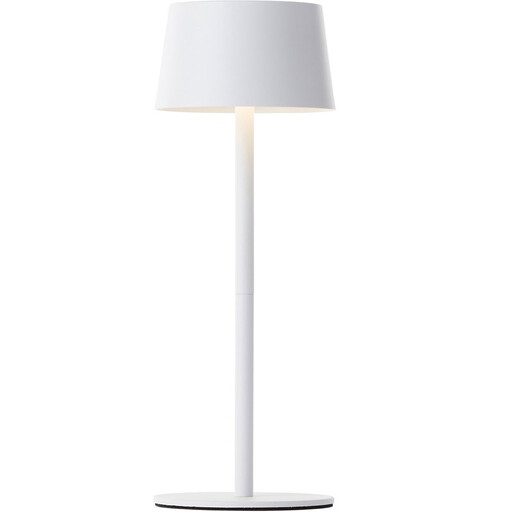
Why it suits this shopper: This freestanding lamp is a good choice if you want one model for your living room, balcony or patio, with the option of solar or USB charging.
The product information clearly states that it has an IP44 rating and warns that the model is splash-resistant, but not waterproof. This helps you avoid using it outdoors in unsuitable conditions.
170 lumens, warm white light at 3,000 K, three dimming settings and solar or USB charging.
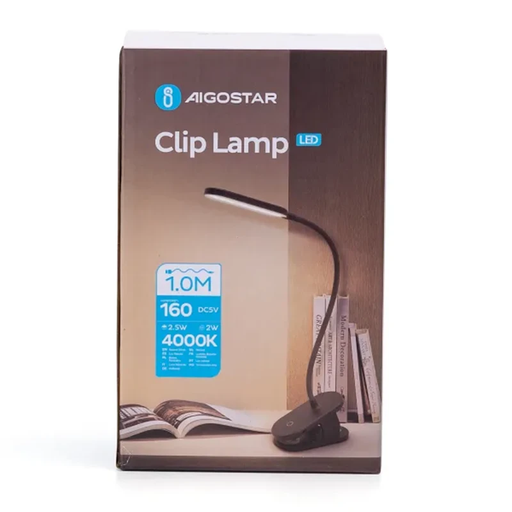
Why it suits this shopper: The clip and flexible neck make it practical for a desk, bed frame, shelf or temporary workspace, with no permanent installation needed.
The product specifications state a battery life of 3–7–30 hours, depending on the setting. Check which setting matches your needs when buying; a single overall battery-life figure wouldn’t give you enough information.
160 lumens, 4,000 K, three light settings, a 1,200 mAh battery and a stated lifespan of 20,000 hours.
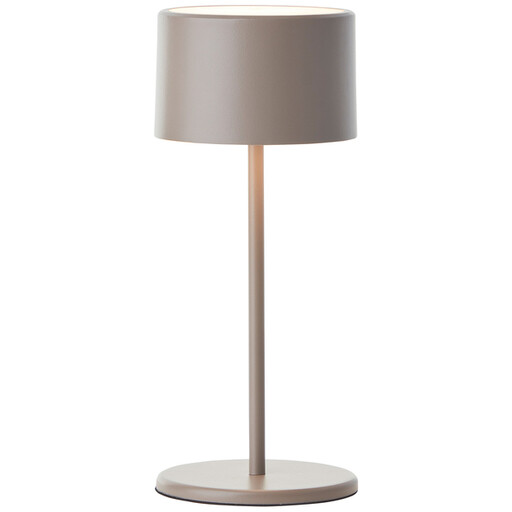
Why it suits this shopper: This compact LED table lamp is designed for a stable surface, such as a sideboard, side table or bedside table.
The specifications state that it has an IP20 rating and is for indoor use. This makes it clear that the lamp isn’t designed for a damp balcony or outdoor space.
210 lumens, warm light at 3,000 K, three touch-dimming settings, 2 W power and a height of approximately 21 cm.
We’ve put together a complete, up-to-date list of products that meet these strict selection criteria and the applicable European safety regulations.
Battery life depends on the battery capacity, brightness and selected light setting. A lamp with 1,100 or 1,200 mAh may run for longer on a low setting than at maximum brightness. So look for a stated battery-life range for each setting rather than relying on the mAh figure alone.
Only if the product specifications confirm that it’s suitable. A model with an IP44 rating is protected against splashes, but shouldn’t be immersed or exposed to direct jets of water. A lamp with an IP20 rating is intended for dry indoor spaces.
LED lighting usually has a low stated power rating. For example, a 2 W model uses less energy per hour than a 10 W lamp. With a rechargeable lamp, most of the electricity use happens while charging. How often you’ll need to recharge it depends on how long you use it and the brightness setting you choose.
