
Vandaag of morgen in huis

Kwaliteit gegarandeerd

Welkomstaanbiedingen ontgrendelen: GRATIS bezorging | Tot 80% korting | Gratis 30 dagen JoyPlus-proefperiode
Download de app
A rechargeable LED lamp is useful in rooms without a power socket or where you do not want a loose cable on display. Place the lamp on a bedside table, attach it inside a cupboard or take it out onto the balcony. However, many models look very similar. A low price or long battery life stated on the packaging does not always tell you how practical the lamp will be in everyday use.
Pay particular attention to these common pitfalls:
First, check the battery type and how the lamp is charged. A USB-rechargeable lamp usually works with a USB cable and can be charged via an adapter, laptop or power bank. Check the charging voltage and current in the product information; a model stating 5 V and 1 A requires a compatible USB power source.
A higher capacity, such as 1100 mAh or 1200 mAh, can be useful, but it does not by itself indicate how many hours the lamp will stay lit. Brightness, colour mode and sensor settings also have an impact. If you use the lamp regularly, choose a model with an easily accessible charging port.
For a bedside table, a soft, warm light is often more comfortable than bright white task lighting. A rechargeable bedside lamp with warm white light of around 2600 to 3000 K is generally well suited to a peaceful bedroom or child’s room. For a kitchen, hallway or wardrobe, a higher light output may work better.
Look at the lumen output, not just the number of LEDs. A compact lamp with 40 lm is mainly intended for mood or orientation lighting. A model with 400 lm produces considerably more light for a cupboard, staircase, garage or work area. A dimmable LED lamp offers extra flexibility when you use the same lamp at different times.
RGB lighting is primarily intended to create ambience. An RGB mood lamp with multiple colours can be fun in the living room or child’s room, but it does not always replace bright, functional lighting.
A cordless lamp should stand securely or be suitable for sturdy installation. Therefore, check the dimensions, weight and mounting materials. Magnetic mounting or an adhesive strip is useful for a cupboard or wall, but the surface must be clean, dry and suitable.
For sensor cupboard lighting, the sensor range and response method are important. PIR sensors respond to movement and are often used for automatic switching on and off. Some models also work with gesture control. With an LED lamp with a motion sensor, it is sensible to test the lamp in the intended position first.
For outdoor use, check the IP rating. A solar-powered outdoor lamp or solar table lamp needs enough daylight to charge via its solar panel. A USB connection is useful in cloudy weather. IP44 means protection against splashing water, not complete waterproofing.
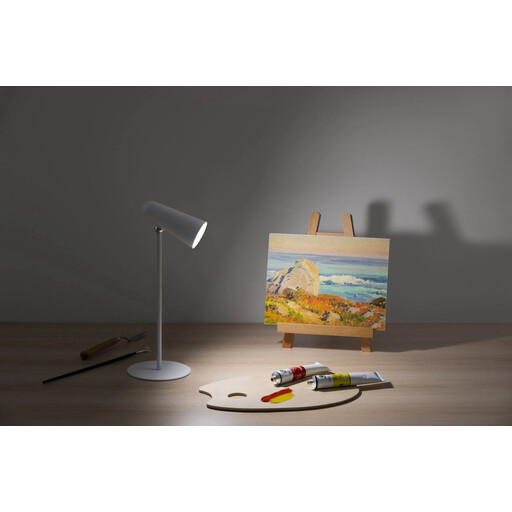
Why it suits this profile: A simple cordless LED lamp for anyone primarily looking for flexible placement. According to the product information, the lithium-polymer battery has a capacity of 2000 mAh and the lamp operates at 3.5 W.
The specifications state both the battery capacity and the maximum charging voltage of 5 V. This gives you more useful information than a general claim about battery life alone.
2000 mAh lithium-polymer battery; 3.5 W power; suitable for use without a fixed cable.
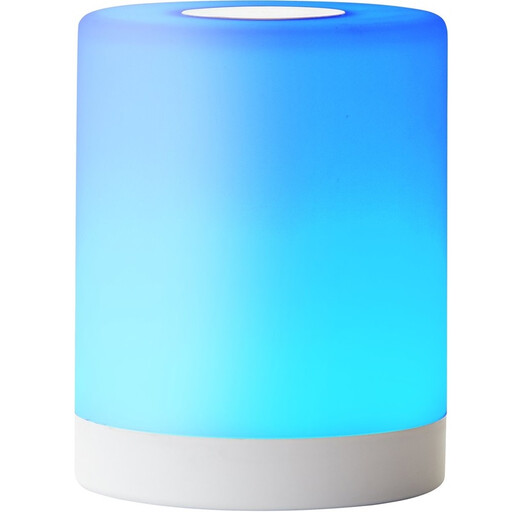
Why it suits this profile: Ideal for anyone wanting a compact LED table lamp for indoors, the balcony or the patio, with touch controls and a choice of mood lighting.
The product information clearly states IP44, 140 lm, USB charging, RGB and a touch dimmer. When using the lamp outdoors, keep it sheltered: IP44 protects against splashing water, not submersion.
140 lm; warm white light of 3000 K; RGB function; touch control; IP44.

Why it suits this profile: Designed for kitchens, wardrobes, hallways or shelves where automatic lighting is more important than decorative features.
The PIR range of 3 to 5 metres, the 1100mAh battery and the three colour temperatures are all specified. This allows you to assess in advance whether it will suit your cupboard or wall.
Pack of two; 61 LEDs; 40 cm long; PIR sensor; three colour temperatures; USB rechargeable.
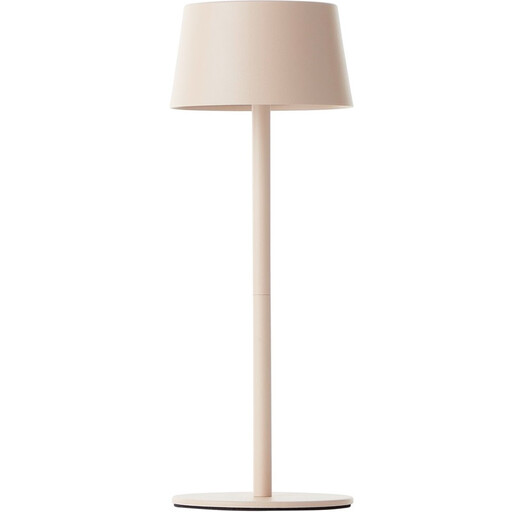
Why it suits this profile: A freestanding solar table lamp for anyone wanting cordless outdoor lighting with the option to recharge it via USB.
The lamp supports both solar and USB charging and has an IP44 rating. This makes you less dependent on sunlight, but you still need to protect the lamp from submersion and powerful jets of water.
170 lm; warm white light of 3000 K; three dimming levels; integrated battery; solar and USB charging; IP44.
We have compiled a complete, up-to-date list of products that fully meet these strict selection criteria and the applicable European safety regulations.
Use the supplied cable and a suitable USB power source in accordance with the product information. Always check the specified voltage and current. A power bank, laptop or USB adapter may be suitable when the lamp is designed for use with one.
This depends on the battery capacity, brightness, colour mode and use of a sensor. A manufacturer may state an operating time under specific conditions. Treat this figure as a guideline and also check whether the battery is replaceable. Many compact models have an integrated battery.
LED lighting generally uses little power. A 1 W lamp consumes approximately 1 kWh over 1000 hours of operation. With a rechargeable model, power consumption also depends on how often you charge the battery and which light setting you use. A motion sensor or timer can prevent the lamp from staying on unnecessarily long.
