
Vandaag of morgen in huis

Kwaliteit gegarandeerd

Welkomstaanbiedingen ontgrendelen: GRATIS bezorging | Tot 80% korting | Gratis 30 dagen JoyPlus-proefperiode
Download de app
A rechargeable LED lamp is handy in places where there isn’t a socket nearby. Think of a nursery, bedroom, kitchen, wardrobe, balcony or patio. However, not every cordless lamp is right for every situation. A battery-powered lamp, for example, may work well as mood lighting but not provide enough light for a kitchen worktop. An outdoor LED lamp with splash protection only may also be unsuitable for prolonged exposure to rain.
The following points will help you separate marketing claims from product information you can check.
Brands don’t always say how long a lamp will run on a single charge. Actual running time depends on the brightness setting, colour mode and how often the lamp is switched on. So start by checking the battery capacity in mAh, charging method and available light settings. A USB-rechargeable lamp with a larger battery won’t necessarily run for longer; the LED’s power consumption also matters.
An IP44 rating means protection against splashing water and solid objects of a certain size. It doesn’t mean the lamp can be submerged or withstand heavy rain from every direction. So place an IP44-rated lamp in a sheltered, stable spot on your balcony, patio or in the garden. Also check that the charging port is properly protected during use.
A dimmable LED lamp may have three fixed settings or offer continuous adjustment. That difference matters if you’re using it beside the bed, for reading or as an LED night light. Also check whether it’s controlled by a button, remote control or touch control. Touch controls are practical, but may be less suitable if the lamp is likely to be touched accidentally.
For a battery-powered lamp, these details are important:
Lumens, shown as lm, indicate the amount of light. An LED table lamp producing 140 to 170 lm is best suited to mood lighting and soft general illumination. For a worktop or dark wardrobe, a focused beam and motion sensor are often more important than a high lumen figure alone.
Colour temperature is measured in Kelvin:
Models with several colour temperatures offer greater flexibility. Bear in mind that colour settings aren’t always saved automatically.
For a nursery, bedroom or living room, a model designed for indoor use is usually sufficient. When choosing a children’s lamp, check the material, stability and safety instructions. According to the product description, the VIVREAL Panda Night Light is made from ABS, PP and food-grade silicone, and has a 1200mAh rechargeable battery. The manufacturer lists three dimming settings and touch control. The product is intended for indoor use; keep it away from heat, fire and immersion in water, and supervise young children when they use it.
For outdoor use, the IP rating, stable base and charging method are key. Solar power is handy in a sunny spot, but USB charging is useful when the weather or daylight doesn’t play along.
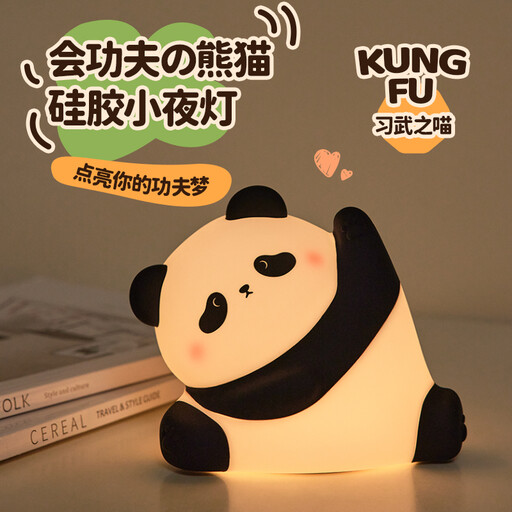
Why it suits this profile: This compact touch lamp is designed for a nursery, bedside table or children’s room. Its three light settings make it easy to adjust to the occasion.
The product information specifies a 1200mAh battery and three fixed dimming settings. This makes the key details clear, although no specific running time is given.
USB rechargeable, touch control, three brightness levels and a casing made from ABS, PP and silicone, according to the product description.
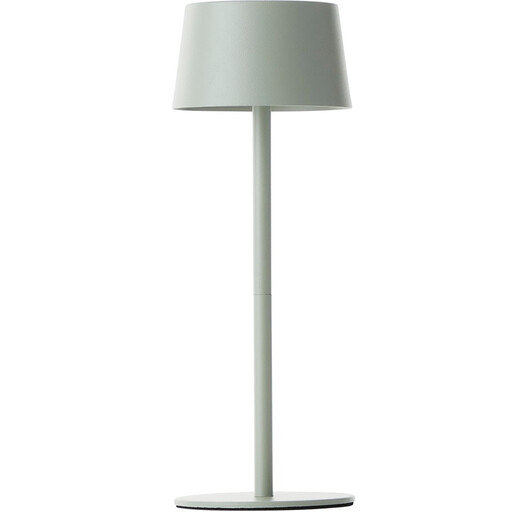
Why it suits this profile: If you’re looking for a stylish LED table lamp for your living room, balcony or patio, this model combines a metal casing with USB and solar charging.
The IP44 rating is clearly stated. So you can use the lamp outdoors where it may be splashed, but not submerged or exposed to direct jets of water.
170 lm, warm white light at 3000 K, three dimming settings and charging via solar power or USB.

Why it suits this profile: This motion-sensor cabinet light is designed for kitchens, wardrobes, larders or dark passageways where hands-free lighting comes in handy.
The lamp lists a PIR detection range of 3–5 metres, a 1100mAh battery and three colour temperatures. This makes it easier to judge whether it’s right for you than a generic claim about smart lighting.
61 LEDs, 40 cm length, two lights per set and no-drill installation with self-adhesive tape.
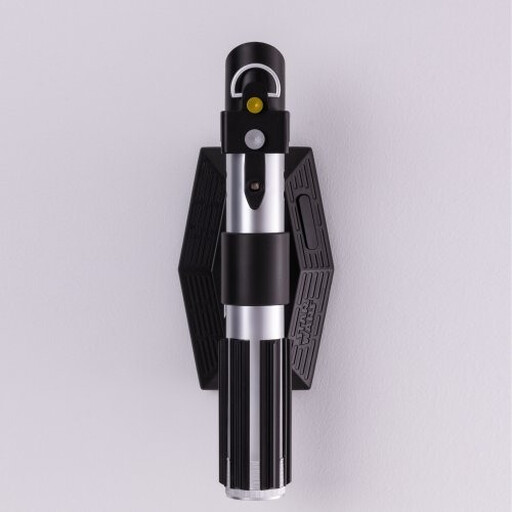
Why it suits this profile: This battery-powered wall lamp is designed as decorative mood lighting for a bedroom, playroom or entertainment space without a socket next to the wall.
Its purpose is clearly defined as a wall lamp for decorative lighting. So don’t expect it to provide full task lighting for a desk or kitchen.
Darth Vader lightsaber design, LED lighting, battery power and mounting materials, according to the product description.
We’ve put together a complete, up-to-date list of products that meet these strict selection criteria and the applicable European safety requirements.
Use a suitable USB cable and a power supply that meets the manufacturer’s specifications. Keep the charging port dry and don’t charge a lamp in a damp outdoor area. If the model has a lithium-ion battery, it’s best not to open or modify the casing yourself.
There are two parts to consider: the LED light source and the battery. LEDs can be used for a long time, but a battery’s capacity may decrease over time. Running time per charge varies depending on the brightness setting. If the manufacturer doesn’t state an exact running time, you can’t reliably work it out from the mAh figure alone.
An LED lamp usually uses little power, but consumption depends on the wattage, light setting and how often you recharge it. A 1 W lamp running for one hour theoretically uses around 1 Wh, excluding charging losses. For regular use, choosing an appropriate dimming setting and using automatic shut-off with a motion sensor are practical ways to limit unnecessary consumption.
