
Vandaag of morgen in huis

Kwaliteit gegarandeerd

Welkomstaanbiedingen ontgrendelen: GRATIS bezorging | Tot 80% korting | Gratis 30 dagen JoyPlus-proefperiode
Download de app
A rechargeable LED lamp is useful when you do not have a socket nearby. You can easily move the lamp from the living room to the bedroom, desk, balcony or patio. However, many models look similar, while the differences in everyday use can be significant. For example, a lamp designed for ambient lighting may not always provide enough light for a cupboard or workspace.
So do not focus solely on the appearance or the term “wireless”. Pay particular attention to the battery, light output, protection against moisture and installation method.
A wireless LED lamp runs on a built-in battery, but its runtime depends on the battery capacity, light output and selected setting. Manufacturers do not always state a specific runtime under normal conditions. What is more, a high mAh rating alone is not enough to predict the actual runtime.
So check:
If this information is missing, do not assume a specific runtime.
For a lamp on a balcony or patio, the IP code is important. A model with IP44 is protected against splashing water from different directions, but it is not designed to be submerged or exposed to heavy rain for extended periods. A lamp with IP20 is intended for dry indoor spaces only.
Therefore, place an IP44 lamp under a canopy or in a sheltered spot. An indoor IP20 model should not be used in a damp bathroom, garden or open patio.
RGB colours, touch controls and dimming settings are useful for creating atmosphere, but they say little about whether a lamp is suitable for use at a desk or inside a cupboard. For functional lighting, look at lumens. The higher the number of lumens, the more light the lamp produces according to its specification. Colour temperature also makes a difference:
An RGB LED lamp is therefore not automatically suitable as a desk lamp or reading lamp.
For a small table or bedside table, a compact lamp with 140 lumens may provide enough light for ambient lighting. For a desk, dressing table or workspace, a higher light output is more practical. According to the product specification, the Brilliant Led Table Lamp Battery provides 210 lumens at 3000 K.
Also check whether the lamp is dimmable. A dimmable LED lamp with several settings is more versatile than a model with simple on/off control. Touch controls can be convenient on a bedside table, but check that the lamp cannot be switched on accidentally when you place something on it.
A USB rechargeable lamp is easy to charge using a suitable USB power supply, laptop or power bank. However, make sure you check the battery specifications. The Brilliant models, for example, use an 18650 lithium-ion battery. According to the product specification, the Xiaomi Flexible Rechargeable Lamp has a 2000 mAh lithium-polymer battery and a maximum charging voltage of 5 V.
Use the supplied cable and a suitable low-voltage USB power source. Do not open an integrated battery or LED module yourself if it is not designed to be replaced by the user.
Measure the space beforehand. A lamp measuring 21.2 cm in height requires more room than a flat cupboard lamp that is 10 mm thick. For cupboard lighting, a slim model with a magnet or adhesive strip is often easier to use than a freestanding battery-powered lamp.
Also check the material and surface:

Why it suits this profile: This battery-powered LED table lamp has clear specifications and is suitable for a desk, bedside table or sideboard indoors.
The specification states 210 lumens, 3000 K and a three-stage touch dimmer. This means you do not have to rely solely on lifestyle images or vague marketing terms.
210 lumens, warm white light at 3000 K, three dimming settings and a compact size of 21.2 × 9 cm.
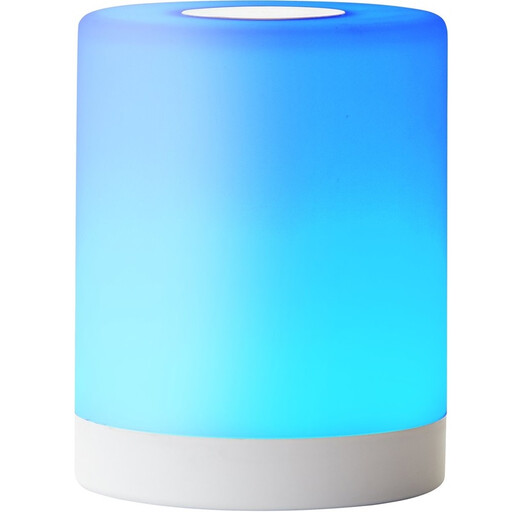
Why it suits this profile: A portable LED lamp for anyone who wants to use one compact lamp indoors and outdoors in sheltered conditions.
The IP44 rating clearly defines its limits: splashing water is permitted, but submersion and severe weather are not.
RGBW function, warm white light at 3000 K, touch dimmer, USB charging and an integrated 1W LED.

Why it suits this profile: This set is designed for cupboard lighting in kitchen cupboards, wardrobes and other dark spaces where automatic switching is convenient.
The PIR sensor has a stated range of 3–5 metres, and the lamps are intended for dry spaces. This clearly defines where they can be used.
Two-piece set, 41 LEDs per lamp, three colour temperatures, 1100 mAh battery and a slim profile measuring 300 × 38 × 10 mm.
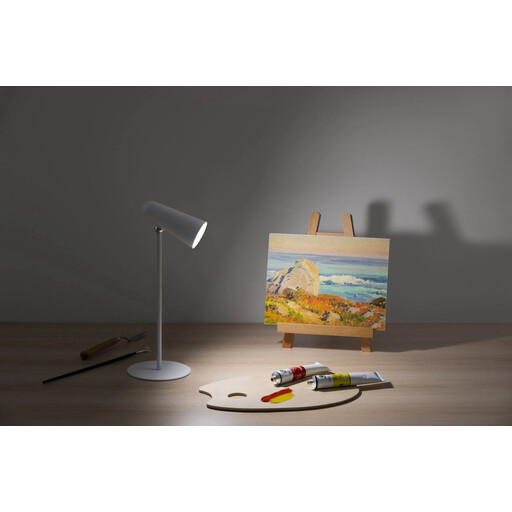
Why it suits this profile: A simple USB rechargeable lamp for anyone looking for a flexible model and wanting to choose the positioning themselves.
The published information states the power rating, battery technology, 2000 mAh capacity and 5 V charging. Lumens, IP rating and dimming functions are not listed; check these details before buying if they are important to you.
3.5 W power rating, lithium-polymer battery, 2000 mAh capacity and USB charging at up to 5 V.
We have put together a complete, up-to-date list of products that fully meet these strict selection criteria and the applicable European safety regulations.
Use the supplied USB cable and a suitable USB power supply with the stated voltage. Charge the lamp in a dry place and do not use a damaged cable. Do not open or modify an integrated battery yourself.
This varies by model and light setting. Battery capacity, wattage, brightness and the use of dimming functions all play a role. If the product information does not state a runtime, an accurate estimate is not possible. So do not compare mAh alone; look for stated runtimes for each setting.
Only if its IP rating is suitable for that purpose. A model with IP44 can withstand splashing water in sheltered conditions, but must not be submerged. A lamp with IP20 is intended for dry indoor spaces and should not be used outdoors or in a damp environment.
