
Vandaag of morgen in huis

Kwaliteit gegarandeerd

Welkomstaanbiedingen ontgrendelen: GRATIS bezorging | Tot 80% korting | Gratis 30 dagen JoyPlus-proefperiode
Download de app
A sudden heatwave, a stuffy train, or an office without air conditioning. A good rechargeable handheld fan can be the difference between comfort and misery. But the market is flooded with models that promise the world. Many users end up with a noisy device, a battery that dies after an hour, or a fan that breaks after just a few weeks in their bag.
As a Joybuy Product Recommendation Officer, I see which specifications truly matter every day. Before you make a purchase, it's wise to look past the marketing hype. Let's discuss the three most common pitfalls that lead to a disappointing purchase.
To avoid these pitfalls, it's best to focus on a few concrete specifications. These determine whether a portable fan is worth its price.
The battery's capacity, expressed in milliampere-hours (mAh), is your fan's fuel tank. A higher mAh value typically means a longer runtime. A model with 5000 mAh can last significantly longer than one with 2000 mAh.
Also, pay attention to the charging port. A USB fan with a modern USB-C connection often charges faster, and you can use the same cable as your phone, which is convenient for on-the-go use.
A quiet handheld fan is essential for use in shared spaces. The noise level is expressed in decibels (dB).
Manufacturers often list the minimum noise level. If possible, check the value at the highest setting as well.
The right model depends on how you plan to use it.
A small battery-operated fan is perfect for travel, but check if the size and weight are truly practical for your bag.
Based on objective specifications, we have selected several models that suit different needs and avoid the pitfalls mentioned earlier.
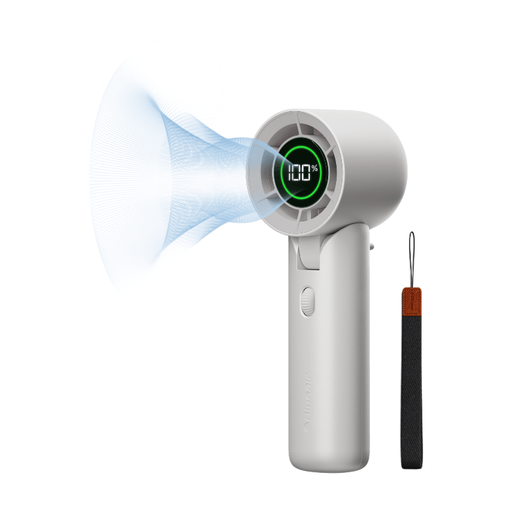
Why This Fits Their Persona: Ideal for office workers and commuters who need discreet, effective cooling. Its sleek design and low noise level make it perfect for professional environments.
This model tackles the pitfalls of noise and battery life. With a minimum noise level of 23 dB, it's whisper-quiet, and the runtime of up to 32 hours (on the lowest setting) is realistic and practical for a full workday.
Stepless speed control (0-100) for precise adjustment and a tilting head (75°) for use as a desk fan. Fast charging via USB-C.
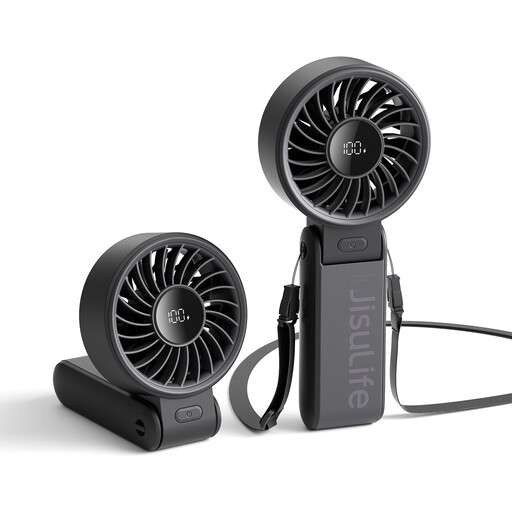
Why This Fits Their Persona: Perfect for students and travelers who need one device for multiple situations. Use it handheld, set it on your desk in a lecture hall, or hang it around your neck on the train.
This model is the antithesis of a flimsy, impractical design. The 3-in-1 foldable design is robust and functional. The LED display shows the remaining battery, so you won't be caught off guard.
The 5000mAh battery provides a long runtime. The 3-in-1 design (handheld, desk, neck) and the clear display make it a very complete and practical choice.
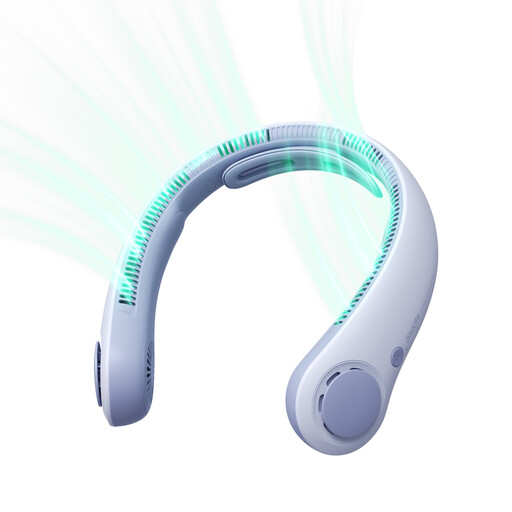
Why This Fits Their Persona: For anyone seeking cooling while cooking, hiking, gardening, or at an outdoor event. Your hands are completely free while the airflow is directed at your neck and face.
This model solves the fundamental problem of a standard handheld fan: you have to hold it. The ergonomic design ensures comfort without neck strain, and the bladeless design prevents hair from getting tangled.
Completely hands-free use with a powerful 5000mAh battery. The bladeless design is safe, and the ergonomic design ensures long-lasting comfort.
We have compiled a complete, up-to-date list of products that fully meet these strict selection criteria and safety regulations.
The lifespan of the fan itself depends on the build quality and the motor. A model with a brushless motor generally lasts longer than a cheaper model. The battery's capacity may decrease after several hundred charge cycles (usually 2-3 years with regular use), just like with a smartphone.
Yes, in most cases, a small battery-operated fan is allowed in your carry-on luggage. Airlines have rules for devices with lithium-ion batteries. Always check the specific regulations of your airline, but personal electronic devices like these are generally permitted in the cabin.
Not always, but often it does. A higher price can translate to a quieter and more efficient motor, a higher-capacity battery, better materials, and smarter features like a battery indicator or more speed settings. By paying attention to the specifications we've discussed, you can determine if the extra cost is justified for your needs.
