
Vandaag of morgen in huis

Kwaliteit gegarandeerd

Welkomstaanbiedingen ontgrendelen: GRATIS bezorging | Tot 80% korting | Gratis 30 dagen JoyPlus-proefperiode
Download de app
Good bike lighting is an essential, not a luxury, especially in the Netherlands. But the quest for a reliable, rechargeable set can be frustrating. The market is saturated with lights that promise impressive specifications but fall short in real-world use. Before you invest in new lighting, it's wise to know the common pitfalls.
Many cyclists fall into the same traps: they buy a light based on a high lumen count, only to find the battery dies after an hour or the beam dazzles oncoming traffic. These are the most common mistakes:
rechargeable bike lights lack an approved beam pattern. They create a round, intense spot that blinds oncoming traffic, which can cause dangerous situations and is not permitted in some European countries.To avoid buyer's remorse, it helps to understand a few technical specifications. These determine whether an LED bike light set is worth the money.
As mentioned, lumens aren't the whole story. The Lux value is far more important. This measures the amount of light that actually lands on a specific surface (the road surface at a distance of 10 metres).
100 lux bike light set offers an excellent balance between visibility and battery life.A term you'll increasingly encounter is StVZO-approved bike lighting. This is a German standard (Stra?enverkehrs-Zulassungs-Ordnung) that sets strict requirements for the light beam. An StVZO-compliant lamp has a clear light-dark cutoff, similar to a car's headlamp. The light is directed onto the road and cuts off at the top, so you don't blind oncoming traffic. While not legally required in the Netherlands, it is a reliable indicator of a high-quality and safe product.
A modern rechargeable front and rear bike light set can do more than just illuminate. A bike light with a brake light is a valuable addition. A built-in accelerometer detects when you slow down and makes the rear light shine brighter, warning traffic behind you. Furthermore, a USB-C port has become the standard for fast and convenient charging.
Based on objective specifications, we have selected several popular choices that suit different types of cyclists.
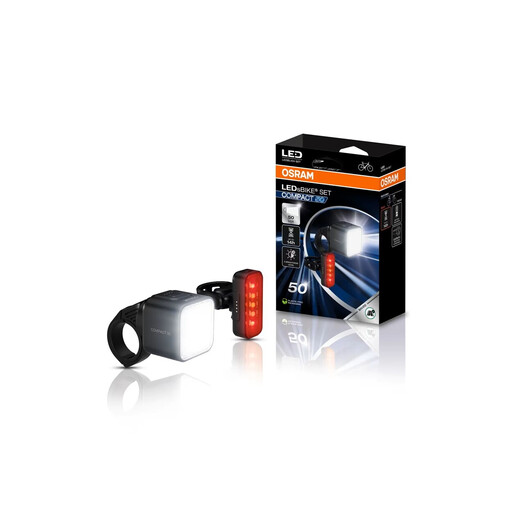
Why This Fits Their Persona: Ideal for daily rides in the city. The 50 lux is more than sufficient for lit streets, and the battery life of up to 14 hours in eco mode is very practical for those who don't want to charge it every day.
This set has an StVZO-approved beam that prevents dazzling. The battery indicator and USB-C port are modern conveniences that avoid the pitfall of outdated technology.
Fully approved for public roads in Germany (StVZO). The Garmin-compatible mount makes installation simple and secure.
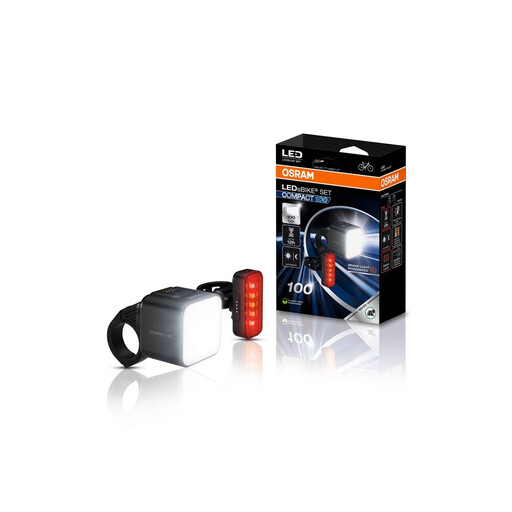
Why This Fits Their Persona: For those who ride a fast `e-bike light` or road bike, including outside the city. The 100 lux provides a powerful beam up to 95 metres, while the brake light function adds an extra layer of safety in busy traffic.
This set solves the "lumen myth" with an effective 100 lux StVZO beam. The intelligent brake light function is a modern feature you won't find in cheaper sets.
The combination of 100 lux, StVZO certification, and an automatic brake light function offers a high level of safety. According to OSRAM, the battery lasts up to 12 hours.
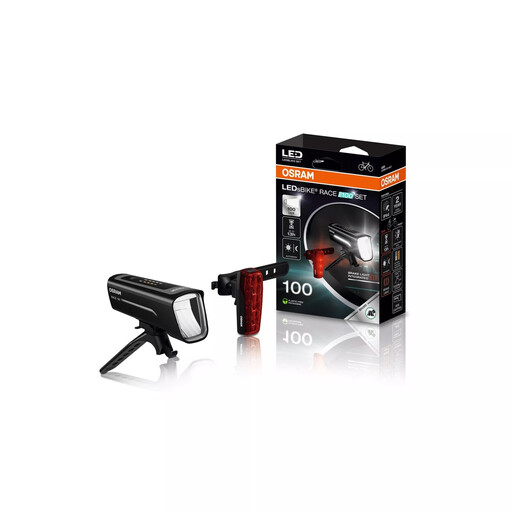
Why This Fits Their Persona: Designed for performance. This set is lightweight and compact, yet delivers a powerful 100 lux beam. The automatic light sensor adjusts the brightness, which is useful during training sessions with varying light conditions.
It provides the brightness needed for high speeds without the weight and bulk of traditional high-power lights. The smart features, like the brake and light sensor, are practical and safe.
The combination of a low weight (69g for the set), a powerful 100 lux StVZO beam, and an automatic brightness sensor makes this a very complete set for sporty use.
We have compiled a complete, up-to-date list of products that meet strict selection criteria and safety regulations.
No, in the Netherlands, the StVZO certification is not legally required. Dutch law sets requirements for colour and visibility, but not specifically for the beam shape. However, an StVZO certification is a strong indicator that you are buying a high-quality, safe light that does not blind oncoming traffic.
This depends on your usage. For rides within built-up areas where street lighting is present, a light with 30 to 50 lux is sufficient. If you regularly cycle on unlit bike paths, rural roads, or with a fast e-bike, a 100 lux bike light or more is recommended for good visibility and reaction time.
The battery life varies greatly by model and usage mode. On the highest setting (e.g., 100 lux), a runtime of 2 to 4 hours is typical. In an eco mode (e.g., 25 lux), this can extend to 12 hours or more. Always check the manufacturer's specifications, as they provide a realistic indication of what you can expect.
