
Vandaag of morgen in huis

Kwaliteit gegarandeerd

Welkomstaanbiedingen ontgrendelen: GRATIS bezorging | Tot 80% korting | Gratis 30 dagen JoyPlus-proefperiode
Download de app
A rechargeable baby night light may seem like a simple product, but there are big differences between models. One light may be ideal for night feeds, while another is better suited to a hallway, toddler’s room or bedside table. So don’t focus only on its shape or colour. The controls, brightness, battery and placement all play a key part in how practical it is for everyday use.
A stated run time may sound appealing, but always check the brightness level at which it was measured. According to the product information, a light rated to last up to 100 hours may only reach that figure on its lowest brightness setting. At maximum brightness, the run time could be considerably shorter.
A bright white LED night light can be useful when you need to find something, but it may not be ideal if you only want a little light for a quick feed or nappy change. Look for dimmable settings, a warm colour temperature and the option to switch the light off quickly.
A button on the back or a complicated remote control may not be easy to use when you’re looking after a baby. A touch-control night light may be simpler. If you’re considering a model with a motion sensor, check whether the sensor only responds in the dark and how far it can detect movement.
For a warm night light, a colour temperature of around 2600–3200 K is a useful specification to look for. This usually gives a softer, warmer glow than cool white light. Also consider how the light dims:
A light with RGB settings only may be less suitable if you want a consistent, warm glow. Check whether warm white is available as a separate setting.
Battery capacity is often listed in mAh. A 500 mAh battery is compact and may be enough for short periods of use with a sensor. A model with 1200 or 2000 mAh will generally have more capacity for longer use, but actual battery life depends on brightness, colour setting and timer function.
Also check:
A USB-rechargeable light is handy on a bedside table, when travelling or in places without a nearby socket.
A motion-sensor night light is handy in a hallway, landing or parents’ bedroom. The selected model has a stated detection range of 3 to 5 metres, and the sensor switches on in low ambient light. Don’t place this type of light right next to the bed if you want to avoid it switching on every time there’s a small movement.
Compact dimensions are important for a child’s room. A light measuring around 7 to 13 centimetres takes up little space on a shelf or changing table. If you’re considering a soft silicone model, check the care instructions too. The VIVREAL Panda’s product description lists food-contact silicone as a material, alongside ABS and PP. This is a material specification, not a general guarantee that the product is suitable for every use. Follow the warning to use the light indoors, away from heat and under adult supervision.
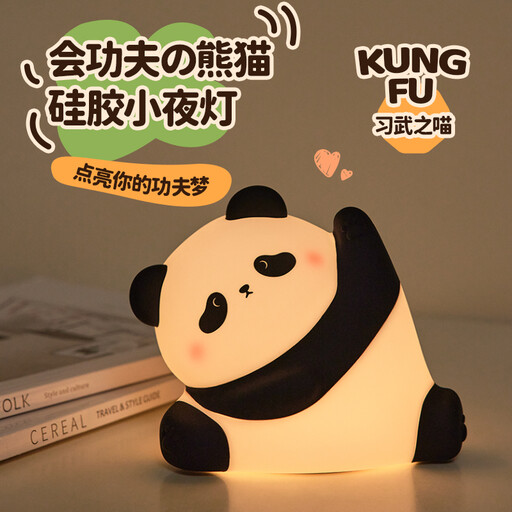
Why it suits these needs: Its simple panda shape, touch controls and three brightness levels make this an easy choice for parents looking for a baby night light for bedtime or night feeds.
According to the product description, the light has three dimming settings and doesn’t need to stay plugged into a socket. This gives you more control over brightness and placement.
1200mAh rechargeable battery, touch controls and a soft silicone exterior, according to the product description.
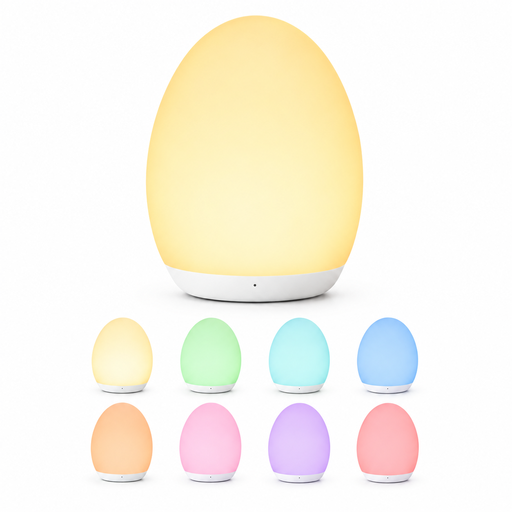
Why it suits these needs: This model is designed for parents who want one light for night feeds, nappy changes, bedtime and travel, with several ways to control it.
The product information distinguishes between the maximum run time and the lowest brightness setting, making the claim of up to 100 hours easier to assess.
2000mAh battery, dimmable warm white light, eight colour settings, a one-hour timer and touch controls.

Why it suits these needs: This set is ideal for households that need lighting in several places, such as the nursery, landing or bathroom.
The light combines a motion sensor with a standard light mode, so you don’t have to rely solely on automatic activation.
Two lights, five dimming levels, three colour temperatures and a stated sensor range of 3 to 5 metres.
We’ve put together a full, up-to-date list of products that meet these strict selection criteria and the applicable European safety regulations.
Place the night light on a stable surface, out of reach of a baby or toddler. Don’t put a charging cable in or next to the cot. Use only the specified USB charger and check the instructions for information about charging, moisture and temperature.
Clean the light with a soft, dry or slightly damp cloth if the product information says this is safe. Don’t immerse an electrical light in water. Over time, check that the battery still holds enough charge and that the casing, charging port and cable are undamaged.
Warm white light around 2600–3200 K is a popular choice for creating a calm atmosphere in the bedroom. Whether it feels right depends on the brightness setting and your personal preference. For night feeds, choose a light that dims and is easy to operate.
It varies from model to model and depends on the settings. The stated run time often applies only at low brightness or in sensor mode. So check both the battery capacity and the conditions given for the run time. A timer can help prevent the light from staying on for longer than necessary.
A sensor is handy for brief trips around the room in the dark, for example on the landing or by the changing table. Touch controls may be more predictable for a light beside the bed. Check the detection range, light threshold and whether the sensor can be switched off.
