
Vandaag of morgen in huis

Kwaliteit gegarandeerd

Welkomstaanbiedingen ontgrendelen: GRATIS bezorging | Tot 80% korting | Gratis 30 dagen JoyPlus-proefperiode
Download de app
A rear bike light might seem like a simple product, until you have to choose between battery power, a dynamo, USB-C, a brake light and different mounting brackets. A budget rear bike light can work perfectly well for short rides, but awkward controls, a loose fitting or a battery that runs out quickly can cause problems on the road.
So don’t just look at the number of lumens or a catchy marketing claim. Focus on the specifications, how you ride and whether the light is compatible with your bike.
A higher lumen rating doesn’t automatically mean a rear light is easy to see from every angle. The light distribution, flashing mode and position on the seat post all play a part too. Check that the light shines straight behind you and that the fitting won’t twist out of position.
With a complete front and rear bike light set, it’s also worth understanding the difference between lumens and lux. Lumens measure the total light output, while lux tells you more about the area illuminated. For a rear light, a clear signal is often more important than a high light output.
A rear bike light with a brake light usually uses a motion or acceleration sensor. It can therefore respond when you brake or slow down, but how well it works depends on how it’s mounted and which mode is selected. Check that the sensor is positioned correctly and that the product description clearly explains how the feature is activated.
A rating such as IP65 tells you about protection against dust and water jets. It doesn’t mean the product is designed to be submerged. If you regularly ride in the rain, check the charging port cover, rubber seal and mounting too.
A rechargeable USB-C bike light is convenient if you already use USB-C chargers. Check the stated battery life, charging time and whether there’s a battery indicator. Battery life can vary depending on the light mode and temperature. For everyday commuting, it’s a good idea to charge the light regularly rather than waiting for the battery to run completely flat.
A battery-free dynamo rear bike light is a better fit for riders who go on long journeys and don’t want to think about charging. If you’re considering a dynamo light, check that your bike has a compatible hub or sidewall dynamo and that the connection matches. Some models use a two-wire connection.
Check the seat post diameter, the space available by the mudguard and the shape of the fitting. A light designed only for a round seat post won’t necessarily fit every aero or specialist frame without an adapter. A rubber strap is quick to fit, while a fixed mudguard mount is often more stable.
A StVZO-approved bike light is designed to comply with German road traffic regulations, according to the product information, and can be identified by a K-mark. This tells you something useful about its light distribution, but it doesn’t automatically make the product suitable for every traffic situation in the Netherlands. Always check that the light meets Dutch requirements for cycle lighting.
For e-bike riders, it’s also important to check whether the rear light can be connected directly to the bike battery. Most USB models work independently, so they’re not the same as an integrated e-bike lighting system.
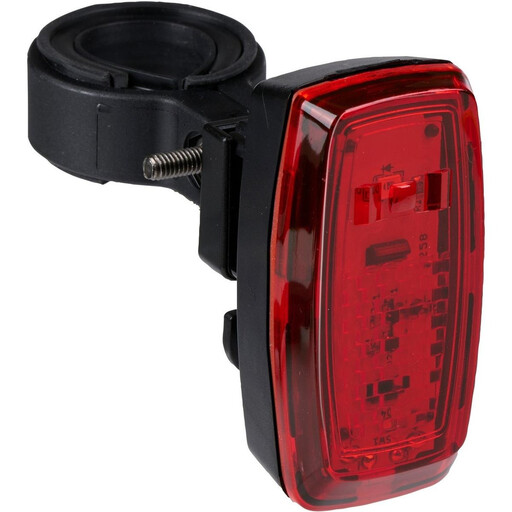
Why it suits this type of rider: This standalone rear bike light is a good option if you’re after a simple solution for city rides and everyday use. Its black ABS casing and compact design suit a range of bikes.
The product information mentions a sturdy ABS construction and a K-mark. Before buying, check the included mounting hardware and whether it’s suitable for your intended use in the Netherlands.
ABS casing; suitable for a range of bike models; at least two years’ statutory warranty according to the product information.
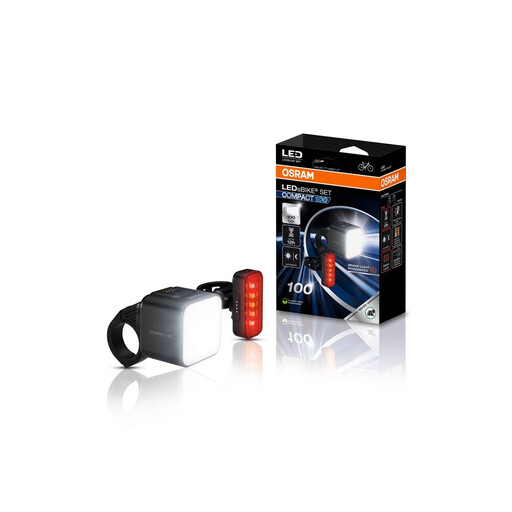
Why it suits this type of rider: This complete LED bike light set is designed for riders who want one set for city, touring, gravel and e-bike use.
The set features USB-C charging, a battery indicator and StVZO approval with a K-mark. The battery life claim comes from the product information.
Front light up to 100 lux; rear light with brake light function; five light modes; Garmin-compatible mount.
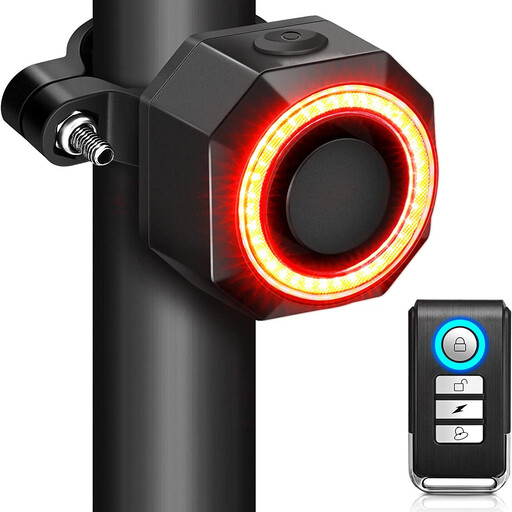
Why it suits this type of rider: This model is designed for commuters and e-bike riders who want to combine a brake light function, flexible mounting and a bike light with an anti-theft alarm.
The product description mentions a motion sensor, remote control and several mounting options. After fitting it, check that the brake signal responds correctly when you slow down.
USB-C and 700mAh battery; IP65 rating according to the product information; mounts with a bracket, cable ties or tape.
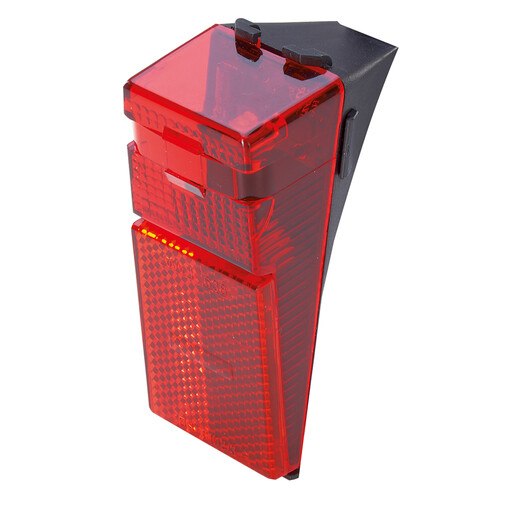
Why it suits this type of rider: This rear light is a good fit if you’re looking for a permanent solution for a bike with a hub or sidewall dynamo, such as a city bike with a mudguard.
As the product description says it doesn’t use batteries, there’s no need to check the charge level. Do check that your bike has a two-wire connection.
Suitable for hub and sidewall dynamos; mudguard mounting; StVZO approval according to the product information.
We’ve put together a complete, up-to-date list of products that meet these strict selection criteria and the applicable European safety requirements.
Mount the light so that it points straight behind you and isn’t covered by a bag, coat or mudguard. After fitting it, check that the strap, bracket or screw fitting doesn’t move when you ride over a bump. If the light has a brake sensor, make sure you follow the recommended orientation.
Battery life depends on charging cycles, light mode, temperature and storage. For everyday use, the run time on a single charge is usually more important. A battery indicator, found on some USB-C models, helps you recharge in good time.
StVZO is a German standard for bike lights. The Netherlands has its own road traffic rules. So use a light that’s visible and correctly fitted, and check local requirements when you buy. A K-mark is useful product information, but it doesn’t replace checking the Dutch requirements.
