
Late-night script reader
You read while someone else is asleep, so you’ll want to consider the available lighting and the ambient light in the room first.


If you want to view a full script page and make notes, a standard tablet with stylus support may be a better fit. If you mainly want to read with adjustable lighting, look for an e-ink device that can handle your PDF. A standard tablet emits its own light and gives you a wider choice of apps, while e-ink models vary in their lighting and PDF annotation features. An e-ink model without a reading light will need another light source in a dark bedroom.
You read while someone else is asleep, so you’ll want to consider the available lighting and the ambient light in the room first.
You want to add cues to a script and need to check whether you can send the annotated PDF back to others. Stylus support alone doesn’t tell you whether the whole workflow will work.
You want to see the text and annotations on a script page at a glance, so you’ll need to balance screen space against how comfortable the device is to hold.
Start with the lighting that suits a shared bedroom. Then decide whether your main priority is reading, viewing a full PDF page or sharing annotations.
| What to consider | What to look for | Who should pay particular attention? |
|---|---|---|
| Lighting in the bedroom | Check that the exact model has a reading light and that it’s adjustable. BOOX lists adjustable brightness and colour temperature for the Note Air5 C; reMarkable states that the reMarkable 2 has no reading light. | If I read while my room-mate is asleep, I want to know what light I’ll need and whether I’ll still need a lamp in the room. Around 31% of consumers cite minimising light disturbance as their main reason for buying. |
| Annotating and sharing PDFs | Check the stylus, PDF app, file protection and export options. Kobo states that notes aren’t supported in PDFs with DRM or disabled annotations. | If I make directing notes, I want to be able to share them with others in a usable PDF. Around 31% of consumers prioritise annotation and export. |
| Viewing a full page | Try a representative script page on the screen size you’re considering. Samsung specifies a 10.9-inch screen for the Galaxy Tab S10 Lite and an 8.7-inch screen for the Galaxy Tab A11 Wi-Fi. | If I read fixed-layout PDFs, I want to see the text and annotations together. Around 23% of consumers cite viewing a full page as their main reason for buying. |
| Ease of handling | Compare the size and weight of the exact model and try it in your usual reading position. A more compact screen may mean you need to zoom in more often. | If I’m holding a device for a long time, I need to balance comfort in my hand against the space available for a full script page. Around 15% of consumers say ease of handling is their top priority. |
The manufacturer states that the reMarkable 2 has no reading light. BOOX lists adjustable reading light for the Note Air5 C, but that doesn’t tell you how much light your room-mate will notice in your room.
Check the lighting on the exact model and consider whether the light source you’ll need is suitable for a shared bedroom.
Kobo says you can’t make notes in PDFs with DRM or disabled annotations. Exporting handwritten notes is described for unprotected PDFs.
Where possible, test a similar script file and check that the exported version will work for your fellow cast members.
According to the Dutch government, the Netherlands has no fixed statutory guarantee period; if a product is faulty, the retailer is your point of contact.
Consider any extra guarantee offered alongside your statutory rights, and keep your purchase details.
The Galaxy Tab S10 Lite combines a larger screen with an S Pen included in the box, while the Galaxy Tab A11 Wi-Fi is a more compact reading option.
The iPad (A16) is a standard tablet with plenty of screen space and support for specific Apple Pencils.
The Elipsa 2E is an e-reader with Stylus 2 support for compatible PDF scripts.
The Note Air5 C is an e-ink option with adjustable reading light and Android.
The reMarkable 2 is designed for reading and writing on PDFs when there’s enough ambient light.
These product picks include standard tablets and e-ink devices with screen sizes suited to script pages, as well as models whose product information mentions a stylus or reading light.
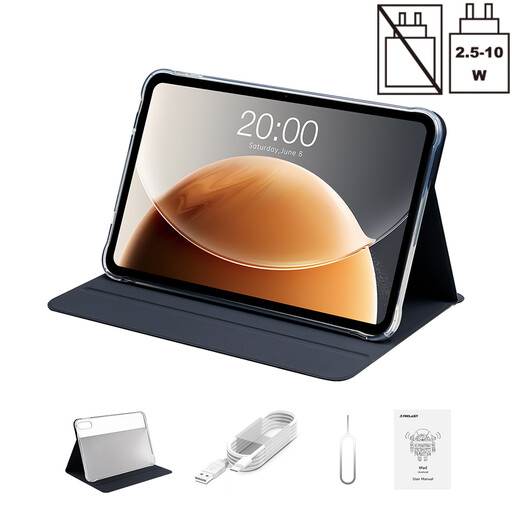 Image unavailable
The stated screen size may suit anyone who wants to view a full script page at a glance.
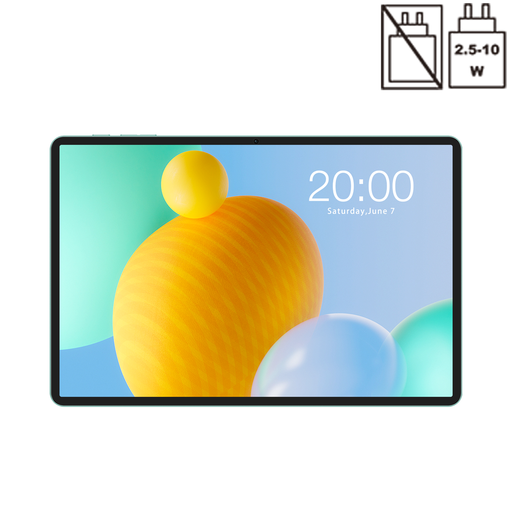 Image unavailable
The 11-inch screen is one size to compare if you want to read script pages on a tablet.
 Image unavailable
The product name lists a large screen and an included stylus, making this one to consider if you’re weighing up page visibility and writing with a pen.
 Image unavailable
The product information mentions reading PDFs and making notes; check that the workflow suits your scripts.
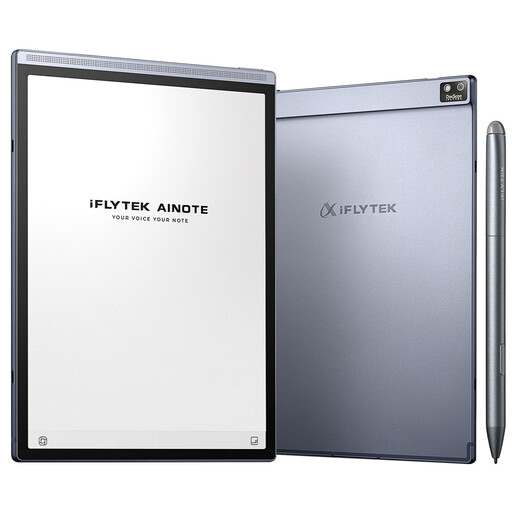 Image unavailable
This more compact screen may suit anyone who values portability. Try it for yourself to see whether a full script page is comfortable to read.
No, not every PDF is suitable. Kobo states that notes aren’t supported in PDFs with DRM or disabled annotations. If possible, try a similar script and check that the export you need works.
Kobo describes transferring files from a computer and also lists Google Drive and Dropbox for unprotected files. According to Kobo, a file imported this way won’t automatically appear in other Kobo apps or on other e-readers.
It depends on the exact model and offer. Samsung lists an S Pen as included with the Galaxy Tab S10 Lite; Apple specifies which Apple Pencils the iPad (A16) supports, but doesn’t say that a pen is included. Check what’s in the bundle you choose and whether you’ll need an adapter.
A standard tablet emits its own light and gives you a choice of apps; e-ink models vary in their reading lights. Choose based on the light available and check the lighting on the exact model: according to the manufacturer, the reMarkable 2 has no reading light, while BOOX lists adjustable reading light for the Note Air5 C.
For an online consumer purchase covered by the rules, you’ll generally have a 14-day cooling-off period, with some exceptions. The Dutch government also states that there’s no fixed statutory two-year guarantee period; if a product is faulty, the retailer is your point of contact.