
Vandaag of morgen in huis

Kwaliteit gegarandeerd

Welkomstaanbiedingen ontgrendelen: GRATIS bezorging | Tot 80% korting | Gratis 30 dagen JoyPlus-proefperiode
Download de app
A remote-controlled car may seem like a simple gift at first glance. However, RC models vary considerably in terms of age suitability, controls, battery life and terrain. A lightweight toy car for indoor use has different requirements from a 4WD RC car for grass, sand or gravel.
For parents, grandparents and family members, three pitfalls are particularly important: marketing claims without clear specifications, a battery that runs out quickly and a remote control that is not suitable for the child’s age. Use the checklist below to compare RC toys for children in a practical way.
A remote-controlled off-road vehicle may be suitable for grass or short-pile carpet, but that does not automatically mean it will perform well on wet mud, deep sand or large obstacles. Check the type of tyres, ground clearance and whether the vehicle has 4WD or 6WD drive.
An RC stunt car with wide rubber tyres can cope better with uneven terrain than a low racing car with smooth drift tyres. The latter is designed for flat floors, tiles or a smooth driveway.
Playtime specifications are useful, but the actual result depends on speed, light and sound effects, the surface and driving style. Also check:
For the 4WD drift cars in this article, the product descriptions state a playtime of approximately 20 to 40 minutes per charge. Treat this as a product specification under certain conditions, rather than a guaranteed playtime for every session.
A fast remote-controlled car can be great fun for a child who already has experience with steering, but it can be more difficult to control in the living room. For RC toys from age 3, moderate speed, simple buttons and forward, reverse and turning functions are usually more practical.
Also look out for small parts. Products with a recommended age of 3 years and over must not be used by children under that age. Always supervise younger children and store batteries and loose accessories safely.
A 2.4 GHz remote control is a common choice for remote-controlled toy cars. According to the product descriptions of the models mentioned, this technology is designed to allow multiple vehicles to play at the same time without their signals interfering with one another too quickly. However, check the stated range. The container truck, for example, is listed with a range of up to approximately 30 metres, while several drift cars offer up to 50 metres.
For beginners, features such as an automatic demonstration mode or one-button stunts can be useful. A model with wrist or gesture control can provide extra interaction, although it may take some getting used to.
Choose the vehicle based on where the child will be playing:
A vehicle with interchangeable tyres can support several styles of play. According to the product information, the BMW, GTR and Porsche models come with racing and drift tyres. This allows you to switch between faster driving on a flat surface and controlled drifting.
Measure the play area in advance. A container truck measuring approximately 45 cm long needs more space than a compact mini monster truck. Also consider storing it in a cupboard or toy box. Large RC lorries are appealing for imaginative play, but less suitable if the child mainly plays in a small bedroom.
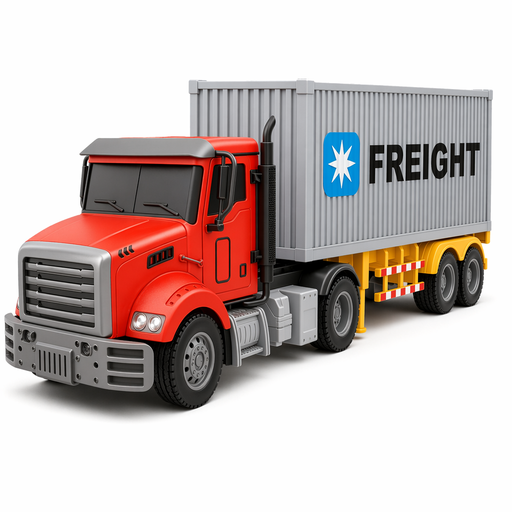
Why it suits this profile: The simple functions and moderate controls are well suited to children using an RC toy for the first time. The large lorry also supports imaginative play, with a removable cab and container.
The product description clearly lists forward, reverse, left and right controls, as well as the battery and USB cable. The recommended age of 3 years and over and the warning about small parts are also clearly stated.
Approximately 45 cm long, 2.4 GHz controls, lights and automatic demonstration mode.
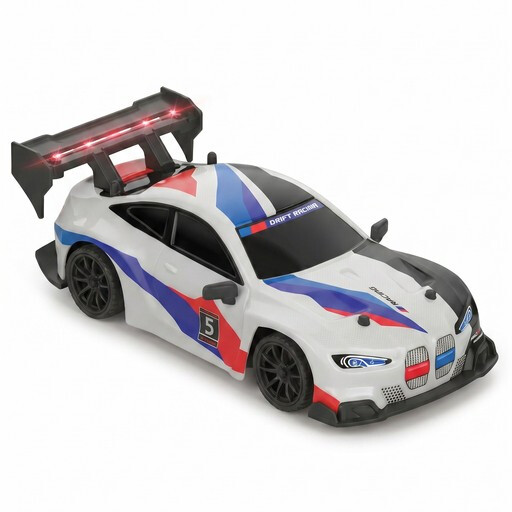
Why it suits this profile: Ideal for children aged 8 and over who want more precise control and the option to switch between racing and drifting. The car is primarily designed for flat indoor and outdoor surfaces.
The product information distinguishes between drift tyres and racing tyres. This makes it clearer what the car is designed for than with models that focus solely on speed.
4WD drive, two sets of tyres, LED lights and a stated range of 50 metres.
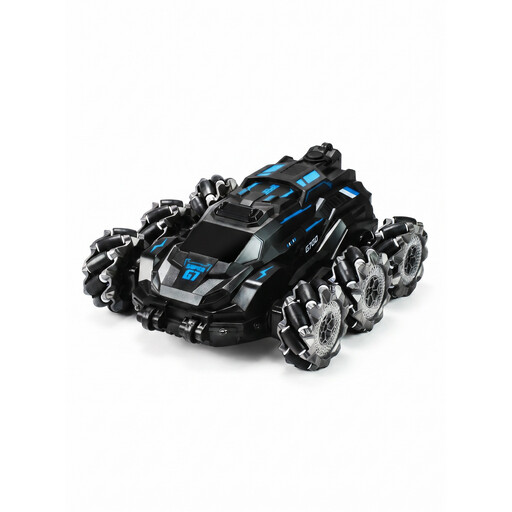
Why it suits this profile: This option is suited to children aged 6 and over who are particularly interested in stunts, spinning and driving on different surfaces. According to the product description, its spray effect uses clean water.
The specifications mention 6WD, rubber treaded tyres and multiple control modes. This provides more information about how it can be used than a general off-road claim alone.
360° spinning, LED and sound effects, automatic demonstration mode and an adjustable swing-arm structure.
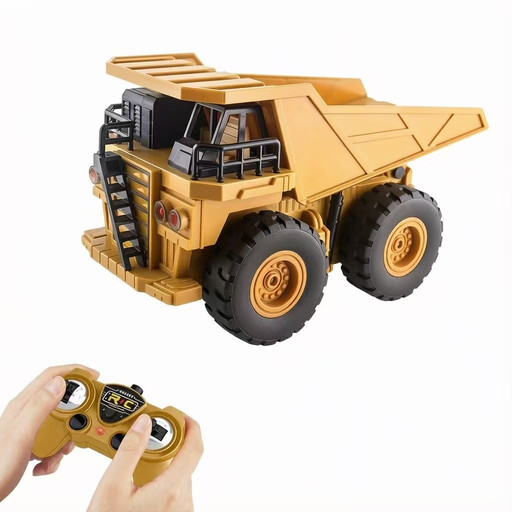
Why it suits this profile: A great gift for children who would rather operate an RC construction vehicle than race around. The tipping bed allows for shared play and role play centred around loading and unloading.
The product description lists six control channels, including a lifting load bed, and separately states the AA batteries required for the remote control.
Tipping bed with lifting and tilting functions, LED lights, sound effects and a rechargeable 3.7 V battery according to the product information.
We have put together a complete, up-to-date list of products that fully meet these strict selection criteria and the applicable European safety regulations.
Before every play session, check that the wheels, bodywork, charging cable and battery are securely attached. Clean an RC car with a soft, dry cloth. Do not submerge a model in water unless the product information explicitly states that it is designed for this. Even with a supposedly water-resistant car, supervision is still required, especially around a swimming pool.
Allow a lithium battery to cool down after intensive use and charge it according to the instructions provided. Store the toy in a dry place and remove loose batteries from the remote control when it will not be used for an extended period.
Choose a model with simple buttons, moderate speed and a clear age recommendation. An RC lorry with forward, reverse and turning functions may be easier to control than a fast RC drift car. Always check the warning about small parts and use the toy under supervision.
This varies by model and usage. The product information for the drift cars mentioned states approximately 20 to 40 minutes per charge. Lights, music, high speed and driving on grass can affect playtime. Also check the charging time and the price of a possible replacement battery.
That depends on the tyres, drive system and construction. A 4WD or 6WD off-road vehicle is generally designed for more surfaces than a low racing car, but always check the product description. Avoid water and mud if the model does not include clear information confirming that it is suitable for them.
