
Vandaag of morgen in huis

Kwaliteit gegarandeerd

Welkomstaanbiedingen ontgrendelen: GRATIS bezorging | Tot 80% korting | Gratis 30 dagen JoyPlus-proefperiode
Download de app
An RC toy car may seem easy to choose at first glance. However, models vary considerably in terms of controls, terrain performance, battery usage and recommended age. A car with lots of lights and sounds is not automatically suitable for a child who mainly wants to drive outdoors. Conversely, an advanced stunt car may be unnecessarily difficult for a beginner.
Pay particular attention to these three common pitfalls:
For indoor use on a smooth floor, a simple drive system may be sufficient. If you want to drive on grass, gravel or uneven paving, it is better to look for 4WD or 6WD, rubber tyres and a clearly defined tread pattern.
A 4WD RC car distributes driving power across four wheels. This can help with corners, small obstacles and driving on less even surfaces. However, an off-road RC car is not automatically suitable for every type of terrain. Always check the product description and pay attention to the wheel size, ground clearance and recommended use.
For stunt functions, Mecanum wheels are worth considering. These wheels allow sideways driving, diagonal movement and turning on the spot. You will mainly see them on an RC stunt car.
A classic 2.4GHz remote control with clear buttons is often easy for beginners to understand. When using several cars, this frequency can, according to the product information, support simultaneous use without signal conflict, although the actual experience depends on the surroundings and the product.
A gesture control RC car is operated using a wristband or motion sensor. This adds an interactive element, but may take some practice. Check whether a standard remote control is included as well. This allows a child to learn to steer first and try motion control later.
For children around three years old, simple functions, low speed and supervision are important. The label RC toy from 3 years does not mean that independent use without supervision is always appropriate. Check the warnings, small parts and intended environment.
A rechargeable remote-controlled car means you do not need new batteries for the car before every play session. However, check the following:
An RC car with LED lighting is particularly eye-catching during evening play or in a dark room. Lights, music and sound effects can enhance the play experience, but are less important when long outdoor sessions or quiet operation are the priority.
Be careful with claims about water resistance. If the product information describes a car as “waterproof” or “amphibious”, still check whether it must be charged away from moisture, whether only clean water is permitted and whether the car needs to be dried after use. An ordinary RC car is not designed to be submerged.
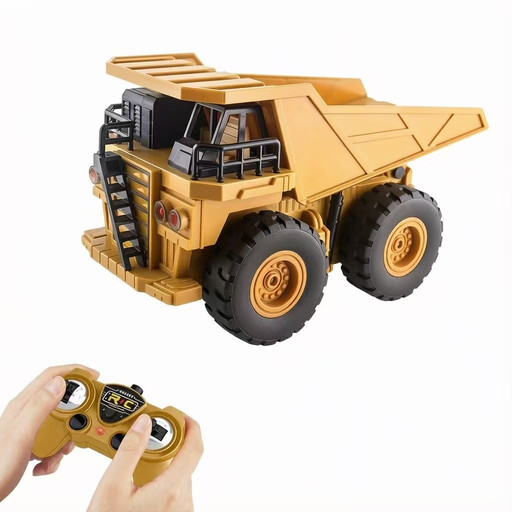
Why it suits this profile: This RC construction vehicle has familiar functions and an easy-to-use 6-channel remote control. This makes it suitable for children who would rather load and unload than race.
The product information states that a 3.7V 500mAh battery and USB cable are included. The remote control uses 2 AA batteries, which are required separately.
Tipper with lifting and dumping functions, rubber tyres, LED headlights and sound effects. According to the product listing, it is suitable for children aged 3 and over when supervised.
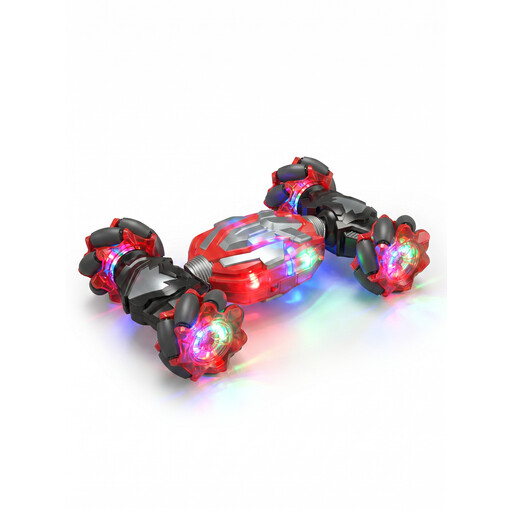
Why it suits this profile: This model combines hand control with motion-sensitive wrist control. It is suitable for children aged around 8 and over who want to try different ways of driving.
The product description mentions dual controls, wide and narrow driving modes, and driving on both sides. This makes the functions more specific than simply calling it a “stunt car”.
4WD, Mecanum wheels, LED lighting, sideways drifting and driving on both sides. The age stated in the product name is 8 years and over.
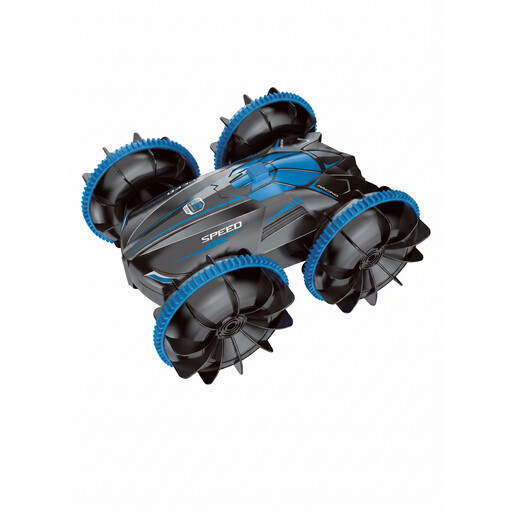
Why it suits this profile: For children who want to play outdoors and are looking for an eye-catching vehicle. The product information describes use on land and water, with hand and wrist controls.
The description explicitly mentions a sealed housing and use on water. Do not charge the car while it is wet, and follow the manufacturer’s maintenance instructions.
4WD, driving on both sides, 360° turning and two control methods. The product listing mentions grass, sand, gravel and shallow water as suitable surfaces.
We have put together a complete, up-to-date list of products that fully meet these strict selection criteria and the applicable European safety regulations.
This varies depending on the model, battery capacity, surface and driving style. Product listings sometimes provide an estimated play time, but using LED lighting and sound can affect power consumption. Allow the battery to cool down after use and store it in a dry place.
A compact car with moderate speed can be used on a spacious, flat floor. Stunt models with large tyres need more room. Protect furniture and check that there are no loose parts within reach of young children.
In addition to the purchase price, replacement batteries, USB charging and batteries for the remote control are the main costs to consider. Check which batteries are included before buying. For many models, the car battery is included, while AA or AAA batteries for the controller are required separately.
When choosing an RC toy car, it is therefore not just about appearance or light effects. Consider the child’s age, drive system, surface, controls and battery information. This will help ensure that the vehicle matches the child’s play style and prevent a purchase from being left unused after just a few trips.
