
Vandaag of morgen in huis

Kwaliteit gegarandeerd

Welkomstaanbiedingen ontgrendelen: GRATIS bezorging | Tot 80% korting | Gratis 30 dagen JoyPlus-proefperiode
Download de app
An RC toy car may seem like a simple gift, but models vary considerably in their recommended age, speed, battery type and controls. A remote-controlled toy car that’s suitable for a preschooler won’t necessarily suit a teenager who wants to drift or drive off-road.
The most common buying mistakes usually come down to three pitfalls:
So don’t rely on the picture or marketing name alone. Check the product specifications, warnings and included accessories before ordering a remote-controlled toy car.
For young children aged 3 and over, a simple radio-controlled car with forward, reverse and steering functions is often easier to manage than a model with lots of channels and stunt modes. A low-speed setting can help when learning, but check that this feature is actually listed in the product description.
A stunt RC car with 360-degree spins, sideways driving or two-sided driving offers more ways to play, but it also needs plenty of space and supervision. Take the recommended age seriously for models intended for ages 14 and over, such as some powerful 4WD cars.
Also look out for the differences between:
A 4WD RC car is powered by all four wheels. This can be useful on grass, gravel or uneven surfaces, but actual performance also depends on the tyres, ground clearance and motor power. A model with smooth tyres is more likely to be designed for flat floors or controlled drifting.
So check:
Treat claims about water resistance with caution. A brand may state, for example, that a model is suitable for shallow water, but this isn’t a general guarantee for every situation. Don’t drive through deep puddles, and dry the vehicle after outdoor use in line with the instructions.
Check whether the battery is included and what type of charger comes with it. A lithium battery with a USB cable is handy for repeated use, but check its voltage and capacity. The remote control often needs separate batteries, which aren’t always included.
Also look out for:
A sturdy ABS or metal part may stand up better to everyday bumps, but no toy vehicle is designed to withstand unlimited hard crashes.
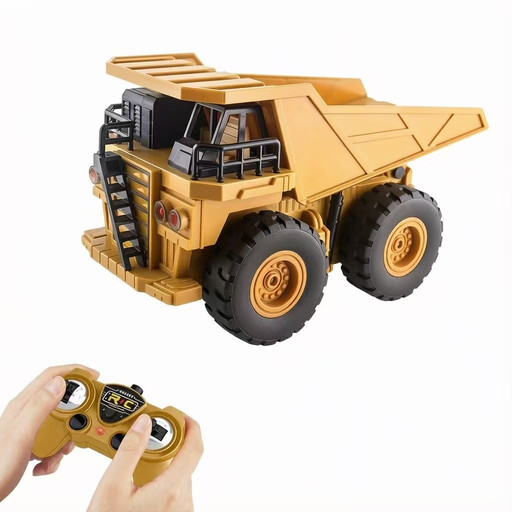
Why it suits this type of user: The tipper and straightforward functions make this model suitable for children who mainly want to explore and enjoy role play, without jumping straight into a high-speed racing car.
The product information lists forward, reverse, steering and a moving tipper separately. Check the age warning, though, and supervise children around small parts.
6-channel remote control, rubber tyres, LED lights and a rechargeable 3.7V battery, according to the product description.
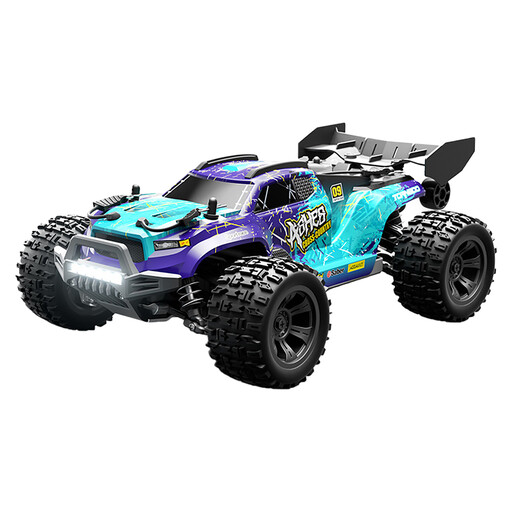
Why it suits this type of user: For teenagers aged 14 and over and experienced users looking for a powerful off-road car to drive in larger outdoor spaces.
The specifications list 4WD, an aluminium chassis plate and a 7.4V battery. The age recommendation of 14 and over helps ensure its speed isn’t put in the hands of a young child.
Four-wheel drive, 2.4GHz transmitter, LED headlights and one included 1500mAh battery, according to the product information.
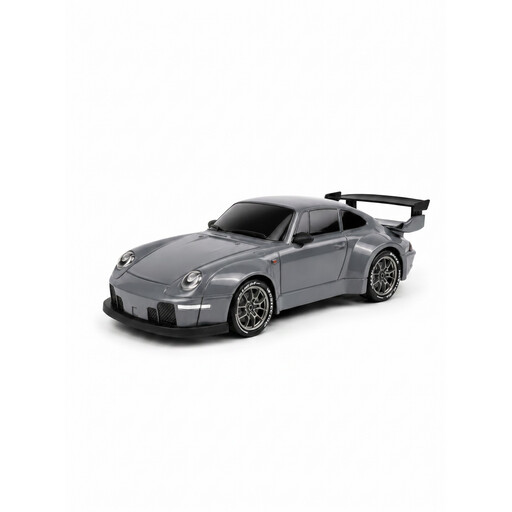
Why it suits this type of user: Designed for users who want to practise drifting, slaloms and circuit driving rather than just driving in a straight line.
The product description lists two speeds, an adjustable gyroscope and interchangeable tyres. This makes it easier to match how you use the car to your driving experience.
4WD, gyroscope assistance, LED lights, shock absorption and a 7.4V battery, according to the listed specifications.
We’ve put together a complete, up-to-date list of products that meet these strict selection criteria and current European safety regulations.
It depends on the specific model. Check the recommended minimum age, warnings about small parts and how complex the controls are. A gift for children aged 3 and over should be used under supervision if the manufacturer advises this. For young children, it’s best to choose a model with simple controls and limited speed.
Play time varies depending on the motor, battery, surface and driving style. The capacity in mAh gives you an indication, but it doesn’t guarantee a set play time. Also check how long it takes to charge and whether a spare battery is available. Remember that the remote control often needs separate batteries.
Some models are designed for grass, gravel or other outdoor surfaces, while others are mainly suited to flat floors. Check the drive system, tyres, ground clearance and any warnings about water. For example, an RC truck with rubber tyres is better suited to role play on a flat surface, while a 4WD model may offer more control on rougher terrain. Only use an RC drone for children in an open space, and always follow local safety rules and the instruction manual.
