
Vandaag of morgen in huis

Kwaliteit gegarandeerd

Welkomstaanbiedingen ontgrendelen: GRATIS bezorging | Tot 80% korting | Gratis 30 dagen JoyPlus-proefperiode
Download de app
An RC stunt car can make a fun present for a birthday or special occasion, or for an afternoon spent playing outdoors together. However, not every radio-controlled car performs in real life as it appears in the product photos. Some models are best suited to smooth floors, while others are designed for grass, sand or small obstacles.
So don’t focus only on LED lights or eye-catching looks. The drive system, tyres, battery and controls all affect how much fun a child or teenager will really get from a remote-controlled toy car.
A car that can spin through 360 degrees isn’t automatically a good RC off-road car. Small stunt wheels can be handy on tiles or laminate, but may be less suitable for grass or gravel. Check the tyre type, ground clearance and the surfaces the manufacturer says the model is designed for.
A bigger battery doesn’t necessarily mean longer playtime. Motor power, speed, surface and driving style all have an impact too. Also check whether the battery is included, how it charges and whether the remote control needs extra AA or AAA batteries.
A simple RC car for children aged 3 and over needs different controls from a fast 4WD racing car for teenagers. Check warnings about small parts, speed and size, as well as the recommended age. Young children should be supervised by an adult, especially outdoors or when using models with water, music or lighting effects.
A 4WD RC car drives all four wheels. This can help with grip, acceleration and driving over slightly uneven surfaces. For more demanding off-road use, a 6WD model may be worth considering, as multiple driven wheels distribute the force across the car. However, this isn’t the only factor affecting speed: tyre tread, motor and weight still matter.
For drifting on a smooth floor, low-friction tyres are often more practical. Some RC drift cars can be switched from drift mode to racing mode using interchangeable tyres.
Look for:
According to the product information for various models, ABS plastic, shock absorption and reinforced parts are designed to help absorb impacts. That doesn’t guarantee the car will remain undamaged: driving hard into walls or kerbs, or into water, can damage any model.
A 2.4GHz remote control is handy when several cars are being driven at once. According to the product information for the selected models, this frequency supports simultaneous use without the signals normally interfering with one another. Also check whether the car has proportional steering or just fixed commands for left, right, forwards and backwards.
A rechargeable RC car reduces the need for disposable batteries in the car. Check:
A stated playtime of 20 to 40 minutes, as listed for some drift models, is a guideline based on the product information. Actual playtime varies depending on the surface, speed and use of the lights.
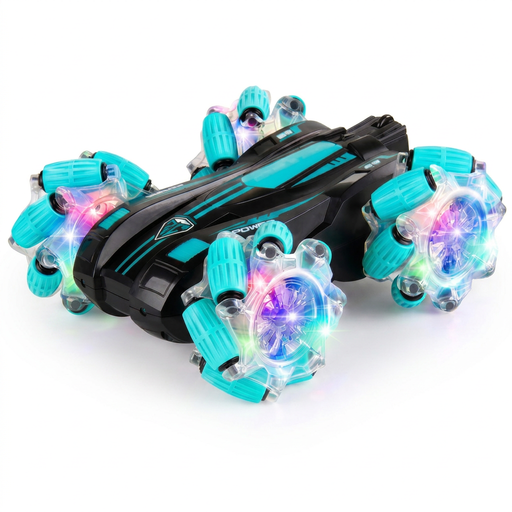
Why it suits this type of user: The double-sided controls, 360° function and automatic demonstration mode make this model easy for beginners to use. According to the product information, it’s designed for indoor and outdoor use.
The product description lists 9 cm Mecanum wheels, 4WD and the ability to drive on either side. Before buying, make sure the surface you have in mind is suitable for how you plan to use it.
4WD, LED wheels, sideways driving, 360° spins and a rechargeable lithium battery, according to the product information.
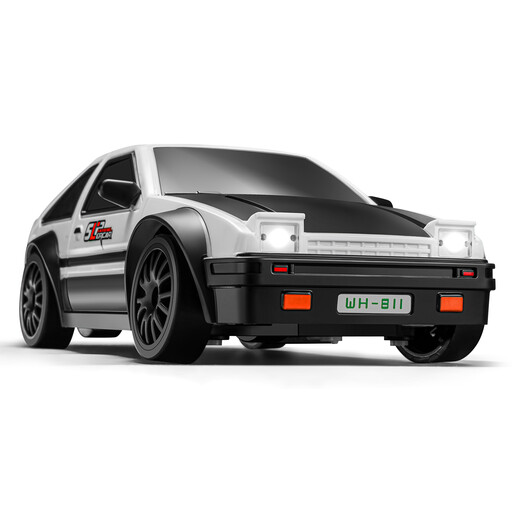
Why it suits this type of user: This model is aimed at users who want to switch between drifting and racing, and build their driving skills step by step.
The product information lists two speed settings, an adjustable gyro stabiliser and interchangeable drift and racing tyres. This means you’re not limited to a single driving style.
4WD, LED lights, independent suspension and a 7.4V rechargeable battery, according to the product description.
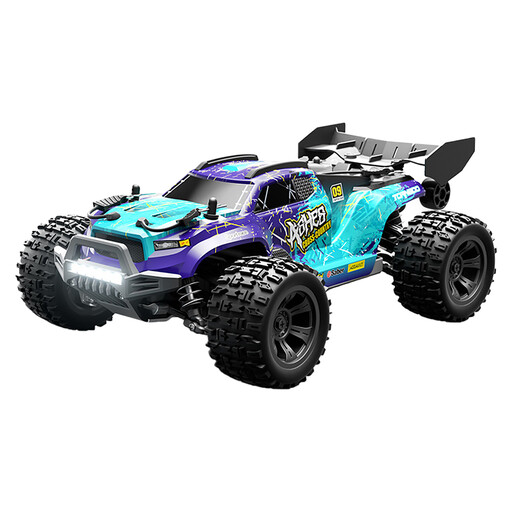
Why it suits this type of user: This model is aimed at teenagers and users aged 14 and over who want to drive outdoors on grass, sand, gravel and slightly muddy surfaces.
The product information lists a metal chassis plate, large off-road tyres, 4WD and a professional transmitter with speed and steering settings.
7.4V 1500mAh battery, LED headlights, 2.4GHz controls and accessories such as spare pins and a USB charging cable.
We’ve put together a complete, up-to-date list of products that meet these strict selection criteria and the applicable European safety regulations.
It depends on the size, speed and tyres. Compact stunt models with sideways movement are often suitable for tiles, laminate or carpet. It’s best to use a fast RC racing car in an open space away from fragile furniture. Also check the noise level and turning circle.
Playtime varies from model to model. The product information for some 1:24 drift models gives an estimate of around 20 to 40 minutes per charge. LED lights, high speeds, frequent drifting and driving on grass can drain the battery more quickly. Let a lithium battery cool down before recharging it, and always follow the charging instructions provided.
For a child aged 6, it’s best to choose a model with simple buttons, a stable 2.4GHz connection and a limited top speed. From age 8, a model with interchangeable tyres, gyro stabilisation or several driving modes may be a good option. For young children, always follow the age recommendation on the product page. Claims about safety or suitability should be checked against the official product information and warnings.
