
Vandaag of morgen in huis

Kwaliteit gegarandeerd

Welkomstaanbiedingen ontgrendelen: GRATIS bezorging | Tot 80% korting | Gratis 30 dagen JoyPlus-proefperiode
Download de app
An RC stunt car often looks spectacular in photos. However, models can differ considerably in terms of control, surfaces, battery life and build quality. A car that drifts smoothly on tiles may get stuck on grass. A vehicle with lots of lighting effects may also offer less driving time if its battery is small.
So don’t just focus on terms such as “4WD”, “off-road” or “360° stunt”. Look at the combination of drive system, tyres, controls and maintenance. This helps you avoid a poor purchase and choose a remote-controlled stunt car that suits the driver’s age and play environment.
An RC off-road car is not automatically suitable for every type of terrain. Grass, sand, gravel and small bumps require treaded tyres, sufficient ground clearance and a drive system that does not jam easily. Check whether the product description clearly states which surfaces the vehicle is designed for.
For indoor use, tiles, laminate and carpet are not the same. An RC drift car usually needs a smooth surface, while a stunt car with larger rubber wheels provides more grip on grass or concrete.
A 360° rotating RC car or double-sided RC car can perform impressive movements, but beginners may benefit more from a low-speed setting and simple buttons. Check whether the car has an automatic demonstration mode, proportional steering or several speed settings.
A gesture-control RC car with wrist or gesture control is interactive, but the traditional remote control remains practical for precise manoeuvres. Some models offer both control methods.
A rechargeable battery is convenient, but always check the estimated playtime, charging time and charging cable. Playtime depends on speed, surface, lighting and stunt use. A product description that only mentions “long battery life” without giving an indication provides little useful guidance.
Also check whether spare batteries are available. A second battery can reduce waiting time between play sessions, but first check whether one is available and which connector it uses.
With a 4WD RC car, all four wheels are powered. This can help with acceleration and tackling small obstacles. On its own, it does not indicate how fast or powerful the car is: motor power, gears, weight and tyres also play a part.
Mecanum wheels can support sideways and diagonal movement. This makes sideways drifting and turning on the spot possible. A standard RC toy car usually does not offer this direction of movement.
A double-sided RC car can continue driving after tipping over without you having to turn it over by hand. This is particularly useful for stunts on a flat surface. However, check whether the car retains the same driving functions on both sides and whether the electronics are sufficiently protected against dust and light splashes.
A rounded, sturdy body can absorb impacts better than thin bodywork. Product descriptions referring to a car as “unbreakable” or “drop-proof” should not be treated as a guarantee. Use the car on a suitable surface and regularly check the wheels, axles and mounting points.
Choose a radio-controlled car for children based on both the recommended age and the level of supervision required. Products with small accessories, batteries or loose parts are not suitable for young children without supervision.
Check before buying:
A CE mark is a legal declaration of conformity by the manufacturer or responsible party, not a promise that a product can withstand every type of collision.
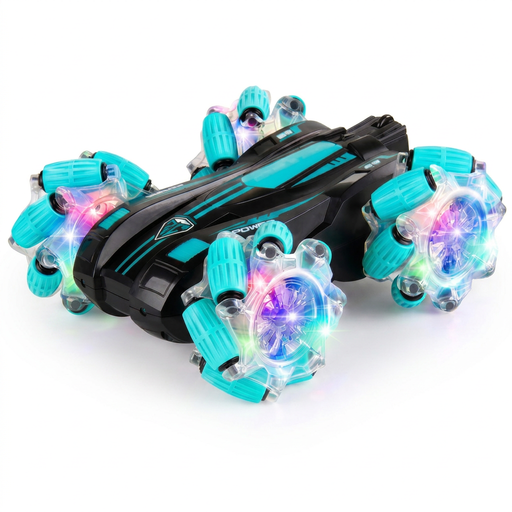
Why it suits this profile: The combination of hand control, 4WD, double-sided driving and 360° rotation offers several ways to play without having to move straight on to a hobby-grade car.
The description specifies 9 cm Mecanum wheels, suitable surfaces and a rechargeable battery. Before buying, check the exact battery capacity and charging time.
4WD, LED wheel lighting, double-sided driving and an automatic stunt mode, according to the product description.
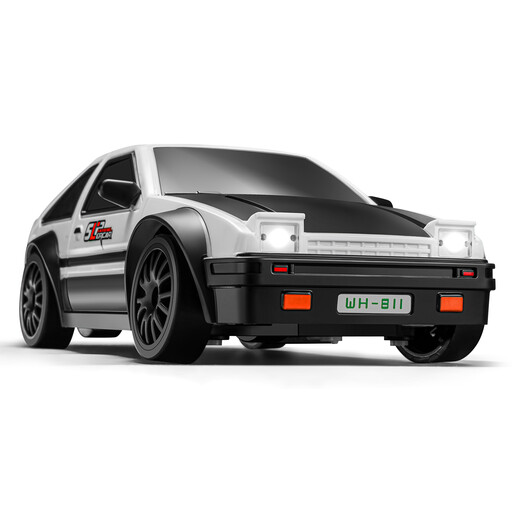
Why it suits this profile: This model is aimed at drivers who want to drift more precisely and switch between racing and drifting.
The product information mentions two speed settings and an adjustable gyro system. This helps you build control gradually, but the actual handling depends on the surface and driving experience.
Interchangeable drift and racing tyres, independent suspension, LED lighting and a 7.4V rechargeable battery, according to the product specifications.
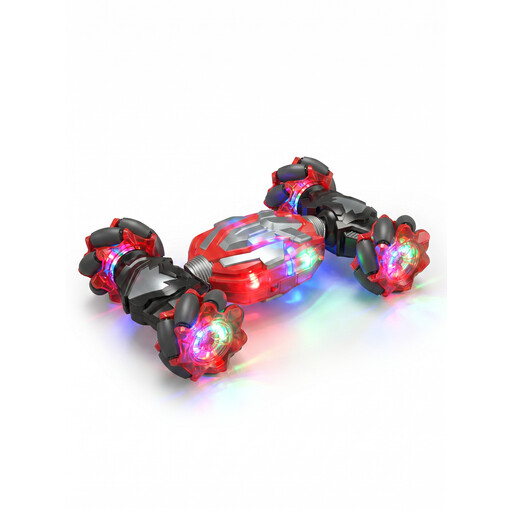
Why it suits this profile: The transforming body and wrist control are ideal for anyone looking for off-road driving and advanced stunts as well as racing.
The description specifies wide Mecanum wheels, 4WD, two body positions and double-sided driving. Check the recommended age beforehand and bear in mind that intensive use may cause additional wear.
Gesture control, transforming design, sideways drifting, LED lighting and driving on surfaces including grass, gravel and concrete, according to the product information.
We’ve put together a complete, up-to-date list of products that fully meet these strict selection criteria and the applicable European safety regulations.
This depends on use, collisions, battery maintenance and the surface. A sturdy ABS body and securely fitted wheels can support daily use, but no model is immune to damage. Check the drive system regularly and store the car somewhere dry and dust-free.
According to the product description, some models are intended for children from around 6 years old. Always check the age recommendation for the specific product, the warnings and whether it contains small parts. Adult supervision is advisable during stunts, at high speed and when playing outdoors.
The main ongoing costs are electricity for charging, spare batteries if required, and wear-and-tear parts such as tyres or gears. USB charging makes everyday use simple. Before buying, check whether spare parts and a suitable replacement battery are available.
