
Vandaag of morgen in huis

Kwaliteit gegarandeerd

Welkomstaanbiedingen ontgrendelen: GRATIS bezorging | Tot 80% korting | Gratis 30 dagen JoyPlus-proefperiode
Download de app
An RC drone for kids can make a fun gift, but the available models vary considerably. Some are designed mainly for indoor use, while others feature a camera, FPV goggles or advanced flight functions. The right choice therefore depends on more than price or appearance alone.
Pay particular attention to three common buying pitfalls:
For a first flight, features such as one-key take-off and landing, a headless mode and automatic altitude hold are practical. With headless mode, the user does not need to pay as much attention to the front of the quadcopter. This can make those first flying lessons easier to manage.
Automatic altitude hold does not mean the drone flies completely independently. The pilot must still avoid obstacles and keep the drone within sight. Also check whether the remote control has clearly labelled buttons and which batteries it requires.
A mini drone for beginners is generally convenient for indoor use or short outdoor flights in calm conditions. A larger model with more powerful motors may be better suited to an open garden or park, but it often reacts more quickly and requires more space.
Pay attention to the battery type, capacity and what is included in the box. A lithium battery should be charged according to the instructions and not immediately after a flight while it is still warm. Store batteries in a dry place away from flammable materials.
An extra battery can reduce waiting time between flights. However, check whether replacement batteries are available and whether a charging cable or charging station is included. A model advertised with “two batteries” does not automatically offer a long total operating time: check the stated duration per battery.
For example, the 4DRC Mini Drone for beginners lists approximately 12 minutes of flight time, a modular lithium battery and two batteries in the product name. The manufacturer also lists a 2.4GHz remote control and an approximate range of 100 metres. Treat these as product specifications, not guaranteed performance in every situation.
A protective cage around the propellers can reduce contact with furniture or walls, but it does not eliminate every risk. Check the propellers, fasteners and battery before use. Small parts and batteries should be kept out of reach of young children.
In the Netherlands, drones are subject to European and national regulations. Keep the drone within visual line of sight while flying, do not fly over crowds and stay away from prohibited or restricted areas, such as zones around airports. Before flying outdoors, check the latest information from the Dutch authorities and the official drone map. A toy drone is not automatically exempt from all regulations.
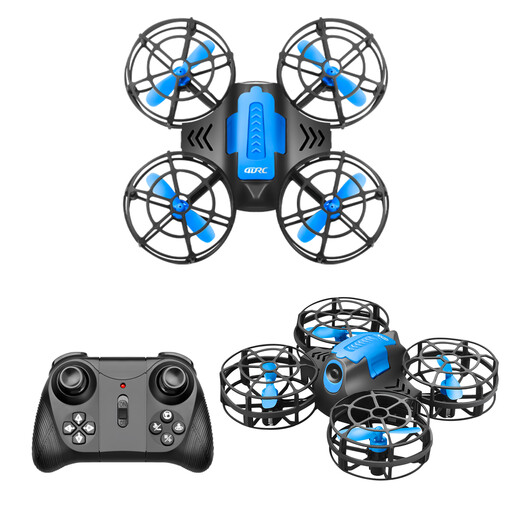
Why This Fits Their Persona: A compact entry-level model for children and beginners who want to learn basic controls before moving on to a camera drone.
The product information provides specific details: approximately 12 minutes of flight time and a modular battery. This makes comparisons easier than a vague claim about “long” flights.
Automatic altitude hold, headless mode, one-key start and two batteries according to the product listing.
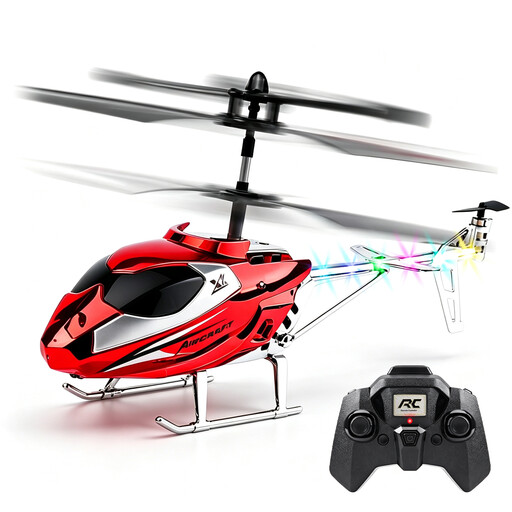
Why This Fits Their Persona: A lightweight, compact RC helicopter for children who mainly want to play indoors and appreciate straightforward controls.
The manufacturer lists a dual-coaxial rotor system, flexible blades and a metal housing. These are verifiable construction features, not a guarantee that damage is impossible.
One-key take-off and landing, two speed settings, trim controls and LED lighting according to the product description.
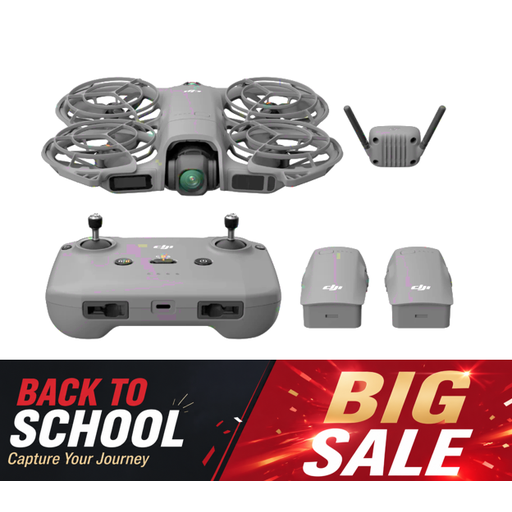
Why This Fits Their Persona: For teenagers, adults and users looking for a camera drone for aerial footage, tracking and more versatile flight options.
The listing includes specific details about its 151-gram weight, three batteries, propeller guards and 4K recording. Before use, however, check the latest app requirements and regulations.
4K camera, omnidirectional obstacle detection according to the product description, and three batteries in the Fly More Combo.

Why This Fits Their Persona: For users who want to try FPV flying and are looking for a package combining a motion controller, goggles and multiple batteries.
The package clearly specifies which components are included: RC Motion 3, Goggles N3, a digital transmission receiver and three batteries. This provides greater clarity than buying a drone on its own.
FPV equipment and three batteries according to the product information. For young children, supervision and checking the latest regulations are especially important.
Browse a current selection of models and compare controls, size, accessories and intended use before making your choice.
That depends on the model, the recommended age and the environment. For young children, choose a simple aircraft with propeller protection, limited speed and straightforward controls. Always ensure adult supervision, particularly with models that have small parts, lithium batteries or higher speeds.
This depends on the model, weather conditions and applicable Dutch regulations. A camera does not automatically make the drone more difficult to operate, but filming introduces additional considerations concerning privacy and the flying environment. Keep the drone within sight and check the latest restrictions before taking off.
In addition to the purchase price, you may need replacement propellers, extra batteries and, in some cases, new batteries for the remote control. Models with a rechargeable lithium battery, such as many mini drones and RC helicopters, eliminate the need to replace the batteries in the aircraft repeatedly. Charge and store batteries according to the manual to help prevent unnecessary wear.
