
Vandaag of morgen in huis

Kwaliteit gegarandeerd

Welkomstaanbiedingen ontgrendelen: GRATIS bezorging | Tot 80% korting | Gratis 30 dagen JoyPlus-proefperiode
Download de app
An RC drift car can make an exciting gift, but not every model is suited to every surface, age or style of play. Marketing copy often focuses on high speeds and spectacular lights. Less obvious are the things that make a difference in everyday use: the right tyres, a usable battery, enough room to drive and a controller that a child can use comfortably.
With this guide, you can compare a radio-controlled drift car using features you can check. That way, you can avoid buying a car that ends up sitting in a cupboard after just a few play sessions.
A fast car sounds appealing, but there’s usually limited space indoors. On a smooth tiled floor, a car can quickly lose traction. So check whether the model is designed for indoor use on flat floors, outdoor use or rougher terrain. A 1:24 model is compact, but it also needs less space than a large off-road truck.
Drifting and driving in a straight line don’t always call for the same type of tyre. Hard drift tyres help the car slide, while racing tyres generally offer more grip on a flat surface. A model with two interchangeable sets of tyres gives you more flexibility than a toy drift car with just one type.
Don’t just check whether a car is rechargeable. Also check how long the battery is said to last, how it charges and whether the controller needs its own batteries. The BMW, Porsche and GTR models are listed as offering around 20 to 40 minutes of play per charge. Actual play time depends on speed, surface and driving style.
A 4WD RC car is powered by all four wheels. This can help with acceleration and controlled drifting, especially on a smooth floor. It doesn’t automatically mean the car is suitable for grass, sand or wet surfaces, so check what kind of use the product is designed for.
With proportional control, the car responds more gradually to the accelerator and steering. This is more practical than a system that only moves fully forwards or backwards. For children aged around 8 and over, this can make learning to steer easier, provided the controller has clear, easy-to-use buttons.
A range of 50 metres is listed for several compact drift models. That’s more than enough for a living room, but walls, other electronic devices and outdoor conditions can affect the signal. A 2.4 GHz controller is useful when several cars are being used at once, as this type of connection is generally designed to let different vehicles run side by side. Always check the instructions and local product information.
An RC car with a rechargeable battery and USB cable is handy for home use. Check whether the battery is removable and whether a spare is available. After driving, remove hair, dust and small stones from the wheels, and check the steering mechanism. This helps prevent unnecessary wear.
When buying, also look for the CE mark, the age recommendation, safety warnings and an instruction manual in English or another language you can understand. The recommended age is a guide; you should also choose a car that suits the child’s motor skills. Don’t use the car on public roads, and supervise younger children.
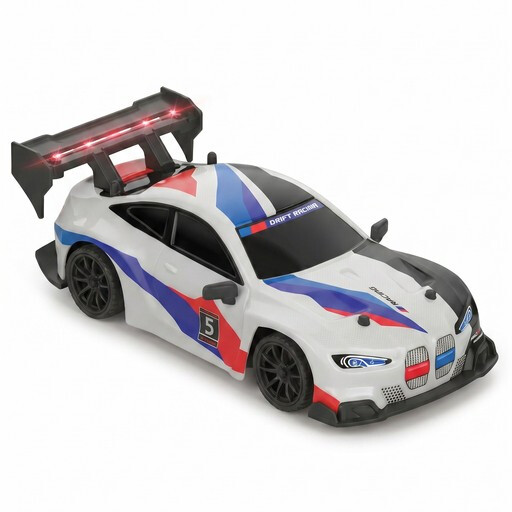
Why it suits this user: This compact model is designed for indoor driving and combines racing with drifting. According to the product listing, it’s suitable for children aged 8 and over and doesn’t need much space.
The two sets of tyres mean you’re not limited to drift tyres. The USB-rechargeable battery also means you won’t need disposable batteries for the car.
4WD, a stated range of 50 metres, LED lights and a stated play time of 20 to 40 minutes per charge.
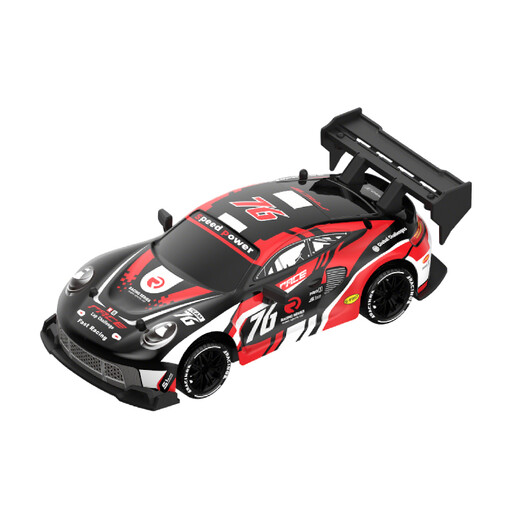
Why it suits this user: This remote-controlled electric racing car is a good fit for enthusiasts who value a recognisable design and different driving modes.
The product listing mentions both drift and racing tyres. This lets you adjust the grip to suit your driving style, rather than choosing based on speed alone.
4WD, 2.4 GHz control, interchangeable tyres, LED lights and a stated range of 50 metres.
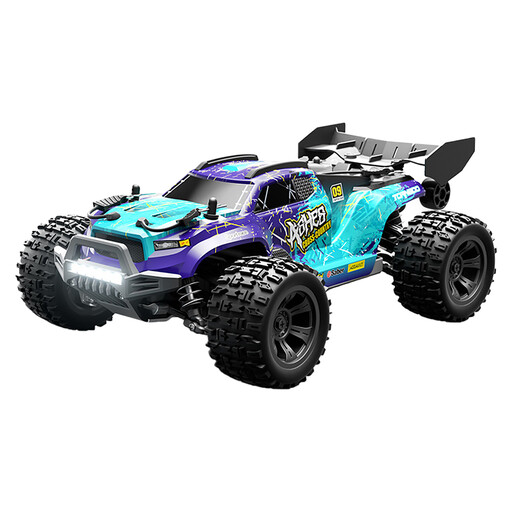
Why it suits this user: This larger model is designed for teenagers and users aged 14 and over who want to drive outdoors on surfaces such as grass, sand or gravel.
The product specifications list 4WD, off-road tyres and a 7.4 V battery. This makes it a clearer choice for outdoor use than a compact indoor car.
A stated top speed of over 40 km/h, a 7.4 V 1500 mAh battery, adjustable controls and LED headlights. The controller uses three AA batteries, which the listing says are not included.
We’ve put together a complete, up-to-date list of products that meet these strict selection criteria and the applicable European safety requirements.
That depends on the model and the manufacturer’s age recommendation. A toy car for children aged 8 and over should be suitable not only for their age, but also in terms of speed and controls. It’s best to start on a clear, flat floor and supervise play until the child is confident using the controller.
Battery life varies depending on the battery, motor and driving style. The compact models mentioned are listed as offering around 20 to 40 minutes per charge. Full acceleration, frequent drifting and driving on rough surfaces generally use more power. Charge the battery as instructed and store it in a dry place.
As well as the purchase price, remember to factor in the electricity used for charging, any AA batteries needed for the controller and replacement tyres. A model with two sets of tyres can be practical, as you won’t need to buy an extra set straight away for a different driving mode. Also check in advance whether batteries and spare parts are available separately.
