
Vandaag of morgen in huis

Kwaliteit gegarandeerd

Welkomstaanbiedingen ontgrendelen: GRATIS bezorging | Tot 80% korting | Gratis 30 dagen JoyPlus-proefperiode
Download de app
On paper, an RC drift car may seem fast, sturdy and suitable for every surface. In practice, however, some models can be disappointing. A car that drifts well mainly on smooth tiles is not automatically suitable for grass or gravel. Spectacular features such as LED lighting, music and 360° rotation can also seem more important than the components that determine how long the toy will last.
With this buying guide, you can compare a remote-controlled car based on the specifications that really matter. This will help you find a suitable toy for children from around 6 years old, an RC car as a birthday present, or a model that teenagers and hobbyists can use to practise with purpose.
An off-road RC car can handle more than a low-slung racing car, but the tyres and ground clearance are still crucial. Smooth plastic or drift tyres work well on tiled and wooden floors. On grass, sand and gravel, a deeper tread and sufficient space beneath the chassis are essential.
Therefore, check whether the product description clearly states which surfaces the car is designed for. A 4WD RC car with sturdy rubber tyres is generally more practical for outdoor use than a small drift model fitted only with smooth tyres.
Many models state a play time of, for example, 20 to 40 minutes per charge. The actual duration can vary depending on speed, surface, lighting and stunt functions. Also check whether the battery is rechargeable, how it is charged and whether the remote control requires separate batteries.
A USB charging cable is convenient, but always check that the correct charging accessories are included. Store lithium batteries in a dry place and charge them according to the instructions.
An RC stunt car with wrist control, transformation, sideways driving and automatic demonstrations offers plenty of ways to play. For a young child, however, a simple remote control may be easier to use. Pay attention to the recommended age, small parts and the need for supervision. The product information and warnings on the product page should always be treated as the leading guidance.
4WD or 6WD distributes drive power across several wheels. This can help with drifting, climbing and driving over uneven surfaces, but it does not automatically make a car suitable for mud, deep puddles or demanding obstacles.
Look out for the following:
An indoor remote-controlled racing car therefore needs different features from an off-road stunt model.
A 2.4G remote control is a commonly used wireless connection. With several cars, this system may allow you to drive them at the same time, provided that the product description states this. A stated range, such as 50 metres, should be viewed as a product specification under certain conditions, not as a guaranteed distance in every garden or hall.
The following features are practical for beginners:
A gesture control RC car with watch or wrist control can provide extra interaction, but check whether the controller requires AAA batteries and whether these are included.
A body made from ABS plastic is lightweight and commonly used for toy cars. Also look at how the wheels, bumper and battery compartment are secured. A rechargeable RC car is practical for regular play, while a replaceable battery can be useful when longer play sessions are desired.
Before buying, check:
A brand’s claims about safety, waterproofing or durability come from the product description. They should therefore not be treated as a universal guarantee. Only use a model on the surfaces and in the conditions permitted by the instructions. According to the description, a car with a spray effect uses clean water; do not add any substances yourself.
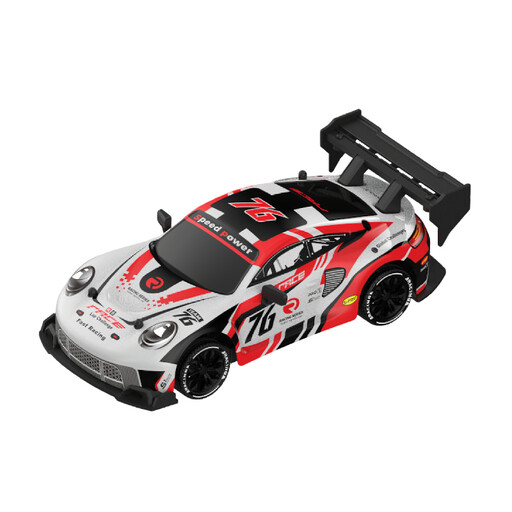
Why it suits this profile: This compact model is designed for indoor use on tiled floors and outdoor driving on flat roads. Combining racing and drifting makes it an accessible first drift toy car.
The product description clearly mentions two sets of tyres and an estimated play time of around 20 to 40 minutes per charge. This lets you see the difference between drift and racing modes before you buy.
4WD drive, 2.4G control, LED lighting, interchangeable tyres and USB charging.
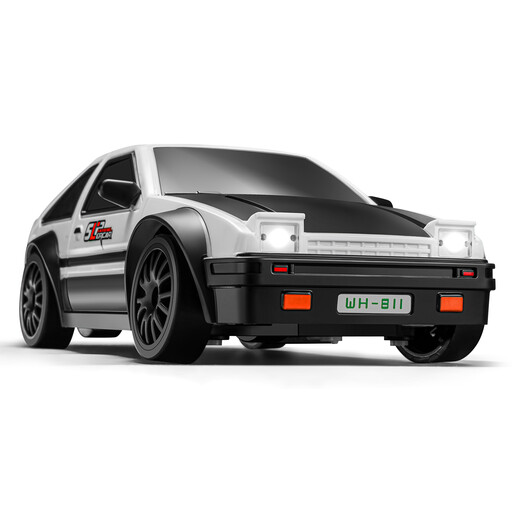
Why it suits this profile: This model is aimed at teenagers and hobbyists who want greater control during slaloms, track drifting and races.
The product information lists two speed settings and an adjustable gyro. This allows you to adapt the controls to a beginner’s level or a more advanced driving style.
4WD, independent suspension, LED lights, two tyre types and a 7.4V rechargeable battery.
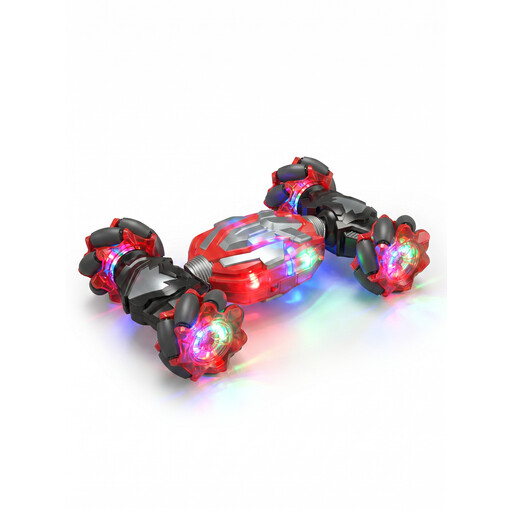
Why it suits this profile: This off-road RC car is designed for users who want to do more than drift, including climbing, driving sideways, transforming and playing on different surfaces.
The specifications mention a 4WD system, Mecanum wheels, double-sided driving and a transformable body. This means it is not limited to smooth indoor floors.
Handheld controller and motion-sensitive watch control, LED lighting, sideways drifting and off-road driving.
We have compiled a complete, up-to-date list of products that fully meet these strict selection criteria and the applicable European safety regulations.
After using the car outdoors, allow it to cool down and remove grass, sand and dust from the wheels. Only use the cleaning method specified in the instructions. A model that is not explicitly designed for water must not be submerged. Regularly check the tyres, screws, battery connector and body.
When driving indoors, preferably use a clear floor and avoid stairs, fragile furniture and traffic. This helps protect both the car and its surroundings.
This varies by model. According to the product information, some RC stunt cars are suitable from 6 years old, while proportional drift models are often listed as suitable from 8 years old. Always check the age rating, warnings and supervision advice.
Several models in this selection state approximately 20 to 40 minutes per charge. Speed, LED lighting, music, stunts and the surface all affect running time. Do not leave the battery unnecessarily discharged and follow the charging instructions.
No. 4WD tells you about the drive system, not automatically about water resistance or off-road performance. Check the tyre tread, ground clearance, chassis and permitted surfaces. An off-road stunt car is usually better suited to grass and gravel, while a compact drift or racing car is often more practical for tiled floors.
