
Vandaag of morgen in huis

Kwaliteit gegarandeerd

Welkomstaanbiedingen ontgrendelen: GRATIS bezorging | Tot 80% korting | Gratis 30 dagen JoyPlus-proefperiode
Download de app
An RC drift car looks simple at first: pick up the remote control, charge the battery and off you go. In practice, models vary considerably in their drive systems, steering, tyres and batteries. A low price can be tempting, but it’s less appealing if the car only works on a smooth floor, is difficult to steer or has no replacement tyres available.
This buying guide will help children aged around 8 and over, teenagers and adult RC enthusiasts choose a suitable 4WD RC car for drifting, racing and stunts.
A high top speed sounds exciting, but without proportional steering, a fast RC drift car can be difficult to control. With proportional controls, the car responds more gradually to the throttle and steering. This is important when cornering, slaloming and drifting in a limited indoor space.
A model with two speed settings is often more practical for beginners. The lower setting gives you time to get used to the controls; you can use the higher setting later for races and longer straights.
Drift tyres generally have less grip on smooth surfaces. This helps you perform controlled slides, but acceleration and braking feel different from a racing car. Racing tyres are usually better when speed and grip on a flat surface are important to you.
So check whether the car has interchangeable drift tyres. With two sets of tyres, you can change how you drive without buying a second car.
A rechargeable RC car is convenient, but check how the battery is charged and whether it’s easy to remove. Product descriptions for various models state a play time of around 20 to 40 minutes per charge. Actual battery life depends on speed, surface and driving style.
Also check which accessories are included. A USB cable, spare tyres and clear battery instructions make regular use easier.
A 4WD RC car powers all four wheels. This can help with acceleration and drifting, but it doesn’t mean every surface is suitable. These models are designed mainly for flat floors, such as tiles, wood or a smooth indoor track. Outdoors, flat paved surfaces are better than grass, gravel or loose stones.
A 1:24 scale is compact enough for indoor use, while still allowing room for a recognisable body, lights and interchangeable parts.
An RC car with a gyro uses a gyroscope to help stabilise the car as it moves during a drift. According to the product descriptions for the models in question, the gyro is adjustable, so beginners can drive with more assistance and experienced users can adjust the sensitivity. This doesn’t guarantee that every drift will work automatically; the tyres, surface and steering input still matter.
A servo and proportional throttle and steering controls are important for precise handling. When looking at a product, don’t just focus on terms such as “high speed”; check how the steering and throttle respond too.
An ABS body is lightweight and described in the product information as impact- and wear-resistant. This makes it suitable for everyday play, but collisions can still damage parts such as the suspension, gears or spoiler.
An RC car with LED lights is great for driving in low light. Check whether you can switch the lights on and off, so the battery isn’t drained unnecessarily. With a lithium battery, it’s important to charge it correctly, supervise younger users and store it according to the instructions. Before you buy, also check the age rating, small parts, CE marking and information about the manufacturer or EU responsible person.
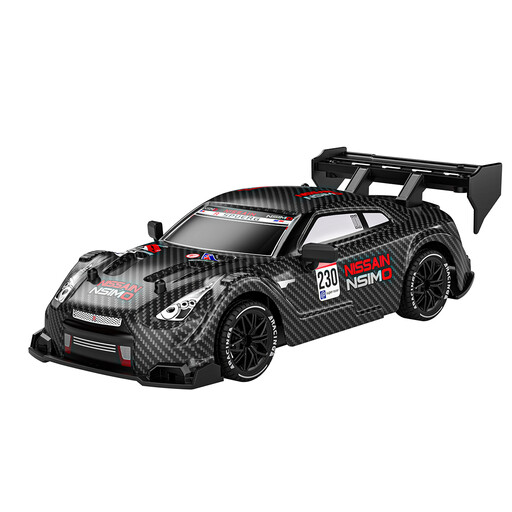
Why it suits this type of user: According to the product description, this compact model is designed for children aged 8 and over. It offers a simple combination of 4WD, LED lights and two sets of tyres. The USB-rechargeable battery is practical for regular use indoors and on flat outdoor roads.
The two interchangeable sets of tyres mean you’re not limited to drift tyres. Proportional controls help you apply the throttle and steer more gradually than simple on/off controls.
4WD drive system, USB-rechargeable lithium battery, LED lights and a stated play time of around 20 to 40 minutes per charge.
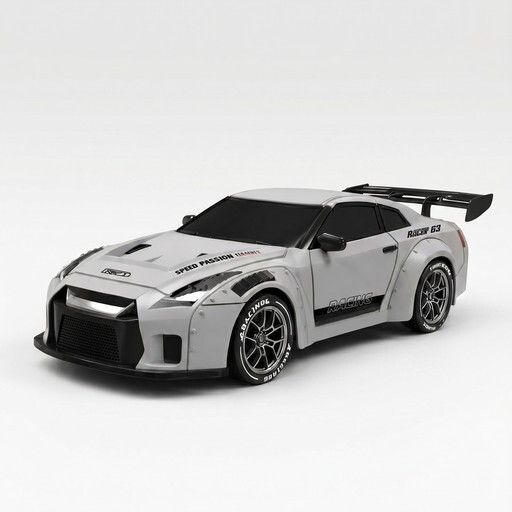
Why it suits this type of user: This model is aimed at users who want more adjustment options. The product description lists an adjustable gyro, servo, independent suspension, two speed settings and a 7,4V LiPo battery.
The low and high speed settings make it easier to practise at your own pace. The included drift and racing tyres give you more options for different flat surfaces.
Adjustable gyro, servo, independent suspension, LED lights and a complete accessory set according to the product listing.
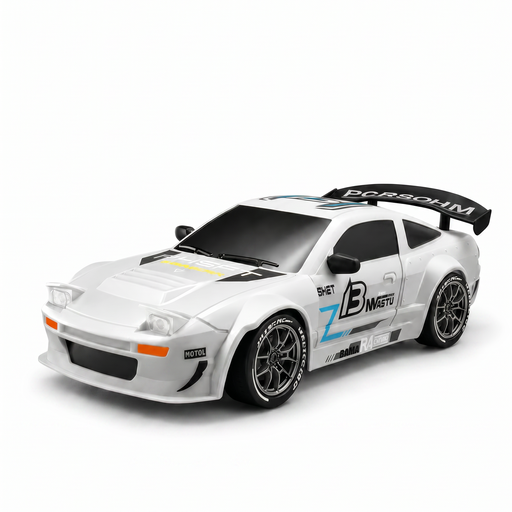
Why it suits this type of user: The combination of an adjustable gyro, two types of tyres and 4WD makes this a good fit for users who want to practise slaloms, circular drifts and track driving. According to the product description, the ABS plastic body is designed for everyday use.
Adjusting the gyro sensitivity lets you tailor the assistance to your driving experience. The racing tyres are an alternative when drift tyres don’t provide enough grip.
Proportional steering, adjustable gyro, 4WD, LED lights and interchangeable drift and racing tyres.
We’ve put together a complete, up-to-date list of products that meet these strict selection criteria and the applicable European safety requirements.
It depends on the model. Some product listings state a minimum age of 8, while others have a different age rating. Always check the product page, warnings and whether it contains small parts. Young users should be supervised while charging and driving.
Several of the models mentioned are listed as offering around 20 to 40 minutes of play time per charge. This depends on speed, surface, use of the lights and the age of the battery. An extra compatible battery can be useful, but check the voltage, connector and charging instructions first.
Yes, provided the model is suitable and the surface is flat and paved. Tiles, tarmac and smooth concrete are generally more practical than grass, sand or gravel. Moisture can damage the electronics, so don’t drive through puddles and store the car somewhere dry.
