
Vandaag of morgen in huis

Kwaliteit gegarandeerd

Welkomstaanbiedingen ontgrendelen: GRATIS bezorging | Tot 80% korting | Gratis 30 dagen JoyPlus-proefperiode
Download de app
An RC drift car sliding sideways around a corner with screeching tires is an impressive sight. Whether you're looking for a gift for a child or want to get into the hobby yourself, the remote control car market can be overwhelming. Many models promise spectacular drifts but, in practice, deliver mostly frustration.
As a Joybuy Product Recommendation Officer, I'm here to help you make the right choices. We'll look past the flashy packaging and focus on what truly matters. Let's discuss the most common pitfalls so you can avoid a bad purchase.
Pitfall 1: The "drift feature" is just a marketing term. Many low-cost models have hard plastic tires that simply slide instead of performing a controlled drift. True drift performance requires a combination of specific drift tires, proper weight distribution, and preferably all-wheel drive (4WD).
Pitfall 2: Impractical batteries and short run times. A car that stops running after ten minutes is no fun. Pay attention to the battery's capacity (expressed in mAh) and its type. Models with very weak or hard-to-replace batteries that use a proprietary connector lead to hidden costs and limited usability.
To find a model that suits your needs, it's important to understand a few technical specifications. These are the features that distinguish a toy from a serious hobby-grade car.
The drivetrain is crucial for control. While rear-wheel drive (2WD) is the foundation of authentic drifting, it requires a high level of skill. For most users, from beginners to advanced drivers, a 4WD RC car offers a much more stable and controllable drifting experience.
For those who want ultimate control, a gyro stabiliser is a key addition. This small electronic aid detects when the rear of the car starts to slide out and automatically corrects the steering angle. This makes it possible to execute long, smooth drifts, something that takes a lot of practice without a gyro. This is a typical feature of an RC car for adults looking for performance.
A good radio-controlled drift car often comes with two sets of tires:
The scale (e.g., 1:24 or 1:16) indicates the size of the car relative to the real model. A 1:24 model is more compact and ideal for indoor use, while a 1:16 model is larger and performs better on rougher outdoor surfaces.
The control method determines the precision. A gesture control car is fantastic for kids; it's intuitive and provides a lot of fun. However, for a serious RC drift car experience, a proportional 2.4GHz remote control is indispensable. It allows you to precisely modulate the throttle and steering, which is essential for controlling a drift.
Below is a selection of models matched to different user profiles. These aren't "winners," but practical choices based on their specifications and intended use.
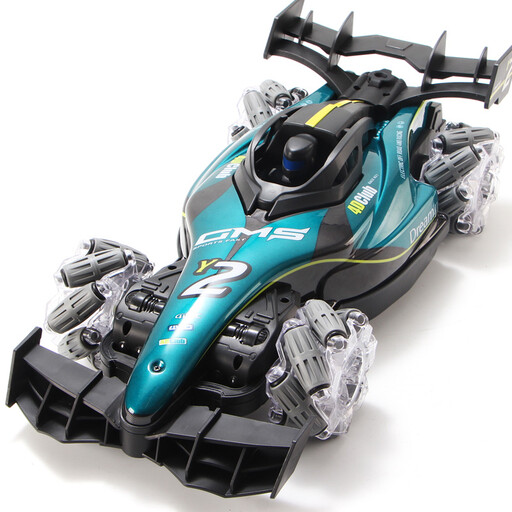
Why This Fits Their Persona: This model is a `remote control stunt car` that's all about instant fun. The combination of gesture control, 360° rotations, lights, music, and a spray effect makes it a spectacular gift.
This model isn't marketed as a precision drifter, but as a stunt car. The focus is on fun features, not performance, which sets the right expectations.
Dual control modes (gesture and traditional remote) offer variety. The 4WD system is ideal for all kinds of stunts.
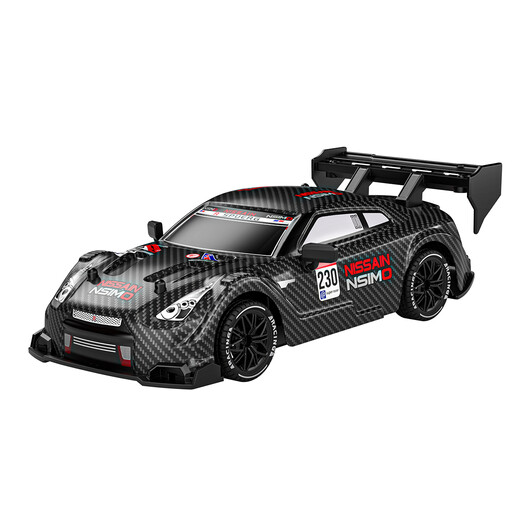
Why This Fits Their Persona: A perfect entry point into the world of `hobbyist drift cars`. It offers the essential features for real drifting, like 4WD and interchangeable tires, in an affordable and compact 1:24 scale.
This isn't a simple sliding toy. The included sets of drift and racing tires and the proportional remote provide an authentic, controllable experience.
The combination of two sets of tires and a proportional remote control gives the user the ability to both race and learn how to drift.
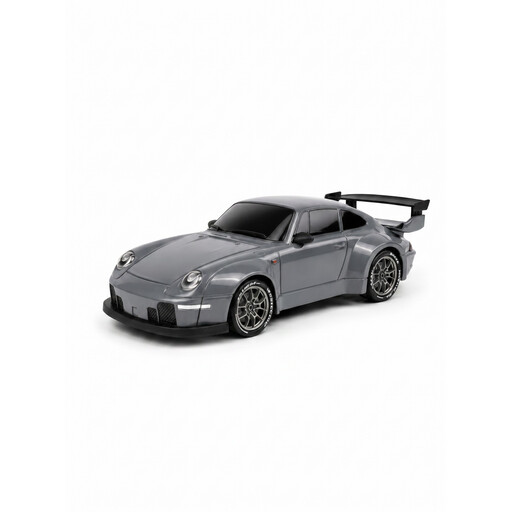
Why This Fits Their Persona: This model is an `RC car for adults` seeking control and customisation. The adjustable gyro, professional steering servo, and independent wheel suspension are hallmarks of a hobby-grade car.
This model directly addresses the "fake drift" pitfall with an adjustable gyro stabiliser. The 7.4V Lithium battery offers better performance and a longer lifespan than standard batteries.
The combination of an adjustable gyro and a professional steering servo gives the user maximum, fine-tuned control over the drifting action.
We have compiled a complete, up-to-date list of products that fully meet these strict selection criteria and safety regulations.
The main difference lies in control and customisability. Toy models are often focused on instant fun with features like lights and sound but offer little precision. Hobby-grade models typically have proportional controls, better suspension, interchangeable parts (like tires), and advanced electronics such as a gyro for maximum control.
Run time varies greatly, from 10-15 minutes for basic models to 20-30 minutes or more for hobby-grade cars with a more powerful Lithium-ion (Li-ion) or Lithium-polymer (LiPo) battery. Many hobbyists purchase an extra battery to extend their driving time. Always check the capacity (mAh) and battery type before you buy.
No, quite the opposite. A gyro makes it easier to control. It helps keep the car stable during a drift by automatically making small steering corrections. This allows beginners to learn controlled drifts more quickly and gives experts the stability to push the limits. On many models, the gyro's sensitivity is adjustable, so you can determine the level of assistance yourself.
