
Vandaag of morgen in huis

Kwaliteit gegarandeerd

Welkomstaanbiedingen ontgrendelen: GRATIS bezorging | Tot 80% korting | Gratis 30 dagen JoyPlus-proefperiode
Download de app
Finding the right RC drift car can be a challenge. The market is filled with models that look similar at first glance but differ significantly in performance and features. The art of RC car drifting is all about precision, control, and the right equipment. The wrong choice can lead to frustration, while the right car opens the door to a fascinating hobby.
As a Joybuy Product Recommendation Officer, my job is to help you make an informed choice. In this article, I'll break down the specifications and present some popular choices. We'll look at what makes a radio-controlled drift car suitable for both beginners and more experienced drivers, so you can find a model that fits your needs.
Before we dive into the models, here are a few practical points to consider. These specifications largely determine the driving experience and the learning curve.
Virtually every serious RC drift car is equipped with four-wheel drive, or 4WD. This is no coincidence. A 4WD RC car offers superior control while sliding. The front wheels pull the car through the corner while the rear wheels push, resulting in a stable and predictable drift. This makes it easier for beginners to master the technique.
The scale, such as 1:24 RC car, indicates the size of the car relative to the real vehicle. A 1:24 model is compact enough for indoor use but also robust enough for smooth outdoor surfaces. This size is an excellent compromise between portability and performance.
A crucial feature for a hobby-grade RC car is proportional steering and throttle response. This means the car reacts in proportion to your input on the remote control. If you steer a little, the wheels turn a little. This is in contrast to cheaper models with an all-or-nothing system, where the wheels can only turn fully left or right. For controlled drifting, proportional control is essential.
Are you looking for a drift car with a remote control as a starting point or as a gift for a teenager? Then opt for a Ready-to-Run (RTR) package. These sets include everything you need to get started right away: the car, the transmitter (remote control), a rechargeable battery, a charger, and often even an extra set of tyres. Most drift cars come with both smooth drift tyres and rubber tyres with more grip for racing.
Based on the criteria above, we have selected a few models that offer a good balance of features, performance, and ease of use.
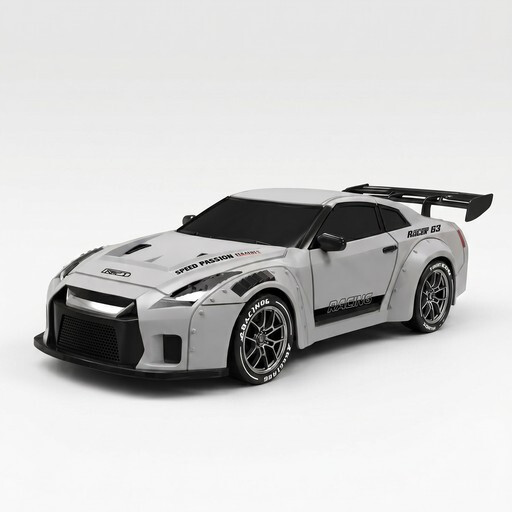
Why it stands out: This model distinguishes itself with the addition of an adjustable gyro stabiliser. This gyro helps the car automatically counter-steer to keep a drift stable, which is a huge help for beginners looking to learn the technique. The professional steering servo ensures a precise and fast steering response.
Key Features:
Who is it for? This is an excellent choice for the serious beginner or the hobbyist looking for more control and tuning options. The gyro stabiliser significantly lowers the barrier to learning complex drift manoeuvres.
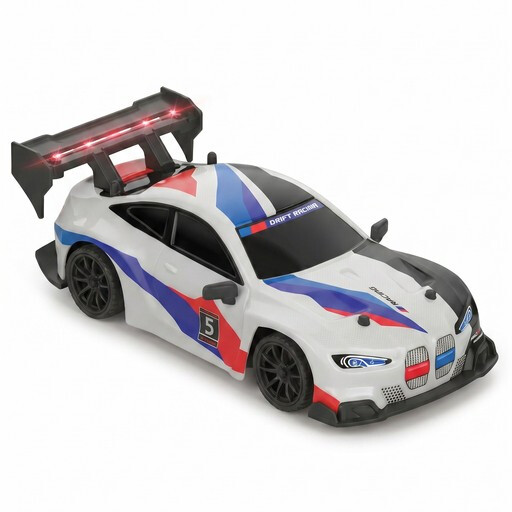
Why it stands out: This model provides a solid foundation for anyone wanting to get into the RC drift hobby. It combines all the essential features into an accessible package. With a range of 50 metres and full LED lighting, it's a fun and functional car for indoor use.
Key Features:
Who is it for? Perfect as a first radio-controlled drift car or as a gift for a teenager (ages 8 and up). It offers a complete and capable experience without the complexity of advanced settings.
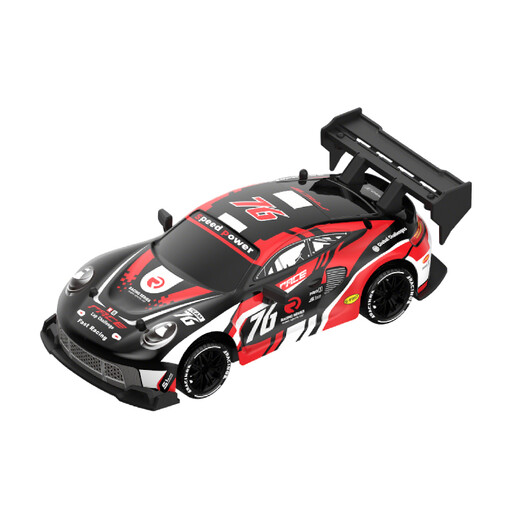
Why it stands out: This model's focus is on speed and performance, thanks to its powerful 25,000 RPM motor. This gives the car a lively character and makes it suitable for fast action on smooth floors. It's a car that invites competition.
Key Features:
Who is it for? For drivers who enjoy speed as much as drifting. The powerful motor makes it an exciting choice for friendly races and practising fast, aggressive drifts.
If a modern RC drift car isn't quite what you're looking for, and you have a preference for classic designs with a unique twist, then it's worth checking out our collection of vintage colour-changing toy cars. These models combine a nostalgic look with a playful effect.
1. What is the difference between a regular RC car and an RC drift car? The main difference is in the tyres. An RC drift car uses hard, smooth plastic tyres that have less grip, allowing the car to slide. Regular RC cars have rubber tyres with plenty of grip for maximum traction. Additionally, drift cars often have a 4WD system and specific suspension tuned for making controlled slides.
2. Is a 4WD RC car better for drifting? Yes, for most drivers, and especially for beginners, a 4WD RC car is the recommended choice. The four-wheel drive provides more stability and predictability while drifting. It makes it easier to initiate and control a drift, which significantly shortens the learning curve.
3. From what age is a radio-controlled drift car suitable? The models recommended in this article are suitable for ages 8 and up, with supervision. The proportional controls require some fine motor skills. However, it's not just a toy for children; a hobby-grade RC car for drifting is a popular and challenging hobby for teenagers and adults alike.
