
Vandaag of morgen in huis

Kwaliteit gegarandeerd

Welkomstaanbiedingen ontgrendelen: GRATIS bezorging | Tot 80% korting | Gratis 30 dagen JoyPlus-proefperiode
Download de app
By the Joybuy Product Recommendation Officer, July 21, 2026
You're in the market for an RC drift car. Not just any radio-controlled car, but a model specifically engineered for controlled slides and precision turns. The market is flooded with options, and the specifications can be overwhelming: 4WD, gyro stabilizer, proportional steering. It's tough to cut through the marketing noise and find a model that truly delivers on its promises.
This article serves as a practical guide. We highlight the most important features and present a selection of models that stand out for their specifications and functionality. This will help you make an informed decision that suits your needs, whether you're a novice drifter or an experienced hobby-grade RC car enthusiast.
Before making a choice, it's helpful to understand a few key technical aspects. These determine how the car performs and feels.
In drifting, control is everything. A 4WD drift car (four-wheel drive) distributes power to all four wheels. This provides a more stable and predictable drift, which is especially useful when learning the technique.
An RC car with a gyro (gyro stabilizer) takes this control to the next level. This small electronic component detects when the rear of the car unintentionally slides out and automatically corrects it by counter-steering the front wheels. The result is a smoother drift that is easier to maintain. On many RC cars for adults, the gyro's sensitivity is adjustable, allowing you to tailor the level of assistance to your skill level.
Most RC drift cars for indoor or smooth-surface use are 1:24 scale RC car models. This size is compact enough for home use but detailed enough for a realistic experience.
Also, pay attention to the included tires. A good set will include both slick drift tires (for low friction) and rubber racing tires (for high grip). This allows you to adapt the car for different driving styles. Details like a drift car with LED lights on the front and rear not only enhance its appearance but also make it possible to drive in low-light conditions.
A key feature of an advanced hobby-grade RC car is proportional steering and throttle response. Unlike toy cars that only offer full left, full right, or full throttle, a proportional system allows you to precisely modulate the steering angle and speed. This is essential for initiating and controlling a drift and marks the difference between a toy and a serious high-speed RC car.
Based on the criteria above, we have selected a few models that stand out for their specifications and complete packages.
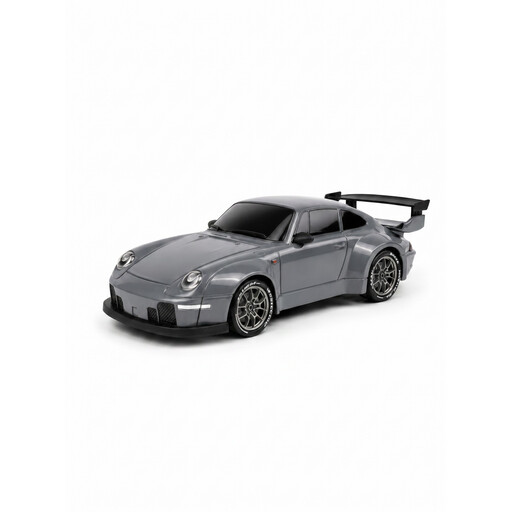
Why This Model Stands Out: This model combines all the key features for the serious hobbyist. The professional steering servo and proportional 2.4G remote provide the precision needed for complex maneuvers. The adjustable gyro stabilizer allows you to perfectly tune the car to your skill level. The retro wide-body style and controllable LED lighting give it an authentic look.
Advantages:
Who Is This For? For teens and adults looking for a complete and customizable drift experience. The adjustable gyro makes it accessible for beginners, while the proportional control offers plenty of challenge for advanced users.
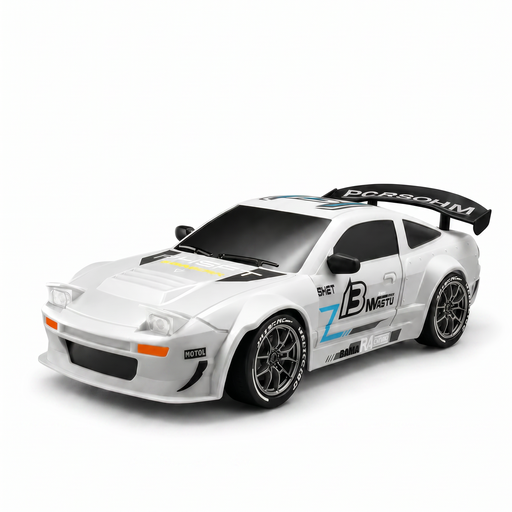
Why This Model Stands Out: This model is technically similar to the first recommendation but features a weighted chassis. This creates a lower center of gravity, which can further improve stability during drifts. The combination of 4WD, a gyro stabilizer, and a 7.4V lithium battery provides a solid foundation for consistent performance.
Advantages:
Who Is This For? This radio-controlled car is a great choice for hobbyists who value stable and predictable handling. It's an excellent platform for mastering the basics of RC drifting.
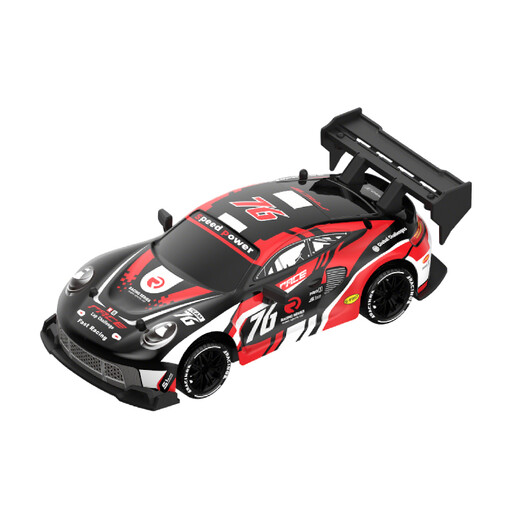
Why This Model Stands Out: This model focuses on speed and an iconic sports car design. The 25,000 RPM motor makes this a remarkably high-speed RC car in its class. Although it doesn't have an explicitly mentioned gyro stabilizer, its 4WD drivetrain combined with the included drift tires offers a fun and challenging drift experience. The 50-meter range is more than sufficient for indoor competitions.
Advantages:
Who Is This For? Ideal for beginners, children aged 8 and up, and sports car enthusiasts looking for a fast and accessible RC drift car. It's an excellent entry-level model for those who prioritize speed and design.
The world of remote-controlled cars is broad and diverse. If these specific drift models don't quite match what you're looking for, or if you're curious about other styles, there's more to explore.
Check out our wider collection of unique, remote-controlled vehicles for more inspiration.
Discover more in the vintage electric toy car category
The main difference lies in the tires and setup. RC drift cars use hard, slick plastic tires with very little grip, allowing the car to slide. Racing cars use soft rubber tires for maximum grip. Additionally, drift cars often have a 4WD system and a specific suspension tuned to promote controlled oversteer.
An RC car with a gyro isn't strictly necessary, but it significantly simplifies the learning curve. The gyro helps keep the car stable during a drift, allowing you to focus on your throttle and steering inputs. For a beginner, it's a very useful feature that can prevent frustration and increase enjoyment.
The speed of a 1:24 scale RC car varies greatly by model and depends on the motor, battery, and gear ratio. Models like the Porsche-style car mentioned above with a 25,000 RPM motor can reach speeds that are impressive for their size, often between 15 and 25 km/h (9-15 mph). However, for drifting, top speed is less important than torque and control.
