
Vandaag of morgen in huis

Kwaliteit gegarandeerd

Welkomstaanbiedingen ontgrendelen: GRATIS bezorging | Tot 80% korting | Gratis 30 dagen JoyPlus-proefperiode
Download de app
A children’s RC car might seem simple at first: a car, a remote control and a charging cable. In practice, models vary considerably in how they handle, the surfaces they can drive on, battery life and age suitability. A cheap remote-control car for children can quickly disappoint if it only works on a smooth floor, is difficult to steer or takes a long time to charge after play.
This buying guide helps parents and family members look beyond marketing claims and check the product details that matter. That way, you can make a more informed choice between an electric toy car, a 4WD RC car, an RC stunt car, a drift RC car and an electric ride-on car for children.
Terms such as “off-road”, “4WD” and “all-terrain” don’t automatically mean that a car will perform well on every surface. Check whether the product description names specific surfaces, such as tiles, carpet, grass, sand or gravel. A small rally car, for example, may work well on flat floors, while a model with larger tyres may be better suited to grass or small obstacles.
A manufacturer may quote long battery life, but actual playtime depends on speed, stunts, the surface and how often you take breaks. So, check the battery type, the cable supplied and whether a spare battery is available. Also check whether the remote control needs separate AA or AAA batteries.
A product recommended for ages 3 and up isn’t automatically suitable for a child to use unsupervised. Small parts, a powerful motor, use in water and fast turns all call for supervision. Always check the warnings on the product page and use the car in a spacious area, away from traffic, stairs and breakable objects.
A 4WD RC car drives all four wheels. This can help with grip, drifting and tackling small obstacles, but it doesn’t automatically make a model suitable for mud or deep sand. For indoor use, compact tyres and proportional steering are often more practical. For outdoor use, a higher chassis, rubber tyres and a clearly specified range of suitable surfaces are useful signs.
A drift RC car with smooth tyres usually works better on tiles, wood or a flat track. An off-road RC car with a more pronounced tread is better suited to grass, gravel or uneven surfaces.
A simple remote control with forward, reverse, left and right is suitable for beginners. More advanced models offer proportional steering, which lets you adjust speed and steering angle more gradually. Stunt cars may also drive sideways, turn through 360 degrees or keep going on either side after flipping over.
For an electric ride-on car that your child sits in, different criteria apply. Check the maximum speed, parental remote control, soft start, seat belt and maximum load. According to the product information, the 12V models mentioned travel at around 3 to 8 km/u, depending on the model.
Check whether the battery is included and how long it takes to charge. A USB cable is handy for small RC cars, while an electric ride-on car often takes several hours to charge fully. Don’t leave a lithium battery charging unattended, and follow the instructions in the manual.
Water resistance also doesn’t mean a car is suitable for deep water. For an amphibious RC car, check which parts are sealed and dry the car thoroughly after use. Safety and waterproofing claims come from the product description; only use the model as instructed by the manufacturer.
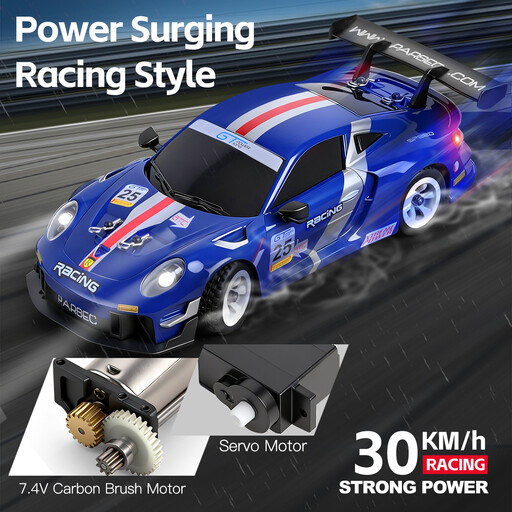
Why it suits this type of user: This compact model is designed for indoor use and flat surfaces. Proportional steering gives you more control than a basic on/off system.
The product information specifies 4WD, proportional controls and a complete set. Check beforehand that its size and speed are right for your play area.
Compact size, electric drive, 4WD and proportional steering for corners and drifts.
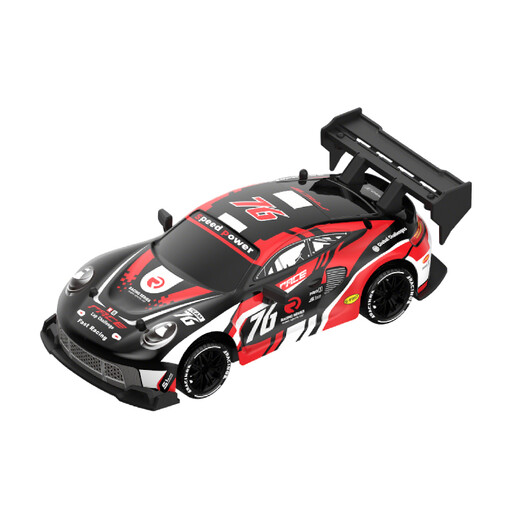
Why it suits this type of user: A good choice for children and beginner RC enthusiasts who enjoy racing and drifting on smooth floors. The two sets of tyres let you switch between driving and drifting.
The recommended setting is described more clearly: flat indoor floors and roads. This helps avoid unrealistic expectations about serious off-road use.
4WD, two interchangeable sets of tyres, LED lights and, according to the product information, 20 to 40 minutes of playtime per charge.
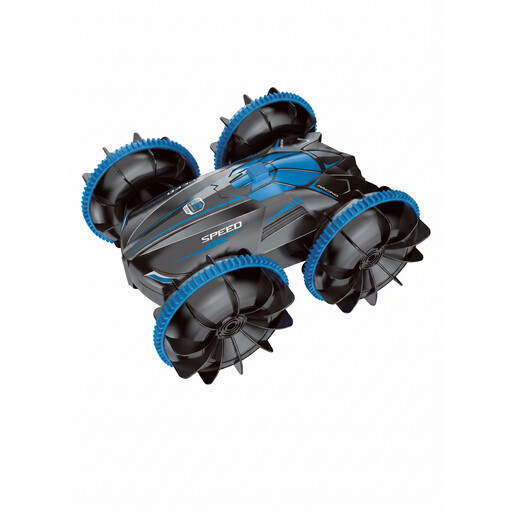
Why it suits this type of user: For children who want to try out stunts, spins and driving on different surfaces. It can be controlled by remote control or wrist gestures.
The description mentions use on land and in water, but follow the manual for water depth and drying. Don’t treat water features as a guarantee that the car is suitable for every surface.
4WD, two-sided driving, 360-degree turns and two control modes, according to the product information.
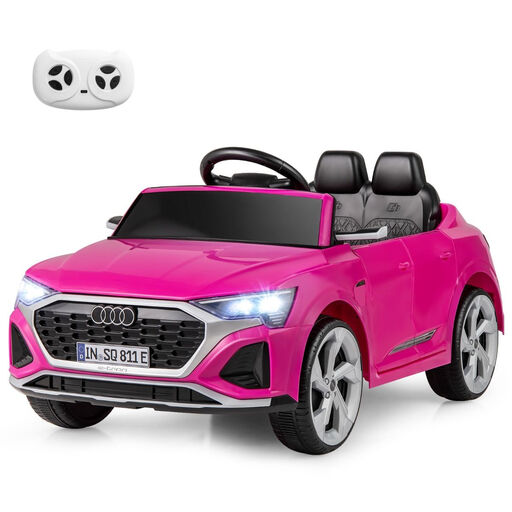
Why it suits this type of user: This electric ride-on car is designed for children to sit in. Your child can drive it themselves, while a parent uses the supplied remote control when needed.
The product information lists three speed settings, a soft start and parental controls. Always check the space available, your child’s age and the maximum load.
12V battery, two control modes, three speeds, LED lights, music and a horn, according to the product description.
We’ve put together a complete, up-to-date list of products that meet these strict selection criteria and the applicable European safety regulations.
It depends on the model. Check the age guidance, warnings and whether it contains small parts. An RC stunt car can move quickly and turn unexpectedly. So, young children should be supervised by an adult, even if the product page recommends it for ages 3 and up.
There’s no standard playtime for every remote-control car for children. Speed, drifting, stunts and the surface all affect battery use. The product description for the Porsche model mentioned above states 20 to 40 minutes per charge. Treat this as information specific to that product, not as a general expectation for every RC car.
As well as the purchase price, you’ll need to allow for electricity, replacement batteries if needed and maintenance. A small USB-rechargeable RC car will generally use less electricity than a 12V electric ride-on car. Also check whether batteries for the remote control are included. Following the charging instructions and storing the battery in a dry place at a suitable temperature will help prevent unnecessary wear.
