
Vandaag of morgen in huis

Kwaliteit gegarandeerd

Welkomstaanbiedingen ontgrendelen: GRATIS bezorging | Tot 80% korting | Gratis 30 dagen JoyPlus-proefperiode
Download de app
A radio-controlled car can be a fun gift for a birthday, holiday or spontaneous treat. However, RC cars vary considerably in speed, controls, battery life and suitability for different ages. A model that is ideal for a teenager is not automatically suitable for a 3-year-old.
So don’t just focus on LED lights, sound or an eye-catching appearance. Above all, check the technical specifications, age warning and the surface the car is designed to be used on.
A remote-controlled toy car may be able to move forwards and backwards, turn, drift, transform and sometimes even be controlled with a wristband. For young children, however, a large number of buttons can be confusing. A simple remote-controlled car with two joysticks is often more practical for a first introduction.
Also look at the difference between an automatic demonstration mode and genuine manual control. A demo shows what the car can do, but says little about how accurately a child can steer it themselves.
The term remote-controlled all-terrain vehicle is used broadly. So check the drive system, tyre tread and recommended surface. A 4WD RC car may offer more grip on grass, gravel or soft ground, but that does not mean every model is suitable for mud, deep puddles or high obstacles.
According to the product descriptions from some brands, certain models are suitable for sand, grass or shallow water. Treat this as a product specification provided by the seller and always check the maintenance instructions.
An RC car with a rechargeable battery is practical, but capacity alone does not determine how long the vehicle will run. Motor power, speed, terrain and driving style also have an impact. So check:
A high-capacity battery can be useful outdoors, while a smaller model may be sufficient for short indoor play sessions.
Start by checking the stated age range. A model with small parts is not intended for children under 3. Even where the stated age is 3, 6 or 8 years and over, supervision is advisable, particularly when driving outdoors, near water or using vehicles with a spray function.
Check whether the packaging and product page provide information about:
A CE mark does not guarantee that a product is suitable for every child. Consider the age limit, size and speed together when making your choice.
A 2WD model is usually simpler and may be suitable for smooth floors. A 4WD or 6WD model distributes the driving force across more wheels, making it interesting for grass, sand, gravel and small uneven surfaces. This type of drive can, however, result in higher energy consumption.
Deep rubber treads help provide grip, but also look at ground clearance and turning circle. For a small living room, compact models with limited speed are often more convenient than a large RC monster truck.
Most modern RC cars use a 2.4GHz connection. According to the product descriptions from the sellers mentioned, this technology can make it possible to use multiple vehicles at the same time without direct signal conflicts. The actual range depends on the surroundings and the design of the remote control.
Some vehicles offer motion control alongside a traditional controller. This sounds appealing, but a wristband or sensor controller often requires additional familiarisation. For precise steering, a traditional remote control is usually easier to manage.
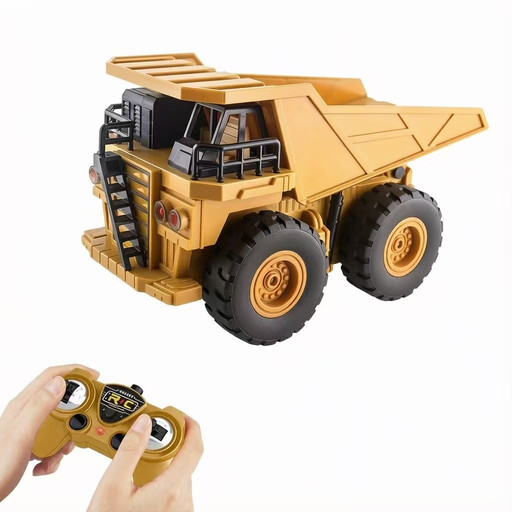
Why it suits this profile: This RC construction truck is designed for calm role play and simple construction-site movements. According to the product description, it has six control channels and a tipping body that raises and lowers using the controller.
The functions are clearly linked to a recognisable tipper truck. That means you are not paying solely for lighting effects or a stunt mode.
1:24 scale, 2.4GHz control, rubber tyres, LED headlights and a 3.7V 500mAh battery included.
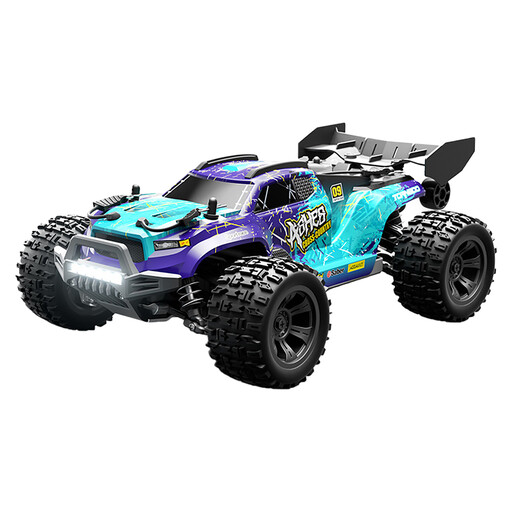
Why it suits this profile: For teenagers aged 14 and over and adult RC enthusiasts looking for greater speed and control across different terrain. According to the product description, this model reaches speeds of over 40 km/u.
The specifications list 4WD, an aluminium chassis plate and an adjustable 2.4GHz transmitter. This provides more information than simply calling it “off-road”.
4WD, 7.4V 1500mAh battery, large all-terrain tyres and LED headlights; remote control requires three AA batteries.
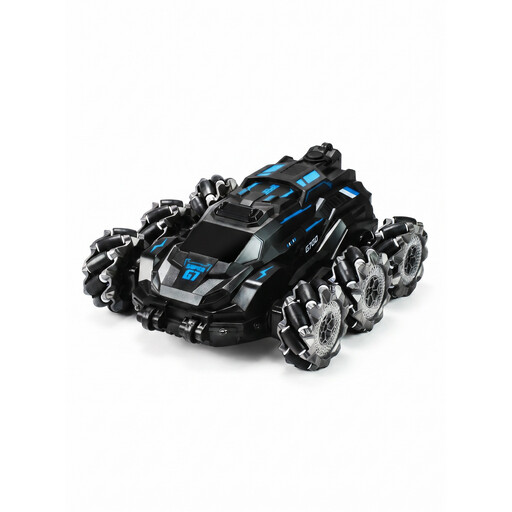
Why it suits this profile: According to the product description, this model is intended for children aged 6 and over and combines 6WD, 360° rotation, LED lights, music and a spray function using clean water.
The product information explicitly states the drive type and the two control modes. When using water, parents should check the instructions and permitted water depth.
6 powered wheels, 2.4GHz controller, automatic demonstration and USB-rechargeable 7.4V lithium battery.
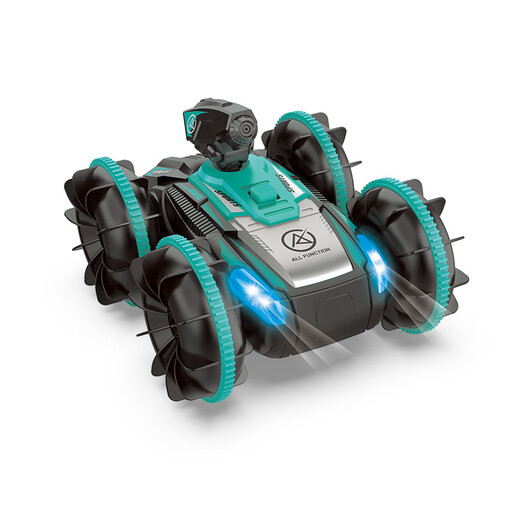
Why it suits this profile: For children aged 8 and over who want to drive outdoors and are looking for something different from a standard RC car. According to the product description, this vehicle drives on land and floats in shallow water.
The description mentions a sealed body, but water use still requires you to check the seals, battery compartment and maintenance after driving.
4WD, screw wheels, 360° rotation, LED lights and a choice of hand control or motion control.
We have put together a complete, up-to-date list of products that fully meet these strict selection criteria and the applicable European safety regulations.
Choose a model with a clear age rating of 3 and over, simple controls, moderate speed and as few loose parts as possible. Use the vehicle under the direct supervision of an adult and check the warnings about small parts.
This varies by model and usage. According to the product information, a 7.4V 1500mAh battery may be suitable for longer outdoor sessions than a smaller 3.7V battery. Driving quickly, climbing and driving on grass generally use more energy. Always check the stated play time and charging time.
Only when the product description expressly states that it can. An amphibious RC car is designed for land and shallow water, but check the permitted water depth and dry the vehicle after use. You should not submerge a standard RC tank or remote-controlled all-terrain vehicle without checking its specifications.
