
Vandaag of morgen in huis

Kwaliteit gegarandeerd

Welkomstaanbiedingen ontgrendelen: GRATIS bezorging | Tot 80% korting | Gratis 30 dagen JoyPlus-proefperiode
Download de app
An RC car may seem simple to choose at first glance. However, models vary considerably in terms of drive system, controls, battery and surface. A compact electric toy car for indoor use is not automatically suitable for grass or gravel. And a fast RC racing car may be harder for a six-year-old to control than a model with a low-speed setting.
The biggest buying mistakes usually come from three pitfalls:
A 4WD RC car sends power to all four wheels. This can help with acceleration, cornering and light obstacles. For indoor use on tiles, wood or carpet, a compact drift model is often sufficient. If you want to drive outdoors, it is worth looking for:
An off-road RC car with large tyres is generally more practical on uneven terrain than a low racing car. However, pay attention to the difference between splash resistance and fully waterproof use. Always follow the instructions and do not submerge an RC car unless the manufacturer explicitly permits it.
A simple remote control with forward, reverse, left and right is suitable for beginners. For teenagers and adults, proportional controls may be more comfortable: the further you press the trigger, the more strongly the car accelerates.
A built-in gyro can help stabilise a drift model. According to the manufacturer’s product description for the 1:24 models, the gyro is adjustable and there are two speed settings. Think of this as a driving aid, not a guarantee that every drift will work automatically. A low setting is useful when you are practising.
With a controllable drift car, interchangeable tyres are useful. Drift tyres are designed for sliding on smooth floors; according to the product descriptions, racing tyres provide more grip on flat surfaces. Before buying, check that both sets of tyres are actually included.
A rechargeable RC car means you do not need to buy new disposable batteries for every play session. Check:
For some 1:24 drift models, a product description states approximately 20 to 40 minutes of play time per charge. Actual battery life depends on speed, surface and use of the LED lighting. Allow a lithium battery to cool down after use, charge it according to the instructions and do not store it completely empty for long periods.
Also pay attention to the age rating. An RC car for children with small parts or a high speed requires supervision. In addition, check the warnings, CE marking, information about the responsible economic operator in the EU and the Dutch-language instructions where available.
The choices below are linked to specific product specifications from the product descriptions. Brand warnings and performance claims are not an independent guarantee; always check the current product page and instructions.
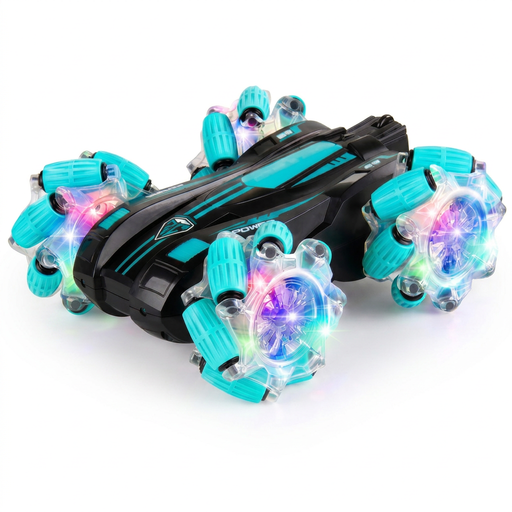
Why it suits this profile: The double-sided stunt car is designed for straightforward stunt fun indoors and outdoors. The car can continue driving after flipping over, so beginners do not have to stop and turn it over each time.
The product description mentions 4WD, two-sided driving and a rechargeable lithium battery. This makes the possible uses clearer than a general speed claim alone.
Mecanum wheels, 360-degree rotation, LED lighting and driving on both sides.
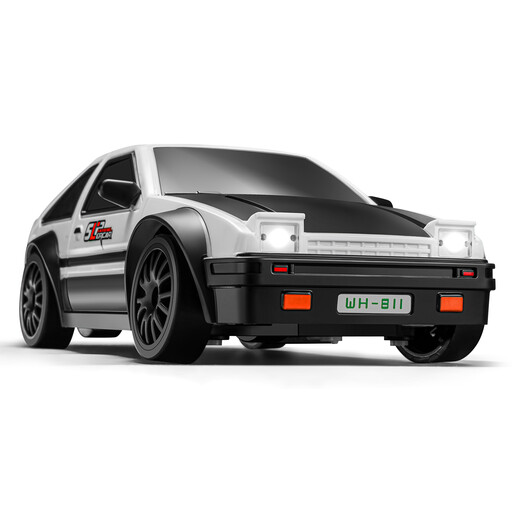
Why it suits this profile: This model combines drift and racing functions with an adjustable gyro, two speed settings and independent suspension. It is well suited to users who want more control while practising.
The choice between low and high speed prevents a single fixed driving mode from being unsuitable for beginners. The two tyre types make the difference between drifting and grip clear.
4WD, adjustable gyro, interchangeable drift and racing tyres, LED lighting and 7.4V battery.
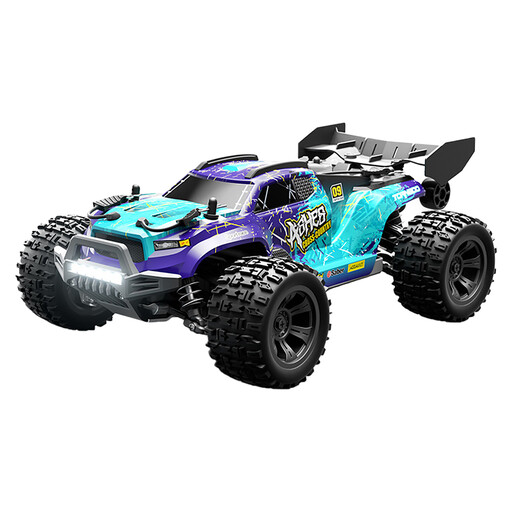
Why it suits this profile: According to the product description, this larger off-road model is intended for teenagers aged 14 and over and adults. The combination of 4WD, large tyres and a reinforced aluminium chassis is suited to driving on rougher terrain.
Its intended terrain is described more clearly than that of a standard racing car. However, check the local conditions and only use water or mud functions in accordance with the instructions.
7.4V 1500mAh battery, 2.4GHz transmitter, large non-slip tyres and aluminium chassis plate.
We have put together a complete, up-to-date list of products that fully meet these strict selection criteria and the applicable European safety requirements.
For children from around six years old, a straightforward remote control, low speed and sturdy bodywork are practical features. An RC car for teenagers can offer more power and finer controls, but pay attention to the stated minimum age. Adult enthusiasts are more likely to look for proportional controls, suspension, interchangeable parts and a second battery.
A model with LED lighting is fun in low light, but do not use a car on public roads. Choose a flat, safe location and be mindful of pedestrians, pets and traffic.
This varies according to the battery and driving style. Product descriptions for certain 1:24 models state approximately 20 to 40 minutes per charge. Intensive racing, drifting and using the lights generally consume more power than gentle driving. A second compatible battery can reduce waiting time, if supported by the manufacturer.
That depends on the tyres, ground clearance, suspension and protection for the electronics. A 4WD model with off-road tyres is generally a more logical choice for grass or gravel than a low drift car. Always check the official usage information; 4WD does not automatically mean that the car is waterproof.
First check the minimum age and warnings. A model with a low-speed setting, simple controls and impact-resistant housing is often easier to handle. For models with small parts, higher speeds or complex stunt functions, adult supervision is advisable.
