
Vandaag of morgen in huis

Kwaliteit gegarandeerd

Welkomstaanbiedingen ontgrendelen: GRATIS bezorging | Tot 80% korting | Gratis 30 dagen JoyPlus-proefperiode
Download de app
An RC car may seem simple at first glance: pick up the remote control, charge the battery and off you go. In practice, remote-controlled cars vary considerably in their drive systems, handling, battery life and suitability for different terrains. A model designed for a smooth living-room floor is not automatically suitable as an off-road RC car. And a fast racing car can be difficult for a young child to control.
Before buying a radio-controlled car, watch out for these three common pitfalls:
A 4WD RC car is powered on all four wheels. This can provide more traction when drifting, climbing and driving over uneven surfaces. For flat floors, a 2WD model may be sufficient, while an off-road model with large tyres, suspension and a protected underside is better suited to grass, sand or gravel.
An RC drift car is generally designed for smooth floors, tiles or a flat outdoor surface. Drift tyres often provide less grip than racing tyres. Models with interchangeable tyres are therefore practical if you want to drift as well as race.
For beginners, a low-speed mode is useful. This allows a child to learn how to steer and brake before switching to the higher setting. On hobby-focused models, proportional throttle and steering controls, an adjustable gyro and a transmitter with trim functions are useful features.
According to the product description, a gyro can help keep the car more stable while drifting. This does not guarantee that every driver will drive perfectly straight away. The surface, tyre type and driving experience remain important.
Also pay attention to the frequency. A 2.4G remote control is used with many models and, according to the product information, is suitable for driving several cars at the same time without the signals normally interfering with one another. However, always check the manual and the actual range. A stated range of 50 metres is mainly relevant in an open environment; walls and other obstacles can affect the connection.
A rechargeable RC car means you do not need new batteries for every play session. Check the battery’s voltage and capacity, as well as the expected playtime. For example, one model states approximately 20 to 40 minutes per charge. This is an indication taken from the product information and may vary depending on speed, surface and use of the lights.
Check the following before buying:
For an RC car for children, age suitability is more important than appearance alone. Models with small parts are not suitable for children under three years of age. Supervise young children and do not allow them to drive on public roads.
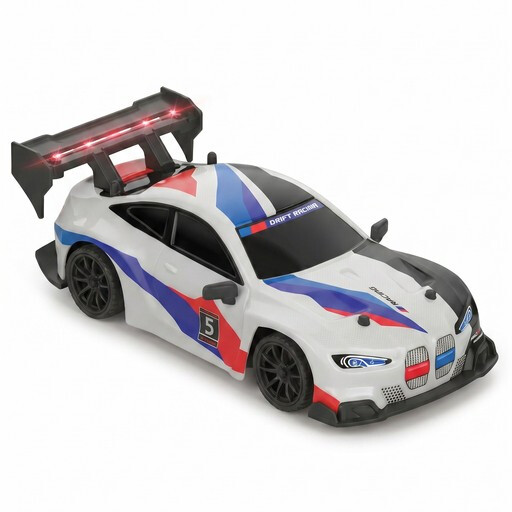
Why it suits this profile: This model combines 4WD with two interchangeable sets of tyres. According to the product information, the car is aimed at users aged 8 and over and is suitable for flat indoor floors and outdoor surfaces.
The listing mentions a rechargeable lithium battery, USB charging and an estimated playtime of approximately 20 to 40 minutes. The choice of tyres means you are not limited to just one driving style.
4WD, two types of tyres, LED lights and a stated range of 50 metres.
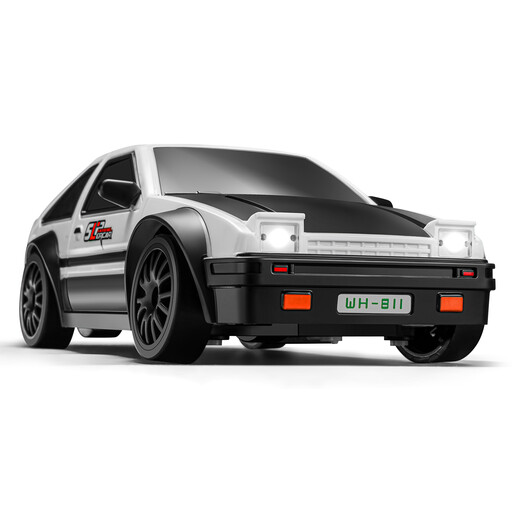
Why it suits this profile: The combination of an adjustable gyro, two speed modes, independent suspension and a complete accessory set is well suited to teenagers and adults who want to practise drifting and racing functions.
The low-speed mode supports a gentle start. Drift and racing tyres are interchangeable, so the chosen surface and driving style do not limit you to one fixed mode.
7.4V battery, 4WD, LED lights, adjustable gyro and independent suspension.
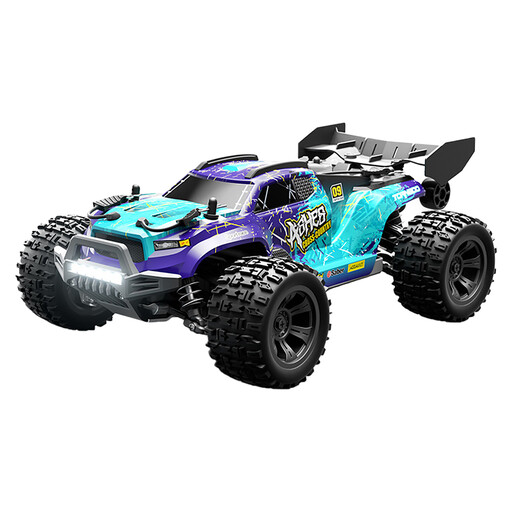
Why it suits this profile: According to the product listing, this off-road model is intended for teenagers aged 14 and over and adult users. Its large tyres, 4WD and aluminium chassis are designed for driving on surfaces including grass, sand and gravel.
The product information lists specific components rather than focusing solely on a speed claim: a 7.4V 1500mAh battery, suspension, reinforced chassis and a transmitter with speed and steering settings.
4WD, 40+ km/h according to the product title, 1500mAh battery, LED headlights and spare accessories included in the set.
We have put together a complete, up-to-date list of products that fully meet these strict selection criteria and the applicable European safety regulations.
It varies by model and usage. Product listings often provide an estimate, such as 20 to 40 minutes. High speeds, frequent drifting, rough surfaces and LED lights can affect the running time. An extra battery can be useful for longer play sessions.
Start by checking the stated age recommendation. For children aged 3 and over, simple controls, a sturdy body and supervision are important. For children aged 8 and over, models with 4WD, interchangeable tyres or a stunt function may be appealing, provided the speed and size are suitable for the play environment.
That depends on the product description. A racing or drift model is often designed for flat roads, tiles or wooden floors. An off-road RC car with large treaded tyres and suspension is better suited to grass, sand and gravel. Do not use a model in water unless the manufacturer explicitly states that it has a waterproof or amphibious design.
