
Vandaag of morgen in huis

Kwaliteit gegarandeerd

Welkomstaanbiedingen ontgrendelen: GRATIS bezorging | Tot 80% korting | Gratis 30 dagen JoyPlus-proefperiode
Download de app
A remote-controlled car for children may seem easy to choose at first glance. However, many buyers are drawn to eye-catching LED lights, high speeds or spectacular stunt videos without checking whether the toy is suitable for the child’s age, the surface and the available play area. As a result, a gift can quickly prove too complicated, fragile or expensive to run.
Pay particular attention to these common pitfalls:
For children aged around 3 to 5, a simple remote-controlled car for children is generally more practical than a model with lots of stunt functions. Large buttons, limited speed and a clear demonstration mode can help prevent frustration.
From around the age of 6, children can often benefit from learning proportional steering, different driving modes and a greater degree of control. A transforming RC car with a remote control and motion sensor may be appealing, but it will generally require more explanation.
Always check:
A CE mark is an important checkpoint for toys sold in the EU. Also look at the safety information, manufacturer details and instructions for use. A statement such as “BPA-free” or “complies with toy standards” comes from the seller’s product information and should not be interpreted as a guarantee against every type of wear or of safe use outside the stated conditions.
A compact model may be sufficient for everyday driving on tiles or a wooden floor. If you want to drive outdoors, 4WD, greater ground clearance and grippy tyres are more useful.
Note the difference between:
A toy off-road vehicle can handle a wider range of surfaces, but it is often larger and noisier. Therefore, measure the available play area in advance. Indoors, it is also important to consider how much turning space the car needs.
A rechargeable toy car saves you from constantly replacing batteries, but pay attention to the charging time and play time per charge. For example, the 1:18 three-wheeled drift car states a play time of approximately 20 to 40 minutes per charge and USB charging. This is a product specification from the listing; the actual duration may depend on speed, surface and driving style.
According to the product information, the robot dinosaur requires 3 AA batteries for the toy and 2 AA batteries for the remote control. These are not included. This makes the model suitable as a gift if you prepare the correct batteries in advance, but less convenient for immediate play straight out of the box.
Also check whether:
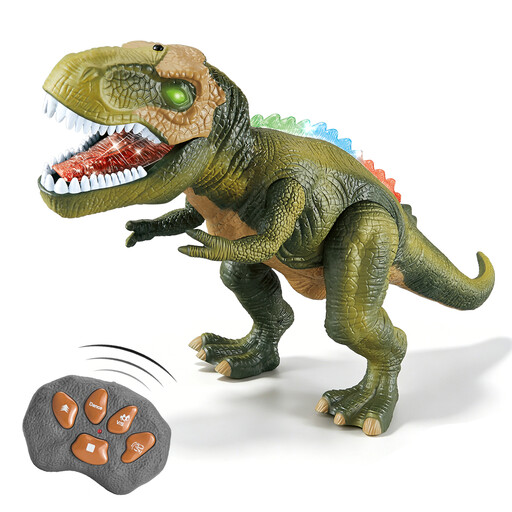
Why it suits this profile: This remote-controlled dinosaur combines walking, head movements, sound and lights. An accessible gift for children who are particularly fond of dinosaurs.
The controls focus on basic movements rather than complex driving stunts. Bear in mind that five AA batteries in total are not included.
LED lighting, walking action and a realistically described roaring sound; suitable as a gift for boys and girls from the stated age.
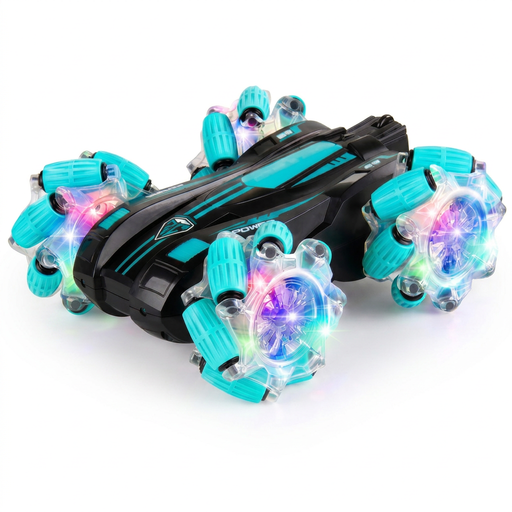
Why it suits this profile: This car is designed for stunt enthusiasts who want to drive indoors and outdoors, with double-sided driving, 360° spinning and sideways drifting.
The specifications mention 4WD, 9 cm Mecanum wheels and a rechargeable lithium battery. Before buying, however, check the current charging accessories and age information.
Double-sided body, automatic stunt demonstration and colourful LED wheels; suitable for concrete, grass, sand, tiles and carpet according to the product description.
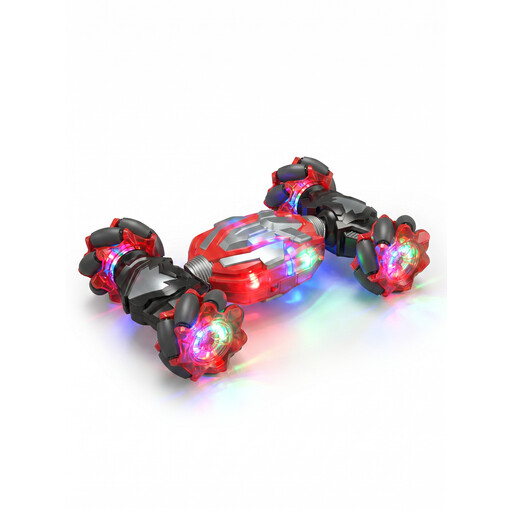
Why it suits this profile: This model is intended for children who want more than simply driving forwards. The car can transform, climb and drift, and can be controlled with a hand controller or motion sensor.
The different driving modes are described clearly: wide for terrain and narrow for confined spaces. This makes the choice clearer than a general claim about off-road use alone.
4WD, double-sided driving, Mecanum wheels and two control methods. The product description mentions driving on grass, gravel and other uneven surfaces.
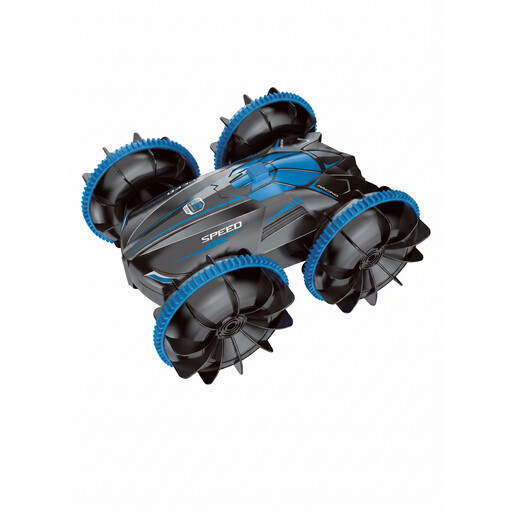
Why it suits this profile: The product description positions this model for use on land and water, for example on grass, at the beach and in shallow water.
The listing mentions a sealed housing, but always check the permitted water depth and dry the toy after use. Water use requires extra supervision.
Double-sided driving, 360° spinning, 4WD and control via remote control or motion-sensitive watch.
We have put together a complete, up-to-date list of products that fully meet these strict selection criteria and the applicable European safety regulations.
That depends on the model. Choose a product with a clear minimum age, simple controls and as few loose parts as possible. For toys with small parts, powerful motors or complicated stunts, adult supervision is advisable. The product page and warnings should be treated as the definitive guidance.
The running time varies depending on the battery, surface and driving style. According to the product information, a model with a small battery can be used for approximately 20 to 40 minutes per charge. Check whether a USB cable is included and allow the battery to cool down after use before charging it again.
Only if the product description confirms this. Pay attention to the type of tyres, ground clearance and protection of the electronics. An RC stunt car with LED lighting may be suitable for tiles or grass, while gravel and sand place greater demands on it. Do not use a model in water unless water use is explicitly stated.
