
Vandaag of morgen in huis

Kwaliteit gegarandeerd

Welkomstaanbiedingen ontgrendelen: GRATIS bezorging | Tot 80% korting | Gratis 30 dagen JoyPlus-proefperiode
Download de app
An RC car for children can make a fun gift for a birthday, holiday or just because. However, many models look alike even though the differences in controls, batteries, terrain suitability and age range can be significant. For example, a cheap remote-controlled car can quickly become frustrating if the battery runs out too soon, the remote control is too complicated or the car only works on smooth floors.
This guide helps you focus on the specifications that matter in everyday use. That way, you can choose more confidently between an RC stunt car, a 4WD RC car, a drift car for children or a remote-controlled off-road vehicle.
A car that can perform 360-degree spins, drift sideways and drive on both sides sounds appealing. For younger children, however, too many buttons can be confusing. Check whether the car has a demonstration mode, a simple button layout or an alternative control method.
Also pay attention to the remote control’s batteries. A rechargeable RC car will usually have a built-in battery for the vehicle, but the controller may still require standard AA or AAA batteries.
According to some brands’ own product information, certain models are suitable for grass, sand, gravel or water. In practice, however, the surface, obstacle height and moisture level remain important factors. An RC car with small wheels is mainly suitable for tiles, wooden floors and short-pile carpet. For outdoor use, 4WD, treaded tyres and sufficient ground clearance are more relevant than eye-catching looks alone.
For a water model, also check whether the product is actually described as waterproof. Splashproof and fully suitable for submersion are not the same thing.
A battery included in the box is convenient, but check its capacity, charging cable and whether spare batteries are available. The product description does not always state an exact play time. Plan a charging period between play sessions and store lithium batteries according to the manufacturer’s instructions.
Choose a model suited to the child’s motor skills. For children aged around 3 and over, simple functions and a sturdy body are often more practical. Models with watch controls, a transforming body or multiple stunt functions are more likely to appeal to children who already have experience with a remote-controlled car.
Also check the dimensions. A model measuring approximately 17 cm is easy to use indoors, whereas a larger car needs more space and may be easier to see outdoors.
4WD means four-wheel drive. This can help with grip and distributing drive power, but it does not automatically make a car suitable for every surface. Mecanum wheels support sideways movement and drifting on some models. Standard rubber tyres with tread, meanwhile, are useful for driving on tiles, wooden floors, short-pile carpet and flat outdoor paths.
For a drift car for children, smooth or specially designed tyres on a flat surface are important. On grass and gravel, grip and ground clearance are generally more important than controlled drifting.
Check:
A 2.4GHz system is practical when playing with multiple cars, as the product descriptions for these models state that the connection works without signal interference between vehicles. However, always check the exact specifications of the model you choose.
Read the age recommendation and warnings on the product page. Several models in this range are not suitable for children under 3 because they contain small parts. Supervise younger children when they use the car, especially outdoors, during stunts or near stairs and traffic.
Also look for manufacturer details, an EU responsible person and clear information about battery use. A CE mark is a legal conformity marking, not a general quality assessment. Consider the product as a whole: warnings, instructions for use, material information and the stated age range.
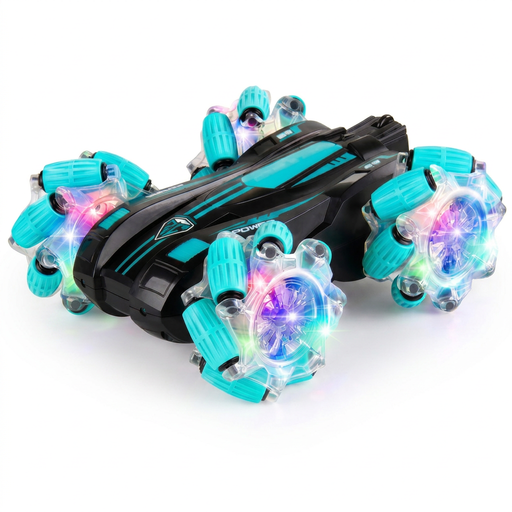
Why it suits this profile: This compact model offers plenty of visible play features without taking up much space. According to the product description, it supports driving on both sides, 360° spins, sideways drifting and colourful LED wheels.
The controls are not just about speed: the double-sided design means the car does not need to be turned over by hand after rolling over. Before buying, however, check the included battery and age warnings.
17.3 cm size; 4WD; driving on both sides; 360° function and LED lighting in the wheels.
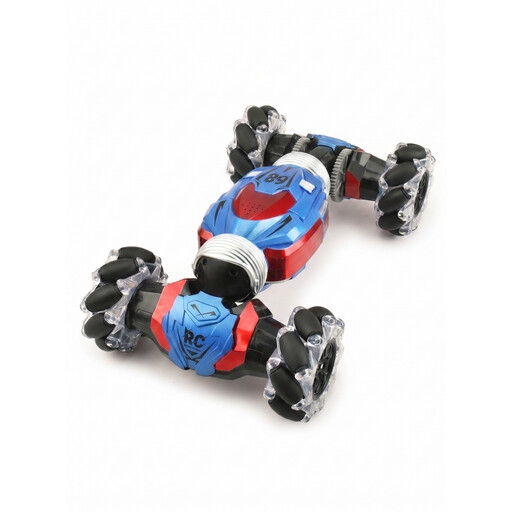
Why it suits this profile: For children looking for more control and variety, this model combines a 2.4GHz hand controller with a gravity-sensitive watch, according to the product description. The car is designed for drifting, transforming and off-road driving.
The two control modes provide an alternative if button controls are difficult to use. Because of its larger 1:16 scale and transforming design, it is sensible to plan for enough play space in advance.
4WD; Mecanum wheels; driving on both sides; transformation and two control options.
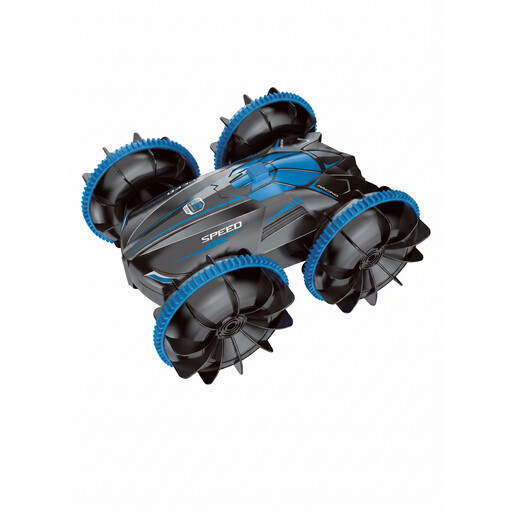
Why it suits this profile: This model is intended for outdoor use in summer. According to the product description, it can drive on land and water, perform 360° spins and be controlled with a hand controller or wristwatch.
The product information explicitly mentions a sealed housing and use on water. Nevertheless, read the current instructions and only use the car in shallow, calm water where it can be supervised.
4WD; driving on both sides; hand and gesture control; suitable for land and water according to the product description.
We have compiled a complete, up-to-date list of products that fully meet these strict selection criteria and the applicable European safety regulations.
Choose a model with simple button controls, clear age information and a sturdy body. Always check the warning about small parts. For children aged 3 and over, supervision during play is recommended.
Play time varies depending on the battery, motor, surface and driving style. A battery with a higher capacity may provide more play time, but the product description does not always give a fixed duration. Check the included charging cable, voltage and whether it is possible to use a suitable spare battery.
That depends on the wheels, ground clearance and stated terrain suitability. A 4WD RC car with treaded tyres is generally more practical on flat grass or a paved path than a small drift model. Only use a water model according to the instructions, and check afterwards that the housing and battery are dry.
