
Vandaag of morgen in huis

Kwaliteit gegarandeerd

Welkomstaanbiedingen ontgrendelen: GRATIS bezorging | Tot 80% korting | Gratis 30 dagen JoyPlus-proefperiode
Download de app
An RC car for children may seem easy to choose: an eye-catching design, plenty of LED lighting and a long list of stunt features. Yet disappointment usually comes down to three recurring pitfalls. The car turns out to be too fast for a young driver, the battery does not match the play time, or the vehicle is only suitable for a smooth floor.
As a Joybuy Product Recommendation Officer, I therefore focus mainly on verifiable features: recommended age, drive system, controls, battery, surface and maintenance. This makes it easier to choose between a remote-controlled car for children, a remote-controlled stunt car or an electric ride-on car for children with remote control.
A vehicle that can spin 360°, drive sideways and transform sounds appealing. For a 3-year-old, however, simple button controls may be easier to understand than two joysticks or a motion sensor. Also check whether the remote control needs batteries and whether they are included.
A 2.4GHz remote control is practical when several children want to drive at the same time. According to the product descriptions of various models, this frequency is designed to allow multiple vehicles to be used simultaneously without direct signal interference. Always check the exact information for the model you choose.
A remote-controlled off-road vehicle may be suitable for grass, gravel or sand, but that does not automatically mean it will perform well on every surface. Pay attention to the wheel diameter, tyre tread, ground clearance and drive system. A 4WD RC car distributes power across four wheels and can therefore offer more grip than a model with rear-wheel drive only.
For a drift RC car, smooth tiles or a flat floor are usually more suitable than thick carpet. Conversely, large rubber tyres and suspension are more valuable for outdoor use.
Play time depends on speed, surface, driving style and the use of lights or sound. A manufacturer may state a play time under specific conditions. Treat this information as a guideline and also check:
First, choose based on the recommended age stated on the packaging and product page. Some RC cars are suitable from the age of 3, while interactive vehicles for toddlers are simpler to use. A warning about small parts means that the product is not suitable for children below the stated age. Direct adult supervision remains sensible, particularly with young children, outdoor play and high-speed vehicles.
For stunts, 4WD, flexible wheels and a shock-resistant body are relevant features. Two-sided driving is useful: if the car turns over, it can keep going without a child having to turn it back over. Mecanum wheels can enable sideways movement and diagonal travel, but the surface has a major effect on performance.
Also check whether the bodywork has rounded edges and whether the parts are securely attached. Phrases such as ‘eco-friendly ABS’ or ‘safe material’ are product claims. Also look for the CE mark, age warnings, manufacturer details and the EU responsible economic operator. A CE mark is not a quality ranking, but it is a relevant declaration of conformity for the European market.
A small RC car for children is suitable for a living room or hallway, provided there is enough clear space. For outdoor use, larger wheels and greater ground clearance are more important than an eye-catching design alone. Decide in advance where the child is allowed to drive, and avoid water, traffic, stairs and deep puddles unless the product information explicitly states otherwise.
The choices below are linked to specific features from the product descriptions. Specifications such as battery capacity, speed and play time may vary by version, so check the current product page before purchasing.
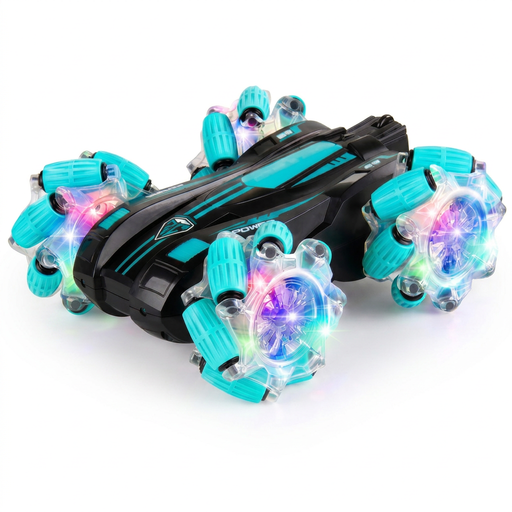
Why it suits this profile: A compact choice for children who mainly want to spin, tilt and play with LED wheels. The button controls are familiar to beginners.
The product description mentions 4WD, two-sided driving and 9 cm Mecanum wheels. This means that turning over during a stunt is less likely to bring play to a halt.
Sideways drifting, 360° spinning, automatic demonstration mode and colourful LED lighting.
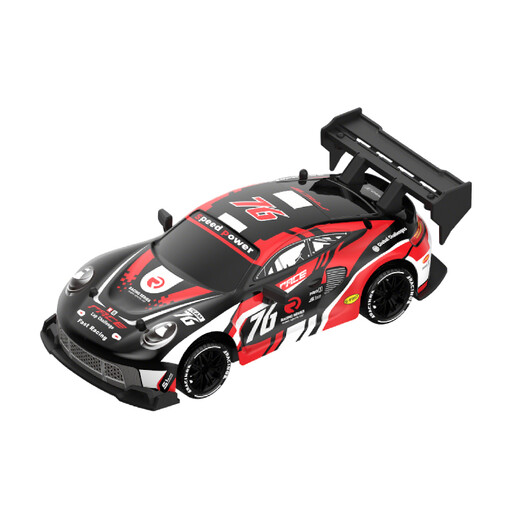
Why it suits this profile: Designed for children who want to race and drift on flat surfaces. The model car clearly distinguishes between speed and drifting.
The car is described as having two interchangeable sets of tyres. This allows you to choose between racing tyres and drift tyres instead of settling for a compromise.
4WD drive system, LED lighting, a stated range of up to 50 metres and a quoted play time of approximately 20 to 40 minutes per charge.
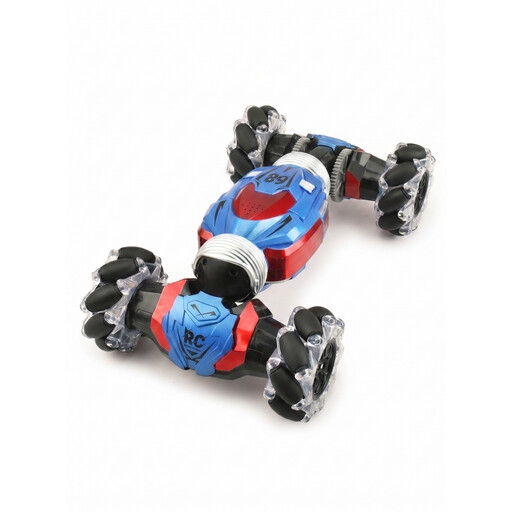
Why it suits this profile: For children who want more than simply driving forwards and backwards. The car combines a hand controller with a watch for motion control.
The product information mentions switchable wide and narrow modes, 4WD and two-sided driving. This makes the car more versatile indoors and outdoors, within the limits of the chosen surface.
Mecanum wheels, sideways drifting, off-road mode and two control methods.
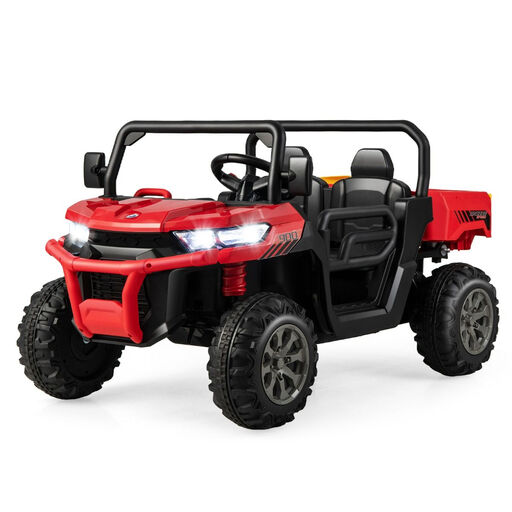
Why it suits this profile: This is not a small RC car, but an electric ride-on car for children with remote control, suitable for children aged approximately 3 to 8. Ideal when riding together and parental supervision are the priorities.
The described version has a 2.4GHz parental remote control, soft start, seat belt and three speed settings. Before use, check the space, load capacity and instructions.
Two seats, 12V battery, dual motors, suspension and a stated speed of 3 to 8 km/h.
We have put together a complete, up-to-date list of products that fully meet these strict selection criteria and the applicable European safety regulations.
It varies by model. According to the product information, simple toy cars may be offered from approximately 2 years old, while many stunt models are recommended from the age of 3. Pay particular attention to small parts, speed, controls and supervision. The age recommendation on the packaging and product page takes precedence over general guidance.
Play time varies depending on the battery and how the car is used. For example, the Porsche drift car states approximately 20 to 40 minutes per charge. Stunts, high speed, LED lighting and driving on grass can affect operating time. Allow a lithium battery to cool down after intensive use and only use the supplied or specified charging cable.
With a rechargeable model, you mainly pay for electricity and, where applicable, replacement batteries for the remote control. Models powered by AA or AAA batteries incur ongoing battery costs. Also check whether an additional battery is available. Store the car in a dry place, remove dirt from the wheels and charge the battery according to the instructions; this helps to limit unnecessary wear.
