
Vandaag of morgen in huis

Kwaliteit gegarandeerd

Welkomstaanbiedingen ontgrendelen: GRATIS bezorging | Tot 80% korting | Gratis 30 dagen JoyPlus-proefperiode
Download de app
An RC car for children might seem easy to choose, but product pages often focus on speed, LED lights and spectacular stunts. The important details can be less obvious: actual play time, suitable surfaces, age warnings and the cost of batteries or spare parts.
A little research can help you avoid a poor purchase. Look out for these three common pitfalls:
A remote-controlled toy car usually uses a 2.4GHz connection. This is useful when several children are driving at once, as this frequency is generally less prone to interference than older systems. Also check:
A long range doesn’t automatically mean a child can control the car well from a distance. Simple buttons and a moderate speed are often more practical for younger children.
A 4WD RC car has power going to all four wheels. This can help with grip and stunts, but performance also depends on the tyres and the surface. Look out for the differences between:
Before buying, check whether the car is designed for indoor use, outdoor use or both. A remote-controlled stunt car may have plenty of technical features, but it needs enough clear space indoors.
When choosing an electric toy car, distinguish between a small RC car and a large ride-on car for children. According to the Porsche 4WD drift car’s product description, a compact RC car runs for around 20 to 40 minutes per charge. The battery charges via USB.
A large 12V ride-on takes considerably longer to charge. For example, the two-seater construction truck lists a charging time of 8 to 12 hours. So check whether:
According to the ride-on construction trucks’ product descriptions, these models are intended for children aged 3 to 8, with a maximum speed of 3 to 8 km/h and a load capacity of up to 50 kg. Use these specifications as a guide, but always follow the manufacturer’s warnings and instructions.
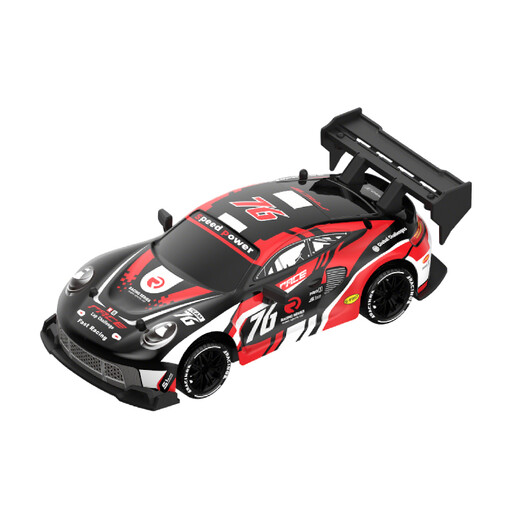
Why it suits this type of user: A compact option for children who want to learn to steer, race and drift without starting out with a large vehicle. The product description gives a range of 50 metres.
The description lists two interchangeable sets of tyres. This lets you switch between racing and drifting, rather than using one type of tyre on every surface.
4WD, LED lights, USB charging and a stated play time of around 20 to 40 minutes per charge.
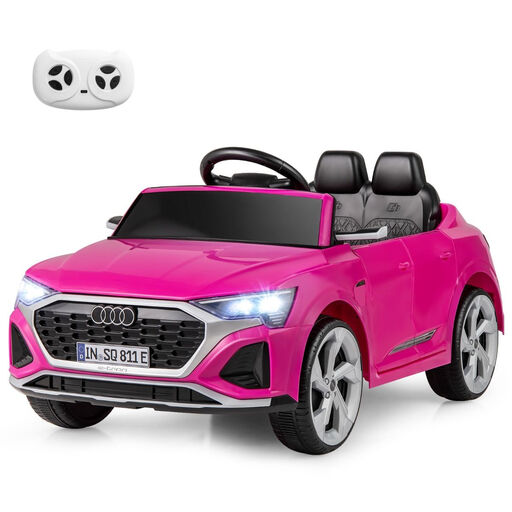
Why it suits this type of user: For families looking for a larger electric ride-on car with parental controls, lights and a recognisable car design.
The product description lists two control modes, three speeds via the remote control and a soft-start function. This gives parents more control when the car is first used.
12V battery, two motors, LED headlights, a horn, music and a stated speed of 3 to 5 km/u.
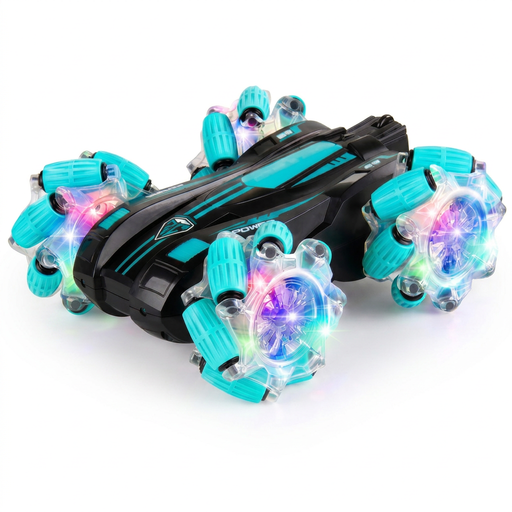
Why it suits this type of user: Designed for children who mainly want to spin, flip and drive sideways. According to the product description, the car is suitable for indoor and outdoor use.
Its double-sided design means the car can keep going after it flips over. This helps keep stunts going with fewer interruptions, although younger children still need supervision.
Mecanum wheels, 360° spins, sideways drifting, LED wheels and 4WD.
We’ve put together a complete, up-to-date list of products that meet these strict selection criteria and the applicable European safety regulations.
Choose a compact RC car if your child mainly wants to practise steering, racing or drifting. An RC construction truck with a tipping bucket is a better fit for children who enjoy construction and loading role-play. Look for features such as a remote-controlled bucket, rubber tyres and LED headlights.
A ride-on car for children is larger and needs more space, a flat surface and more time for charging. According to the product description, models with two seats can carry up to 50 kg, but always check the current specifications, seat dimensions and age limit. A seat belt and parental remote control are important features for young drivers.
For every model, look for a clearly visible CE mark, age warnings and information about compliance with the relevant European toy safety regulations. A reference to ASTM or CPSIA is no substitute for checking the European product information. A brand’s claims about durability or safety should be treated as information from the product description, not as a guarantee for every situation.
It varies by model. Some product descriptions say 3 years and up, while other stunt cars are recommended from age 6. Don’t just check the age stated on the product page: also consider small parts, how difficult the car is to control and whether an adult can supervise.
Play time varies depending on the battery, motor, surface and driving style. The Porsche 4WD drift car lists around 20 to 40 minutes per charge. A larger 12V ride-on car often takes several hours to charge. A second battery can be handy, but first check whether the manufacturer supports battery replacement.
Yes, if the product description says it’s suitable for outdoor use and the surface is appropriate. Use a drift model mainly on flat, smooth surfaces. For grass, tiles or small obstacles, larger rubber tyres or a 4WD model are usually a better choice. Avoid water and puddles unless the manufacturer specifically says the vehicle is suitable for them.
