
Vandaag of morgen in huis

Kwaliteit gegarandeerd

Welkomstaanbiedingen ontgrendelen: GRATIS bezorging | Tot 80% korting | Gratis 30 dagen JoyPlus-proefperiode
Download de app
An RC car for children may seem easy to choose at first. However, models vary considerably in their controls, drive system, battery life and the surfaces they can handle. A fast remote-controlled car designed for tiles won’t necessarily work well on grass or sand. And a model packed with lights and sound effects may be less appealing if its battery runs out quickly.
Keep an eye out for these three common pitfalls:
Start by checking the recommended age on the product page. A model with small parts isn’t suitable for children younger than the stated age. For young children aged around 3 and up, simple controls, rounded edges and a sturdy design are important. Supervise them while they play, and check that the body, wheels and battery compartment are intact before use.
For children aged around 6 or 8 and up, a model with several functions may be appealing. These might include sideways driving, drifting, transforming or wristband control. These features require more hand–eye coordination than simply driving forwards and backwards.
A 4WD RC car is driven by all four wheels. This can help with grip and manoeuvring, but it doesn’t mean every model is suitable for mud, deep puddles or long grass. Check the type of tyres and the surfaces listed in the product description.
Check whether the car uses a built-in lithium battery, separate batteries or both. Some models include a battery for the car, while the remote control still needs AAA batteries. Playtime depends on the surface, speed and use of lights and stunt functions.
The stated playtime is a product specification, not a guarantee for every play session. For example, the product description for some drift models states a playtime of 20 to 40 minutes per charge. A model supplied with two batteries may offer around 40 minutes of continuous use, according to its description. If you’re buying one as a gift, remember to factor in charging time or spare batteries too.
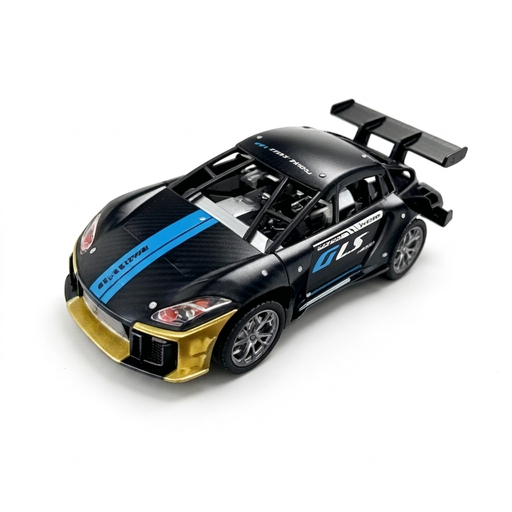
Why it suits this profile: This model is ideal for children who want to get started with driving and drifting straight away, without having to work through a complicated set-up first. The product description says it comes with a rechargeable battery already installed.
The included battery reduces the chance of a gift going unused because the car’s battery is missing. Do check which batteries the remote control needs.
Metal body, 4WD, drift tyres and controls for driving forwards, backwards and steering.
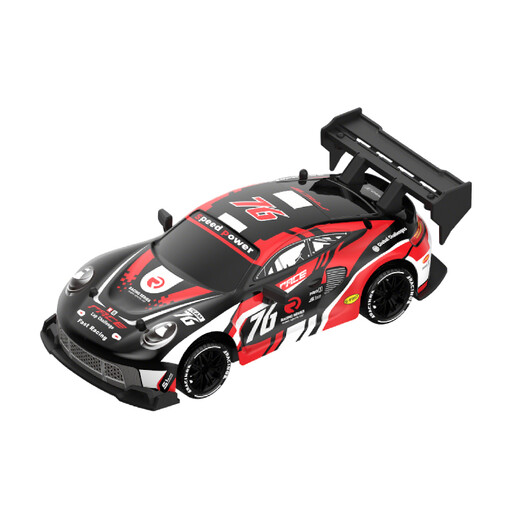
Why it suits this profile: For children who like to switch between racing and drifting, this model comes with two sets of interchangeable tyres and built-in lights.
The product description distinguishes between drift tyres and racing tyres, making it clearer which driving style each set is designed for.
4WD, USB-rechargeable lithium battery, LED lights and a stated playtime of 20 to 40 minutes per charge.
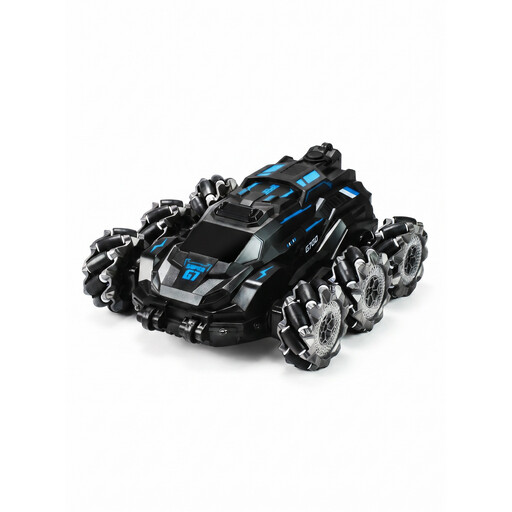
Why it suits this profile: This model is designed for children aged around 6 and up who want to drive outdoors and try more than just steering forwards and backwards.
The product description specifically lists grass, sand and cement as suitable surfaces. Before buying, check that these suit the places where you plan to use it.
Six-wheel drive, LED lights and sound effects, 360° stunts and a stated battery life of around 40 minutes.
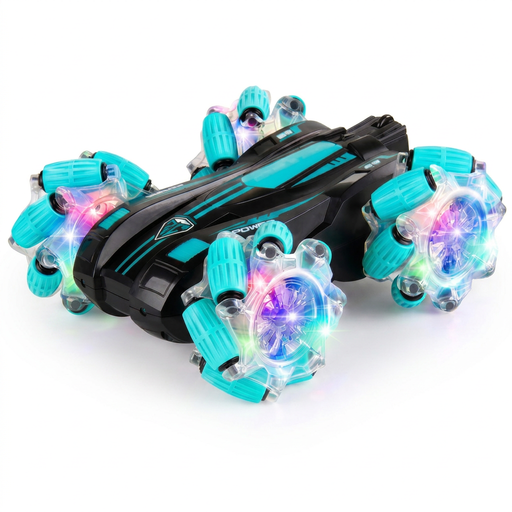
Why it suits this profile: This car is a good choice for children who enjoy stunts, illuminated wheels and driving on a range of flat surfaces.
Thanks to its double-sided design, you don’t have to turn the car over by hand if it flips. This makes it well suited to more frequent stunt play.
4WD, Mecanum wheels, 360° spins, LED lights and a rechargeable battery, according to the product description.
We’ve put together a full, up-to-date list of products that meet these strict selection criteria and current European safety regulations.
Before first use, check the battery, charging cable, remote control and wheel attachments. Don’t use an RC car on public roads, near traffic or in deep water. For models with a water-related feature, follow the manufacturer’s instructions. “Waterproof” in a product description doesn’t mean the car is safe to use in every situation.
Store lithium batteries in a dry place and charge them using the supplied or a suitable cable. Don’t leave a battery charging unattended. Remove sand and dust after outdoor use, and stop playing if any parts crack, come loose or become unusually hot.
Choose a model with the right age rating, simple controls and adult supervision. Check carefully for small parts, and avoid a stunt model if the controls are too complicated. A non-electric toy car, such as a manually operated construction vehicle, may sometimes be easier to manage at this age.
It varies by model and how it’s used. The product information mentioned above gives a stated playtime of around 20 to 40 minutes. Lights, high speeds, drifting and driving on grass can all affect actual playtime.
Only if the manufacturer lists these as suitable surfaces. A standard drift RC car is mainly designed for smooth floors and flat roads. For grass, sand or gravel, an off-road RC car with larger tyres and 4WD is generally a more suitable choice. After use, check the wheels and remove any dirt before putting the car away.
