
Vandaag of morgen in huis

Kwaliteit gegarandeerd

Welkomstaanbiedingen ontgrendelen: GRATIS bezorging | Tot 80% korting | Gratis 30 dagen JoyPlus-proefperiode
Download de app
An RC car can make a fun gift, a first hobby project or a collector’s item. However, remote-controlled cars vary considerably in their drive system, battery, controls and intended use. A compact racing car for the living room has different requirements from an off-road RC car for grass and gravel.
When comparing models, look beyond speed and striking looks. These common pitfalls can easily lead to a purchase that doesn’t live up to expectations.
A product title may highlight high speed, even if the car is mainly designed for flat surfaces. A drift RC car, for example, works well on tiles or smooth tarmac, but is less suited to carpet, grass or loose stones. Always check the recommended surface and tyre type.
An electric RC car may come with a rechargeable battery, while the transmitter batteries are sold separately. Check whether a USB cable, charger, spare parts and instruction manual are included too. That way, you won’t find that you can’t use the car straight after unpacking it.
A model car or die-cast model may have small parts, opening doors or a delicate finish. For young children, a sturdy toy car with a clear age recommendation is usually a better choice. Check the warnings, parts and recommended age before ordering.
A 4WD RC car sends power to all four wheels. This can help with acceleration, cornering and driving on less even surfaces. However, it doesn’t automatically mean that every model is suitable for mud, water or sand.
Check the tyre type too:
Check the battery voltage and capacity, as well as how it charges. A 7,4V lithium battery is used in several models, but running time depends on speed, surface and driving style. A second battery can come in handy if you want to enjoy several drives in a row.
Pay attention to the transmitter too. A 2,4GHz controller is common in modern models and can be suitable for driving several cars at once. Do check whether the transmitter batteries are included.
The scale, such as 1:24 or 1:18, gives you an idea of the car’s size, but not necessarily its performance. A small RC car is handy indoors, while a larger model may have more ground clearance.
Also check:
Claims about speed, durability, water resistance or running time come from the relevant product description. Treat them as the seller’s product specifications and compare them with the information on use, safety and maintenance.
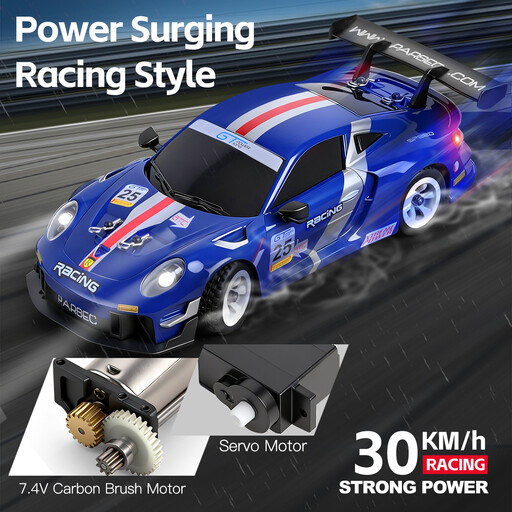
Why it suits this profile: According to the product description, this is a complete electric rally car with 4WD and a controller. Its compact size makes it practical for use indoors on suitable, flat floors.
The product information says the set is ready to use and has proportional steering. Before buying, check exactly which batteries or charging accessories are included.
1:28 scale, electric drive, 4WD and an included controller.
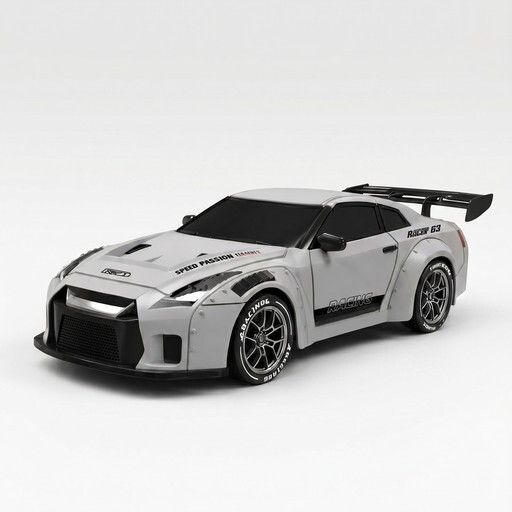
Why it suits this profile: This model is aimed at drivers looking for more control settings. According to the product description, it features an adjustable gyro system, two speed settings, LED lights and interchangeable tyres.
According to the product information, the two speed settings offer a beginner-friendly option and a faster mode. The interchangeable tyres help you switch between drifting and racing.
4WD, gyro adjustment, servo, two speed settings and a 7,4V LiPo battery, according to the product listing.
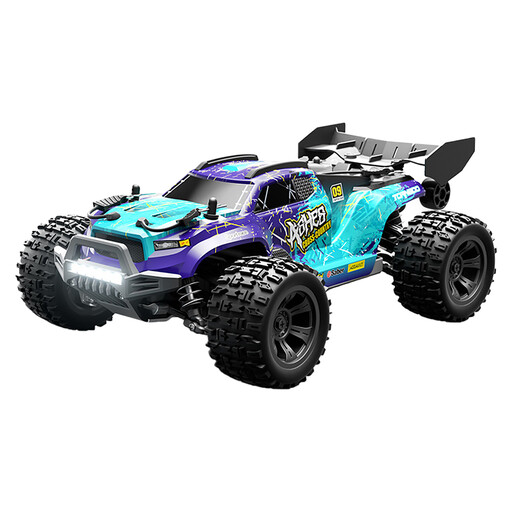
Why it suits this profile: According to the product description, this is a 4WD off-road RC car with large all-terrain tyres, LED headlights, a 2,4GHz transmitter and a 7,4V 1500mAh battery. This makes it a good fit for outdoor use on surfaces such as grass, sand and gravel.
The product listing mentions a reinforced chassis, all-terrain tyres and an included battery. Follow the instructions when it comes to moisture and water-resistance claims, and avoid deep water.
4WD, off-road tyres, LED lights, 2,4GHz control and an included lithium battery.
We’ve put together a complete, up-to-date list of products that meet these strict selection criteria and the applicable European safety requirements.
For collectors, metal cars in scales such as 1:43, 1:36 or 1:18 may be of interest. If you’re buying a die-cast model, always check whether it’s a toy or a display model. According to the product information, some models are intended for ages 14 and over.
Running time varies depending on the battery, motor, surface and driving style. Product descriptions for some 1:24 drift models quote around 20 to 40 minutes per charge. Treat this as the seller’s product specification and check the latest information on the product page.
It depends on the design. A drift RC car is usually intended for smooth floors and flat tarmac. An off-road RC car often has larger tyres and more ground clearance. Always check the maintenance instructions, especially when driving in damp conditions, sand or mud.
The electricity used for charging is generally inexpensive. The main costs to consider are replacement batteries, transmitter batteries, tyres and any body or drivetrain parts you may need. Before buying, check which parts are included and whether spares are available.
