
Vandaag of morgen in huis

Kwaliteit gegarandeerd

Welkomstaanbiedingen ontgrendelen: GRATIS bezorging | Tot 80% korting | Gratis 30 dagen JoyPlus-proefperiode
Download de app
An RC car may seem easy to choose at first glance. However, a remote-controlled car for young children, an indoor RC drift car and a remote-controlled off-road vehicle differ considerably in their drive systems, controls and maintenance. A low price also tells you little about whether a model is right for your needs.
Look out for these common pitfalls:
A 4WD RC car distributes power across all four wheels. This can help with cornering, loose surfaces and small obstacles. A two-wheel-drive model may be enough for smooth floors, while a remote-controlled off-road vehicle can benefit more from four-wheel drive, larger tyres and suspension.
Don’t just look for “4WD” in the title. Also check:
A model designed for sand, grass or mud needs different features from a compact remote-controlled racing car for tiles or parquet flooring.
Proportional steering means the car responds gradually to throttle and steering inputs. This is generally easier to control than a system that only moves fully forwards or fully backwards. Two speed settings or adjustable speed can be useful for beginners.
An RC drift car often uses smooth drift tyres. These work best on flat, hard surfaces. Interchangeable tyres are useful if you want to switch between drifting and racing. Also look for a gyroscope: according to the product description, this system can help stabilise the car while drifting. The actual driving experience also depends on the surface, set-up and driver.
A product page may list playtime or range, but these figures depend on speed, surface, temperature and driving style. So treat “20 to 40 minutes” as an advertised range, not a guaranteed running time.
Before buying, check:
With an electric RC car that has a swappable battery, you can extend playtime without waiting for it to charge. Store lithium batteries in a dry place and use only the supplied or recommended charger.
Small parts and loose accessories are worth considering for children aged 3 and over. Read the warnings on the product page and packaging. A product recommended for ages 8 or 14 and over isn’t intended to be a simple remote-controlled toy car for a toddler.
Keep the following points in mind:
The recommendations below are based on the product features listed. Performance claims aren’t presented here as independently verified facts. Where a feature comes from the product description, this is made clear.
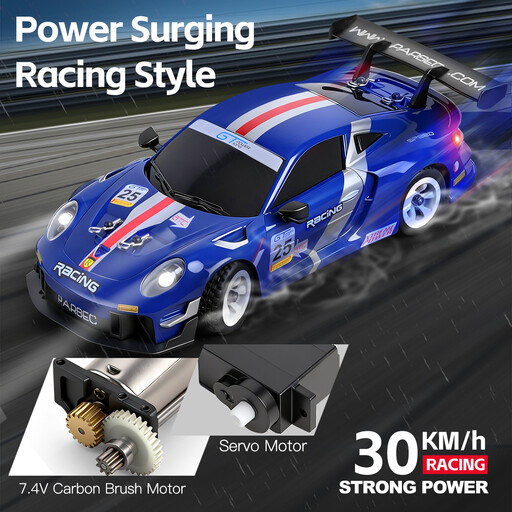
Why it suits this profile: According to the product description, this compact electric RC car is suitable for a range of indoor surfaces and has a 2.4G controller with proportional controls.
The product information doesn’t mention complicated assembly and describes a complete set. However, check exactly what’s included and the battery details beforehand.
1:28 scale, 4WD and proportional steering; described as suitable for both beginner and more experienced drivers.
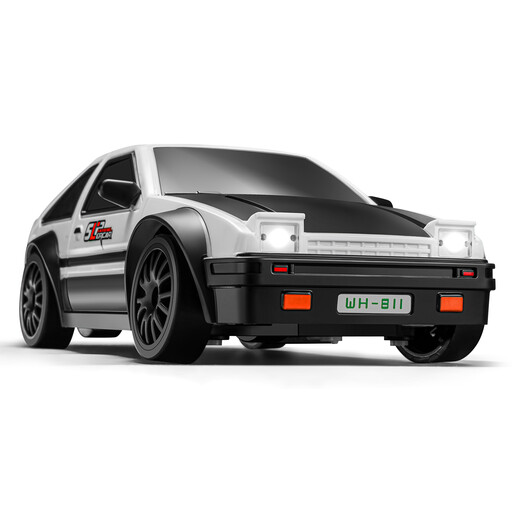
Why it suits this profile: This model combines 4WD, two speed settings, interchangeable drift and racing tyres, and an adjustable gyroscope system.
The two speed settings let you practise at a slower pace. The two sets of tyres mean you’re less likely to need to buy extra tyres straight away.
LED lighting, independent suspension, a 7,4V rechargeable battery and an ABS body, according to the product information.
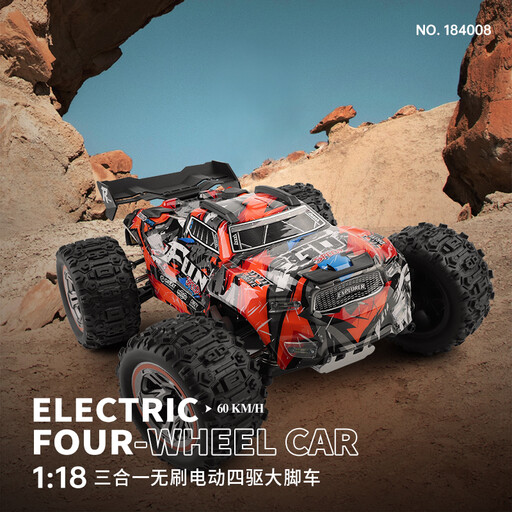
Why it suits this profile: This 4WD monster truck is designed for off-road driving, jumps and rough terrain. The product description lists three configurations: monster truck, buggy and truggy.
The independent suspension and different vehicle configurations make it better suited to outdoor use than a compact indoor racing car. Check the instructions before using it in wet conditions.
Brushless motor, 4WD, independent suspension and 2.4GHz remote control, according to the product description.
We’ve put together a complete, up-to-date list of products that meet these strict selection criteria and the applicable European safety regulations.
Choose a model with a clear age recommendation, simple controls and few small, loose parts. A powerful 4WD model or a car with drift tyres may be better suited to older children and teenagers. Always check the safety warnings and supervise play.
Its lifespan depends on use, storage and maintenance. Don’t leave the battery completely flat for long periods, use the correct charger and regularly check the cables, tyres and fixings. Playtime per charge varies by model; product pages sometimes give a range, such as 20 to 40 minutes.
You can, as long as the surface is flat and hard, such as a smooth patio or tarmac. Drift tyres work less well on grass, sand and gravel. For loose surfaces, a remote-controlled off-road vehicle with treaded tyres and suspension is more suitable.
