
Vandaag of morgen in huis

Kwaliteit gegarandeerd

Welkomstaanbiedingen ontgrendelen: GRATIS bezorging | Tot 80% korting | Gratis 30 dagen JoyPlus-proefperiode
Download de app
An RC car may seem easy to choose at first: a rugged look, a remote control and a few eye-catching features. In practice, models vary widely in their drive system, the surfaces they can handle, speed, controls and maintenance. As a result, a cheap remote-control car may not be suitable for grass, while a fast 4WD RC car may be too difficult for a young child to control.
As a Joybuy Product Recommendation Officer, I cut through the marketing copy to focus on the most important product specifications. This helps you see which features matter and which common buying pitfalls are best avoided in the Netherlands.
High speed sounds appealing, but it isn’t always practical. An RC racing car for tiles or a smooth floor needs different features from an off-road RC car for grass and sand. So don’t just look at the stated top speed. Consider:
A 2.4GHz remote control is also useful when several cars are being driven at once. According to the product descriptions for various models, this connection is designed to reduce interference between vehicles. Actual handling also depends on the distance, surroundings and battery level.
That description doesn’t automatically mean that every RC car can drive through wet grass, mud or puddles. Check whether the product information specifically mentions water-resistant electronics or only use on flat surfaces.
A drift model will generally perform better on tiles, wood or a smooth indoor track. A crawler or monster truck with larger tyres and suspension is a better choice for grass, gravel and small obstacles. After driving on a wet surface, dry the car and always follow the instructions.
A rechargeable RC car is convenient, but play time per charge varies. Some models state around 20 to 40 minutes of use per charge. This is a manufacturer’s estimate and may vary depending on speed, surface and driving style.
Also check:
Some models don’t include AA or AAA batteries for the transmitter. That can make a present less convenient on the first day of play.
A 4WD RC car sends power to all four wheels. This can help when driving over grass, hills and small obstacles, but it often increases the weight and power consumption too. A 6WD stunt car is designed for extra traction and special manoeuvres, not necessarily for higher speed.
For a child aged 3 or 6 and over, simple controls, a low top speed and large impact-resistant parts are often a better fit. For teenagers and adult hobbyists, proportional throttle and steering, adjustable speed and suspension are more important.
Drift tyres need little grip to slide. Racing tyres, on the other hand, are designed to offer more control on a flat surface. Models with interchangeable drift and racing tyres therefore offer different ways to play.
For off-road driving, deep treads, larger wheels, sufficient ground clearance and suspension are important. A crawler is generally designed for controlled climbing and tackling obstacles. A monster truck is more often built for speed, jumps and rougher terrain.
A remote-controlled car for children should be fun, but it also needs to be suitable for their age. Check the minimum age on the product page and look out for small parts and batteries. Adult supervision may be needed.
An RC stunt car with a one-button demo function can be easy to get started with. A drift model with a gyro, two speed settings and proportional steering offers more room to practise, but also requires more control. It’s best to use a fast car in an open, safe space, away from traffic, water and breakable items.
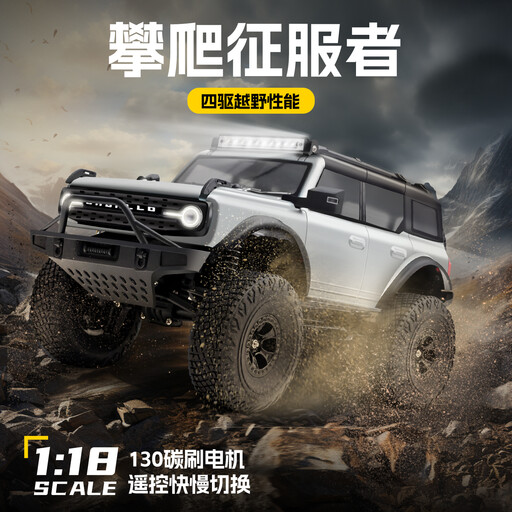
Why it suits this user: This crawler is designed for controlled driving over grass, stones and small obstacles. That makes it a good choice for beginners who want more than just driving in circles on a smooth floor.
It’s not all about speed. The stated 4WD drive system and crawler design are better suited to obstacles and uneven terrain.
4WD drive system, 1:18 scale and, according to the product description, suitable for indoor and outdoor use.
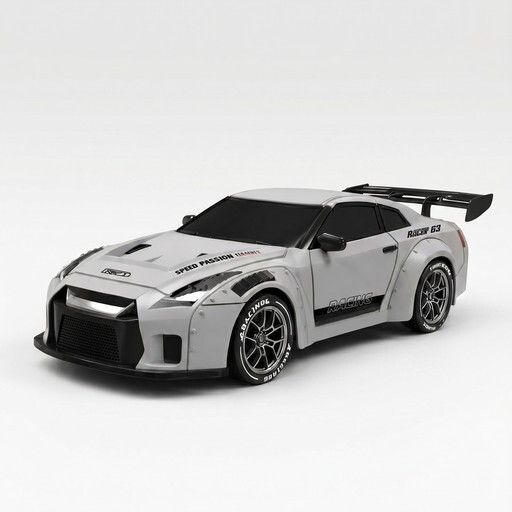
Why it suits this user: This model is a good fit for teenagers, adults and enthusiasts who want to practise drifting and racing, and try different tyres.
The product description lists two speed settings, an adjustable gyroscope system and interchangeable tyres. This means the car isn’t all about speed.
4WD, gyro stabilisation, LED lights, 7,4V battery and two types of tyres, according to the product specifications.
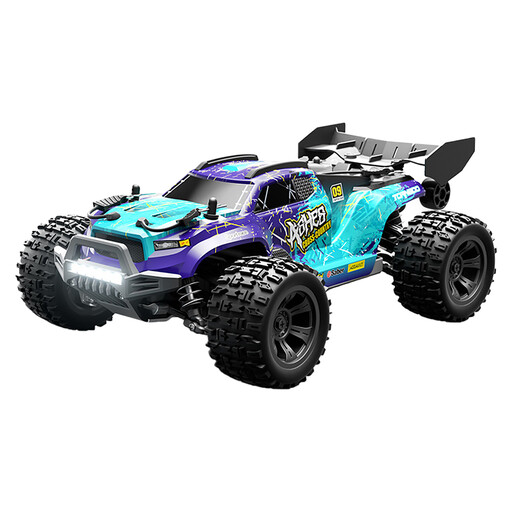
Why it suits this user: This model is designed for teenagers aged 14 and over, and adults who want to drive outdoors on grass, sand and rougher terrain.
The stated 7,4V 1500mAh battery, large off-road tyres and aluminium chassis are designed for longer use and more demanding outdoor driving.
4WD, off-road tyres, LED headlights, USB charging cable and included accessories, according to the product information.
We’ve put together a complete, up-to-date list of products that meet these strict selection criteria and the applicable European safety regulations.
Choose a model with a clearly stated minimum age of 3, simple controls, a low top speed and a sturdy body. Always check the warnings on the product page. Adult supervision is advisable for models with small accessories or a powerful drive system.
Play time depends on the battery, speed, surface and driving style. Some models state around 20 to 40 minutes per charge. Charge a lithium battery according to the instructions, use the correct cable and store the car somewhere dry.
A drift model is mainly designed for smooth, flat surfaces such as tiles, wood or tarmac. For grass, sand and obstacles, you’re better off choosing an off-road RC car, crawler or monster truck with deep treads, higher ground clearance and suspension.
