
Vandaag of morgen in huis

Kwaliteit gegarandeerd

Welkomstaanbiedingen ontgrendelen: GRATIS bezorging | Tot 80% korting | Gratis 30 dagen JoyPlus-proefperiode
Download de app
An RC car can make a great gift for a child, teenager or adult enthusiast. Yet many models look similar on paper. A high top speed, 4WD or long battery life doesn’t tell you everything about how a car performs. The surface, age suitability, spare parts and controls matter just as much.
Before buying a remote-controlled car, look out for these common pitfalls:
A 4WD RC car powers all four wheels. This can help with acceleration, cornering and driving on grass or slightly uneven terrain. It doesn’t guarantee that every surface is suitable, though. Check the tyres, ground clearance and suspension too.
A basic transmitter with forward, reverse, left and right controls is often enough for young children. For teenagers and adults, features such as proportional steering, adjustable speed and steering trim are more practical. They let the car respond more gradually to your input.
The scale gives you an idea of the size, but not the performance. A 1:24 RC car is compact and handy indoors. An 1:18 model usually has more room for larger tyres and suspension. As well as the scale, check the dimensions in the product details.
A gyro can help keep a drift model more stable. Some models have adjustable sensitivity, according to their product descriptions. This makes them an interesting choice for beginners who want to practise at a gentle pace, as well as users looking for more control as they progress.
Check the battery type, voltage and capacity, as well as whether a charging cable is included. A higher capacity can extend running time, but actual use depends on speed, surface and driving style. A product description might quote 20 to 40 minutes per charge, for example. Treat this as a product specification under certain conditions, not a guaranteed running time.
Also check:
Warnings about small parts are important when choosing toys for young children. Also check the CE marking, the manufacturer and EU responsible person details, and the safety information supplied with the product. A CE marking doesn’t prove that a product is suitable for every age group.
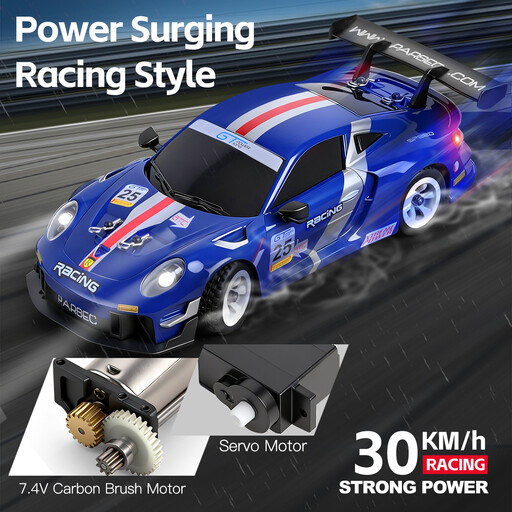
Why it suits this type of user: This compact model is designed for driving indoors and on flat surfaces. According to the product description, it’s ready to use straight away and features 4WD and proportional controls.
Its compact scale and straightforward controls make it easier to match the speed to the space available.
1:28 scale, electric drive, 4WD and proportional steering, according to the product description.
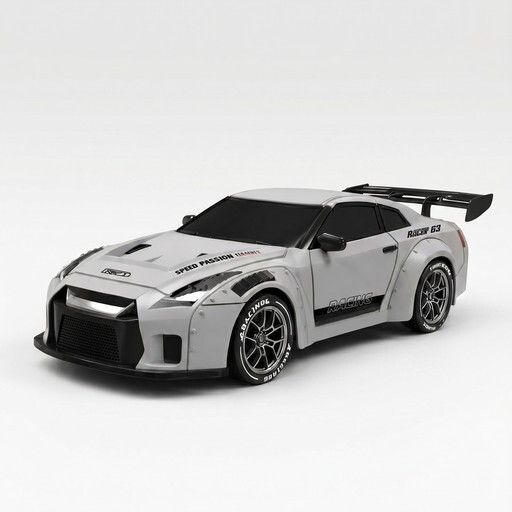
Why it suits this type of user: This model is designed for users who want to switch between drifting and racing. According to the product description, it has two speed modes, an adjustable gyro system, and interchangeable drift and racing tyres.
The low-speed mode and adjustable gyro offer more control while you’re learning, while the choice of tyres lets you adapt the car to the surface.
4WD, LED lighting, ABS body, gyro and two types of tyres, according to the product information.
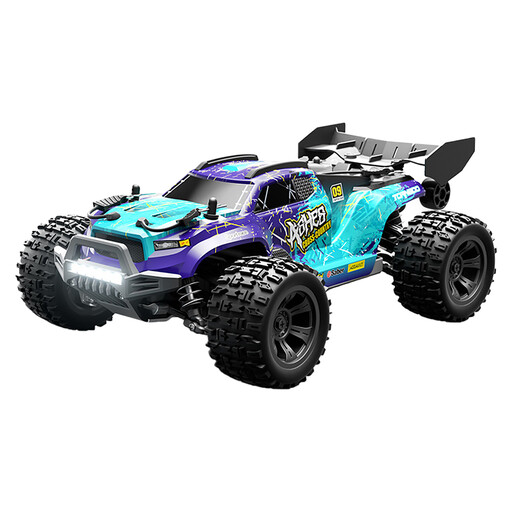
Why it suits this type of user: This remote-controlled off-road car is for teenagers and adults who want to drive outdoors. The product description lists 4WD, a 7,4 V battery, off-road tyres and an aluminium chassis plate.
The product information covers more than just speed: it also details the tyres, chassis, battery and transmitter settings. This helps you choose a car that’s suited to outdoor use.
4WD, deep-tread tyres, adjustable 2,4GHz transmitter, LED headlights and a 7,4 V 1500 mAh battery included, according to the product description.
We’ve put together a complete, up-to-date list of products that meet these strict selection criteria and current European safety requirements.
Start by checking the manufacturer’s age guidance. A simple model with limited speed and few small detachable parts is generally more practical than a fast hobby car. Products with small parts often carry a choking hazard warning. Supervise young children while they play.
It depends on the battery, capacity, speed and surface. A model might be advertised as running for 20 to 40 minutes per charge, for example, but this isn’t guaranteed for every play session. A removable battery or spare battery can be useful for longer use.
You can drive one on a flat, hard surface such as tarmac or paving, as long as the tyres are suitable. Drift tyres are less effective on grass or gravel. For uneven terrain, a 4WD RC car with treaded tyres and suspension is usually a better choice than a low-slung drift model. Always check the wheels, drive system and electronics after driving outdoors.
