
Vandaag of morgen in huis

Kwaliteit gegarandeerd

Welkomstaanbiedingen ontgrendelen: GRATIS bezorging | Tot 80% korting | Gratis 30 dagen JoyPlus-proefperiode
Download de app
An RC car is often the perfect gift, whether you're surprising a child or starting a new hobby yourself. But the market is flooded with models that overpromise and underdeliver. Many buyers fall into the same traps: a car with a battery that dies in ten minutes, breaks on the first impact, or gets stuck on a simple patch of grass.
Before you make a choice, it's important to know the pitfalls. This will help you cut through the marketing noise and find a model that truly suits your needs.
The 3 most common pitfalls when buying an RC car:
off-road RC car. In reality, many of these models lack the power (motor) or the drivetrain (often 2WD instead of 4WD) to handle more than a smooth floor or a short-mown lawn. They get stuck immediately in sand, taller grass, or on uneven ground.To avoid these disappointments, it's smart to look at a few technical specifications. These determine the car's performance and durability.
The drivetrain is crucial for where you can drive the car.
off-road RC car and also provides more control for a drift car.A stunt car takes a beating. Therefore, pay attention to the materials used.
drift car.The control method determines the play experience.
Based on these criteria, we have selected a few models that suit different users.
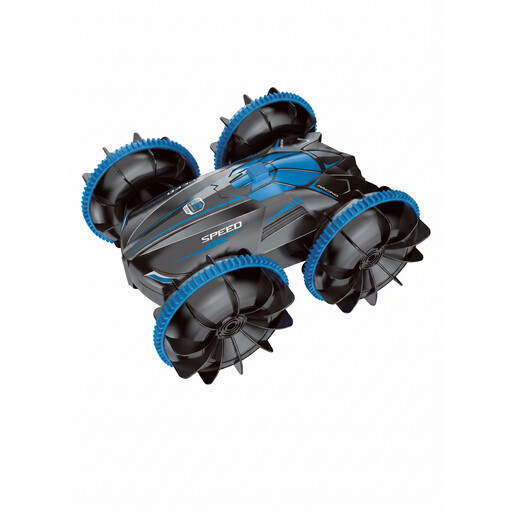
Why This Fits Their Persona: Perfect as a first `stunt car` for kids. The dual control option (transmitter and wrist-watch) makes it accessible, and the 360° spins and double-sided driving feature provide instant spectacle. The car is even amphibious, offering extra play opportunities at the beach or in a puddle.
The body is made of thick ABS plastic and can drive on both sides, so it won't break immediately after a fall (pitfall #2). The propeller tires and 4WD drivetrain give it actual grip on more than just a smooth floor (pitfall #3).
Dual control: Both with a transmitter and as a `gesture control car`.
Amphibious: Can drive on both land and in shallow water.
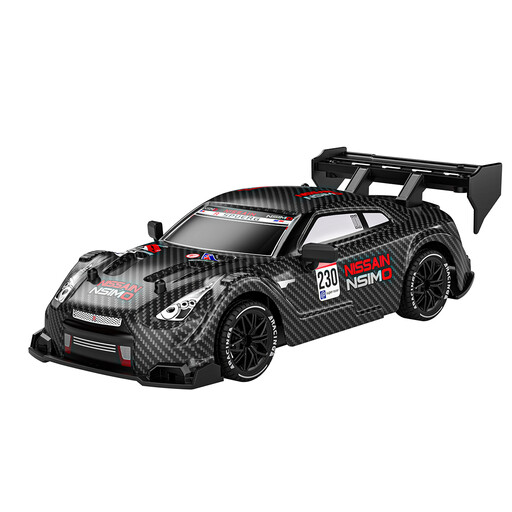
Why This Fits Their Persona: Ideal for teens and beginner hobbyists who want to explore the world of drifting. This `drift car` offers an authentic experience thanks to its 4WD drivetrain and the ability to switch between drift and race tires. A perfect `gift for a boy` who is looking for more of a challenge than a standard toy car.
This model avoids the "all-terrain" illusion (pitfall #3) by specializing. The included tire sets make it functional for two purposes (racing and drifting) instead of pretending to do it all. The `rechargeable RC car` has a realistic runtime of 20-40 minutes.
Two tire sets: Includes special drift and race tires.
4WD drivetrain: Provides the control needed for stable drifting.
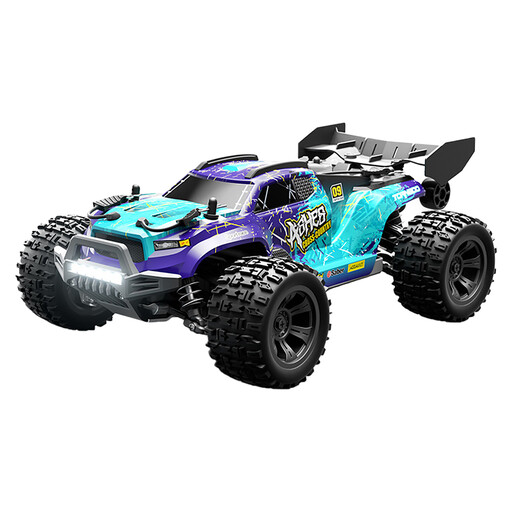
Why This Fits Their Persona: For the older teen (14+) or adult beginner looking for a powerful and durable `RC car`. This model is built for performance, with a powerful motor, 4WD, and a reinforced chassis. It's not a toy, but an entry-level model for the serious hobbyist who wants to go truly off-road.
This model delivers on the "all-terrain" promise (pitfall #3) thanks to a powerful motor, 4WD, and large off-road tires. The reinforced aluminum chassis and shock absorbers provide the durability lacking in cheaper models (pitfall #2).
High speed: Can reach speeds up to 40 km/h.
Durable construction: Reinforced chassis with metal parts.
We have compiled a complete, up-to-date list of products that fully meet these strict selection criteria and safety regulations.
The runtime varies greatly by model and usage. For most toy-grade models, you can expect 15 to 30 minutes per charge. Hobby-grade models with larger batteries can extend this to 30-45 minutes or more. Pay attention to the battery's capacity, expressed in mAh (milliampere-hour); a higher number typically means a longer runtime.
Yes, as long as the cars use a 2.4 GHz remote control. This modern system automatically finds a free channel, allowing multiple cars to run side-by-side without their signals interfering. Older or very cheap models with a 27 MHz or 40 MHz transmitter may experience interference.
A stunt car is built for versatility and durability. Features often include 360-degree spins, double-sided driving, and large, shock-absorbing tires. A drift car, on the other hand, is specialized for controlled sliding through corners. These cars have hard, smooth tires and a chassis tuned for precision and balance, typically for use on flat surfaces.
