
Vandaag of morgen in huis

Kwaliteit gegarandeerd

Welkomstaanbiedingen ontgrendelen: GRATIS bezorging | Tot 80% korting | Gratis 30 dagen JoyPlus-proefperiode
Download de app
A fast, agile RC car that tears across the terrain is a dream for many, young and old alike. But the search can be frustrating. The market is flooded with models that look flashy but give up the ghost after just a few drives. Before you invest in a new remote control car, it's wise to know what to look for. As a Joybuy Product Recommendation Officer, I'll help you see through the marketing hype and find a model that's truly right for you.
Many buyers fall into the same traps. By recognising them, you can save yourself a lot of disappointment and money.
You don't need to be a technician to make the right choice. Pay attention to these three key points, and you'll be in a much better position.
The drivetrain determines the car's grip and handling.
The scale (e.g., 1:24, 1:18) indicates the size relative to a real car. A 1:24 scale model is smaller and more agile, ideal for indoors or on a small track. A 1:18 or 1:10 scale model is larger, more stable, and often better suited for rough terrain. Think about where you plan to drive and choose a type that fits:
For the more serious hobbyist, the motor type is important. Most cars have a brushed motor, which is fine for beginners. A professional RC car for adults often has a brushless motor: more efficient, powerful, and durable. Additionally, proportional control is a sign of quality. This allows you to apply gradual throttle and steering, rather than just full-throttle forward or abrupt turns.
To help you get started, we've selected a few models that score well on the key points and suit different types of users.
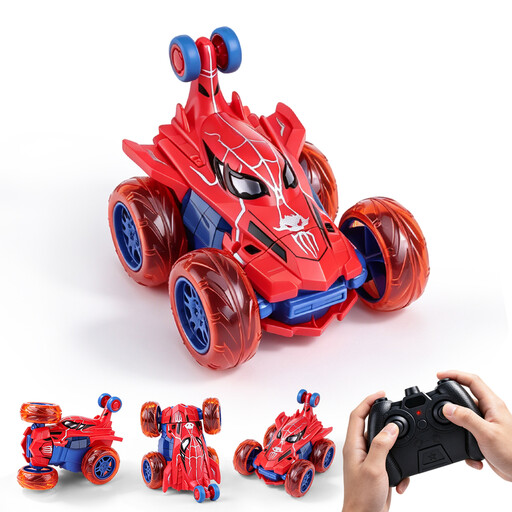
Why This Fits Their Persona: Ideal for kids who want to do more than just drive. This car is built for action, capable of 360-degree spins and 90-degree upright stunts. The bright colours and light-up wheels make it extra appealing.
The car is made with impact-resistant rubber tyres and a sturdy structure, helping it avoid the "brittle toy" pitfall. Convenient USB charging prevents the frustration of dead batteries.
4WD system for grip on various surfaces and a 2.4 GHz transmitter that allows multiple cars to run simultaneously without interference.
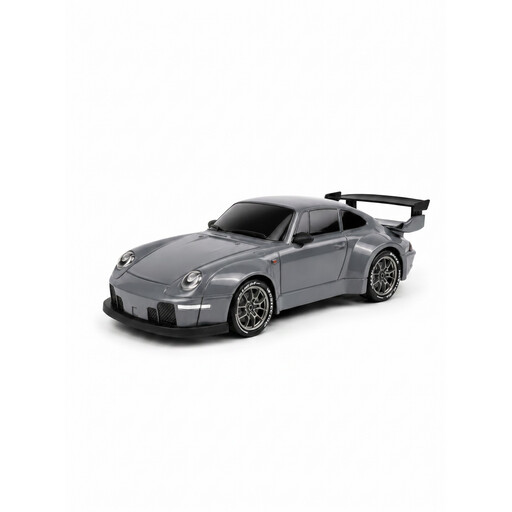
Why This Fits Their Persona: For those who want to master the art of drifting, this is an excellent starting point. It's a hobby-grade model in a compact 1:24 scale, complete with special drift tyres and a set of racing tyres for when you need grip.
The body is made of durable ABS plastic, and the lithium battery includes overcharge protection. The adjustable gyroscope system helps stabilise the car, preventing the "too fast and uncontrollable" pitfall for beginners.
Includes two sets of tyres (drift and race) and a gyro stabiliser. This offers versatility and a helping hand for learning drifting techniques.
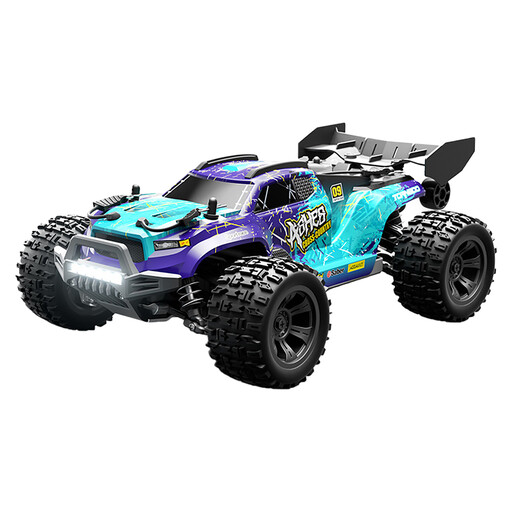
Why This Fits Their Persona: This is a remote control car for adults and teens who are looking for performance. With a powerful motor, 4WD, and a robust build, this model is ready for rough terrain, from sand and grass to muddy paths.
The reinforced aluminium chassis and shock-resistant body counter the "brittle toy" pitfall. The large 1500mAh battery provides long playtime, preventing battery frustration.
Excellent off-road performance thanks to its powerful motor and large tyres. The professional 2.4GHz transmitter offers precise control over speed and steering.
We have compiled a complete, real-time list of products that fully satisfy these strict selection criteria and UK safety regulations.
Playtime varies greatly by model, from 15 minutes for basic cars to 40 minutes or more for hobby-grade models with larger batteries. Driving style also has an impact; constantly driving at full throttle consumes more power. Many serious models feature a swappable RC car battery, allowing you to extend your drive time with a spare.
That depends on how you use it. For driving on a flat pavement or indoors, 2WD is often sufficient. However, if you want to go off-road—on grass, sand, or unpaved tracks—a 4WD remote control car offers significantly more grip and control. For drifting, 4WD also provides a more stable and predictable experience.
The biggest differences are in durability, performance, and repairability. Toy models are often made from cheaper plastic and don't have replaceable parts. If something breaks, it's game over. A hobby-grade model, like a professional RC car, is built with stronger materials, has better performance (such as proportional controls), and you can buy individual parts for repairs and upgrades.
