
Livraison le jour même et le lendemain

Qualité garantie

Débloquez vos offres de bienvenue: Livraison GRATUITE | Jusqu'à -80 % | 30 jours d'essai gratuits à JoyPlus
Téléchargez l'application
A ratchet wrench may seem simple: choose a handle, click on a socket and turn. In practice, the drive size, tooth mechanism and available accessories largely determine how comfortable the tool is to use. The wrong choice can leave you with a ratchet that will not fit into tight spaces, sockets that do not connect properly or a cordless model that runs out of power halfway through a job.
This buying guide helps DIY enthusiasts, mechanics and garage owners compare ratchet wrenches using verifiable product specifications.
A ratchet with more teeth generally has a smaller return angle. This is useful when you have little room to move the handle. However, the number of teeth does not tell you everything. Also check the drive size, the ratchet-head construction and whether a quick-release function is included.
For example, a 90-tooth ratchet with a specified working angle of 4 degrees is suitable for restricted assembly space. A 72-tooth ratchet with a working angle of around 5 degrees can also be practical for automotive and maintenance work.
An electric ratchet wrench, such as a 12 V cordless ratchet wrench, can tighten or loosen bolts and nuts more quickly. That does not automatically mean the tool is suitable for setting the specified tightening torque accurately. For critical connections, finish the job with a suitable torque wrench whenever the vehicle or assembly manual specifies this.
For an electric model, pay attention to maximum torque, speed, battery capacity, charging time, direction of rotation and head dimensions.
A ratchet set with lots of components may seem appealing, but a large case can be unnecessary if you mainly repair bikes, furniture or small appliances. Check whether the set contains metric sockets and whether the sizes match the jobs you carry out. For cars, deep sockets, extension bars, spark-plug sockets and universal joints are also useful.
The drive size determines which sockets fit and how much space the tool takes up.
A 3/8 inch ratchet is a practical middle size for many garage jobs. Make sure the sockets have the same drive size. An adapter can help, but it makes the combination longer and may reduce access to a tight spot.
The return angle indicates how far you need to move the ratchet before the mechanism engages again. A smaller angle is useful in an engine bay or when assembling something against a wall. A ratchet with 90 teeth and a specified angle of 4 degrees works with very small movements; a 72-tooth model is often listed as having an angle of around 5 degrees.
For heavily seized bolts, do not use a thin, compact ratchet if a longer breaker bar or suitable handle would be safer. A ratchet mechanism is designed for turning, not for being used indiscriminately as an impact or extension tool.
Many models in this category are made from chrome vanadium steel. Product descriptions mention this material because it combines hardness with wear resistance. A polished or chrome-plated finish is also easier to clean after contact with oil and grease.
Also look for:
A ratchet handle, ratcheting combination spanner and flexible ratchet wrench are not the same thing. A ratcheting combination spanner has a ratchet function on the ring-spanner end. A flexible ratchet wrench has an adjustable head for access at awkward angles. A ratchet screwdriver usually uses 1/4-inch bits and is aimed more at driving screws than handling heavy bolted connections.
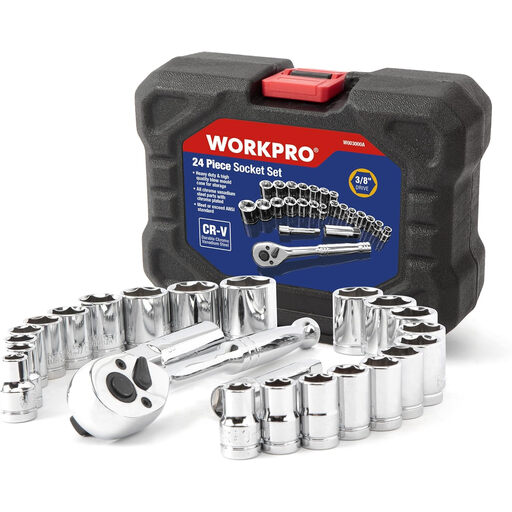
Why it suits this profile: A compact set for anyone starting out with car, bike and general maintenance jobs who wants to try both metric and SAE sockets.
The set lists both metric and SAE sizes and comes with a 3/8-inch quick-release ratchet and storage case.
24-piece configuration, chrome vanadium steel, quick-release button and a compact plastic case.
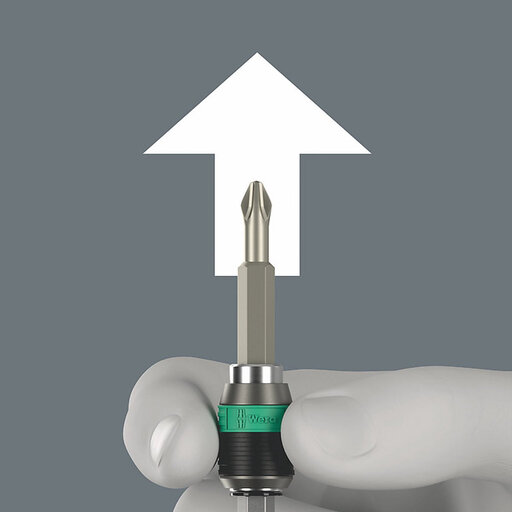
Why it suits this profile: Designed for users who frequently drive screws and value compact operation more than a complete socket set.
The switch for anti-clockwise, clockwise and neutral operation means you do not need a different tool for each direction.
Pistol grip, 1/4-inch bit holder, Rapidaptor change system and six included bits.
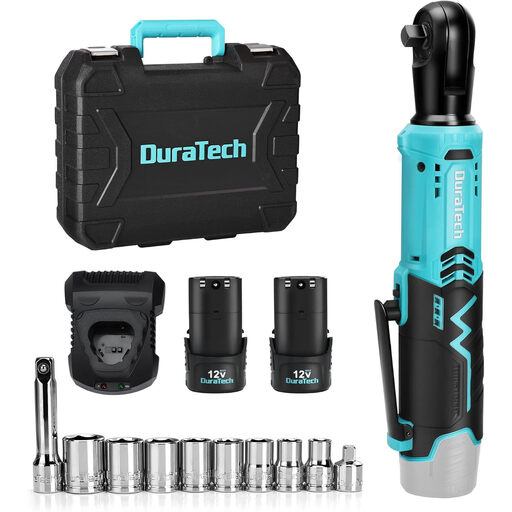
Why it suits this profile: Useful for mechanics and garage owners who regularly need to remove or fit multiple bolts without a mains cable.
The product description lists two 2.0 Ah batteries, a fast charger, charging indicator and LED light. This means you can keep a charged spare battery ready to use.
According to the product specifications: maximum 65 Nm, up to 180 rpm, 3/8-inch drive, eight sockets, extension bar and 3/8-to-1/4-inch adapter.
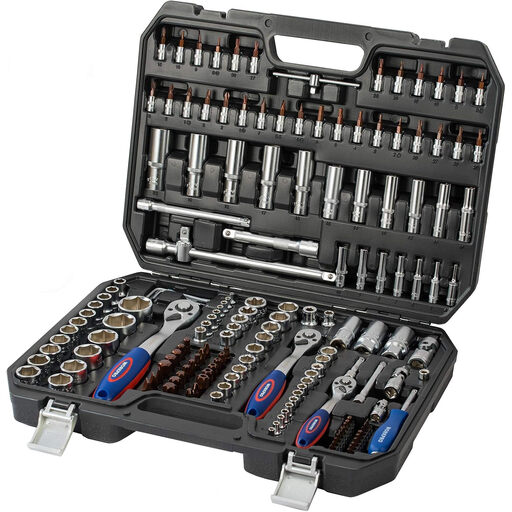
Why it suits this profile: For garages and keen DIY enthusiasts who want to keep multiple drive sizes, bits and accessories in one case.
The case contains 1/4-, 3/8- and 1/2-inch ratchets, so you do not need to buy a separate ratchet for every job.
172 components, 72-tooth handles, extension bars, universal joints, spark-plug sockets and labelled storage compartments.
We have put together a complete, up-to-date list of products that fully meet these strict selection criteria and the applicable European safety regulations.
For many passenger cars, 3/8 inch is a useful middle size. For small fasteners, 1/4 inch may be sufficient. Larger wheel or engine components may sometimes require 1/2 inch. Always check the bolt size and the space around the connection.
That depends on the number of connections, the required torque and the availability of batteries. Check the battery capacity, charging time and maximum load. Use the device according to the product manual and check important connections with a torque wrench when necessary.
Wipe away oil and dirt after use and store the tool in a dry place. Check that the direction switch and quick-release function continue to operate smoothly. With intensive use, a small amount of suitable maintenance product on the ratchet mechanism may help, provided the manufacturer permits this. Do not use damaged sockets or a ratchet with play in the head.
