
Vandaag of morgen in huis

Kwaliteit gegarandeerd

Welkomstaanbiedingen ontgrendelen: GRATIS bezorging | Tot 80% korting | Gratis 30 dagen JoyPlus-proefperiode
Download de app
A ratchet spanner saves time when tightening and loosening bolts and nuts, especially in places where you have limited room to move. But an expensive-looking ratchet set isn’t automatically right for the job. The wrong drive size, an oversized ratchet head or a missing torque wrench could leave your tools unused in their case.
In this buying guide, you’ll find out what to look for in a ratchet spanner, ratchet spanner set or electric ratchet wrench. Our recommendations are based on verifiable product specifications and practical uses.
A ratchet with more teeth generally has a smaller swing arc. This is useful in a cramped engine bay or when maintaining a bike. But the number of teeth isn’t everything. Also consider the quality of the mechanism, the direction switch, the release button and compatibility with your sockets.
For example, a 90-tooth ratchet with a 4-degree working arc is practical in a confined space. For heavy-duty work, the material, drive size and maximum load are just as important.
A standard ratchet spanner is designed to make turning easier. It doesn’t automatically measure how much force you’re applying. For wheel bolts, engine parts, bike components or other connections with a specified tightening torque, you’ll need a torque wrench or digital torque wrench.
Use the value given in the vehicle or component manual. An alert on a digital torque wrench is a useful aid, not a replacement for following the prescribed procedure.
For an electric ratchet wrench, voltage, torque, battery capacity and charging time are all important. Also check whether one or two batteries are included and which sockets come in the set. According to DURATECH’s product description, the 12 V set in question includes two 2.0 Ah batteries, has a stated torque of 65 Nm and features fast charging. Always check the current package contents and instructions before buying.
The drive size determines which sockets you can use:
A 3/8 inch ratchet spanner is a practical middle-ground size for many DIY enthusiasts. If you tackle a range of jobs, you could choose a ratchet set with 1/4, 3/8 and 1/2 inch drives.
A small working arc means you need to move the handle less before the mechanism engages again. This is useful in confined spaces. Products with 72 or 90 teeth are often marketed for this purpose. Also check the shape of the head: a slim or pear-shaped head may fit more easily around obstacles.
A ratchet ring spanner or ratchet open-ended spanner is useful when a socket set won’t fit. An adjustable model can handle different sizes, but check the jaw capacity and whether the jaws stay parallel. This helps prevent unnecessary strain or damage to a bolt.
For a torque wrench, the range is key and is usually measured in Nm. Choose a range where your desired setting isn’t close to the minimum or maximum limit. A digital torque wrench may have extra features, such as a display, preset values, peak measurement and an audible, visual or vibrating alert.
According to the product descriptions, various MoveCrab models claim an accuracy of ±2 per cent. This is a specification stated by the manufacturer; always follow the supplied instructions for use, storage and any calibration. Don’t use a torque wrench as a breaker bar or impact tool.
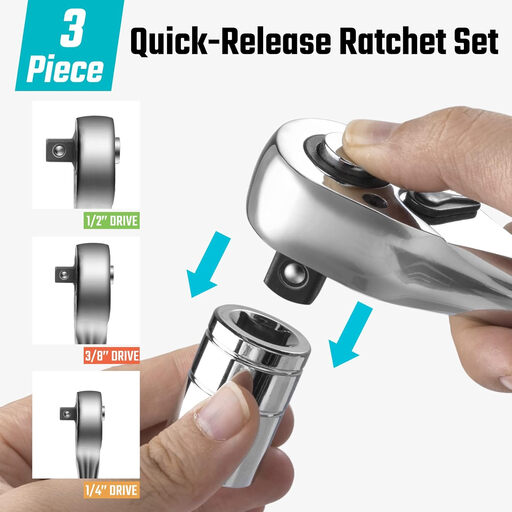
Why it suits this user: Three drive sizes give beginners the flexibility to tackle household assembly, car maintenance and general DIY jobs.
You’re not limited to one drive size, so there’s no need to buy several ratchets separately straight away.
1/4, 3/8 and 1/2 inch, 72 teeth, a 5-degree working arc and a storage case.
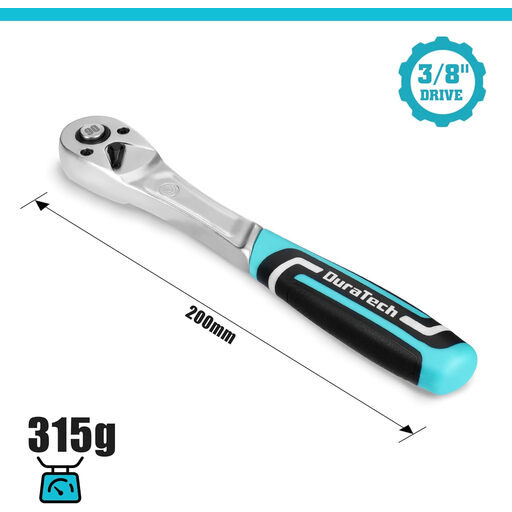
Why it suits this user: A good choice for anyone looking for a compact hand ratchet for frequent maintenance in a confined workspace.
Its stated 4-degree working arc reduces the amount of handle movement needed in confined spaces.
90-tooth mechanism, quick release, reversible action and an ergonomic handle.
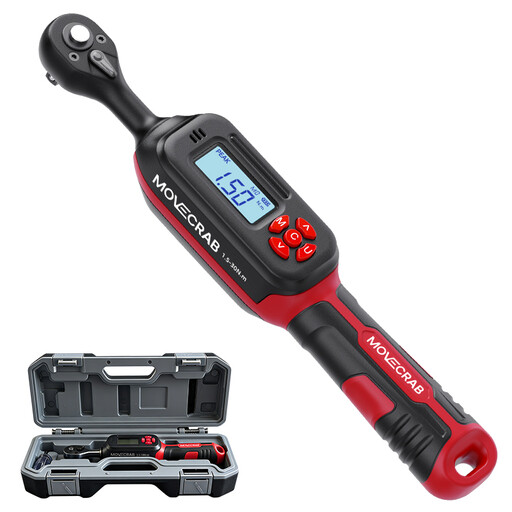
Why it suits this user: A sensible choice for car, motorbike and bike maintenance where you need to follow a specified tightening torque.
A ratchet alone doesn’t provide a measurement; this model lists a range, a display and alerts when the set value is reached.
3/8 inch ratchet head, 4.2-85 Nm range, multiple units of measurement and vibration, sound and light alerts, according to the product description.
We’ve put together a complete, up-to-date list of products that meet these strict selection criteria and the applicable European safety regulations.
A 3/8 inch ratchet spanner is versatile for general car maintenance. You may need a 1/2 inch drive for larger connections. Check in advance which socket sizes and tightening torques the car manufacturer specifies. For wheel bolts, a torque wrench is more important than a ratchet alone.
An electric ratchet wrench makes repetitive turning easier and can save time. The stated torque varies by model. According to the product description, the DURATECH 12 V ratchet mentioned has a stated torque of 65 Nm. Don’t automatically use the tool on connections that require a precise final torque.
Its lifespan depends on the material, load, maintenance and storage. Chrome vanadium steel is often used for hand tools, but the teeth and ratchet mechanism also affect durability. Avoid overloading it, don’t use a ratchet as an impact tool, and replace damaged sockets or parts promptly.
